Oct. 19, 2026
Sumitomo Corporation
Hankyu Corporation
Energy-Saving Demonstration Project to Reduce Regenerative Braking Energy Losses Launched on LRT1 in Manila- Utilizing Unused Regenerative Energy to Reduce Electricity Consumption and Promote Modal Shift -
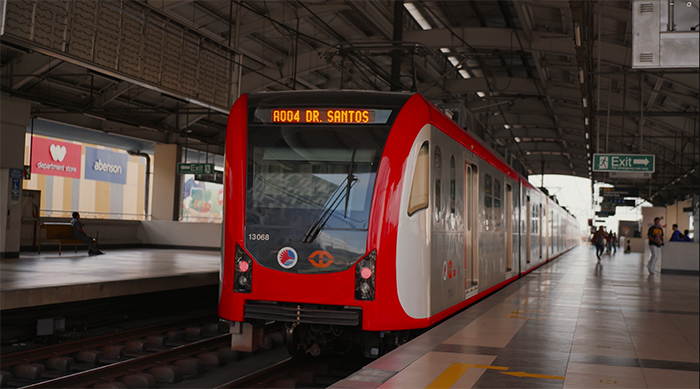
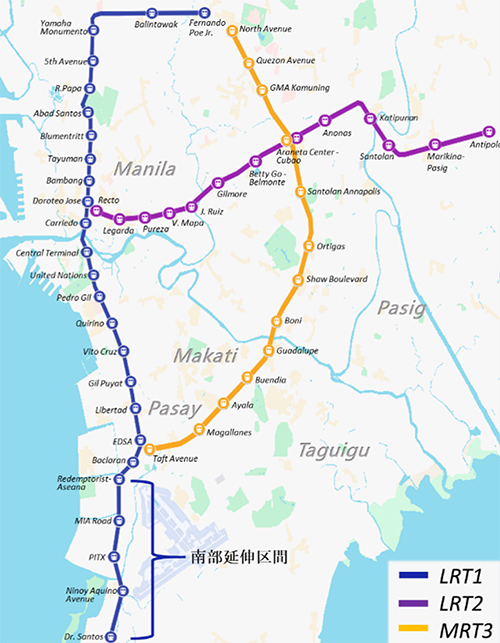
Sumitomo Corporation (Head Office: Chiyoda-ku; Representative Director, President and Chief Executive Officer: Shingo Ueno; "Sumitomo Corporation") and Hankyu Corporation (Head Office: Osaka City, Osaka; President: Yasuo Shimada; "Hankyu Corporation"), in collaboration with Light Rail Manila Corporation ("LRMC"), will conduct an energy-saving demonstration project on the LRT1 urban railway in Metropolitan Manila, the Philippines. The project will make productive use of surplus regenerative power generated during braking as trains decelerate that would otherwise go unused and be lost.
The demonstration project has been selected for Synergistically Beneficial JCM Demonstration Programme by Ministry of the Environment of Japan *1.

Metropolitan Manila is regarded as one of the most severely congested cities among ASEAN countries, making the development of public transportation networks an urgent priority. For this reason, railway infrastructure development – including the construction of new lines – is underway. At the same time, electricity prices in the Philippines are relatively high compared with other ASEAN countries due to factors such as fuel prices and the structure of the country's power supply. Reducing the electricity consumed in urban railway operations is consequently an important challenge.
This demonstration project is based on measurements and analysis conducted through a JICA technical cooperation project undertaken by Hankyu Corporation to promote energy conservation on LRT1. The findings confirmed that a significant amount of regenerative power generated on LRT1 each year is currently lost without being utilized. By making productive use of this unused energy, the demonstration project is expected to enable approximately half of the regenerative power currently being lost to be utilized. In addition, funds made available through reduced electricity consumption will be reinvested in initiatives to improve convenience for passengers, including enhancements to station and rolling stock services. Through these measures, the project aims to encourage a modal shift and help alleviate traffic congestion.
Energy-efficient trains can use the characteristics of their traction motors to convert the kinetic energy generated during deceleration into electrical energy. The electricity generated in this way is known as "regenerative power" and is transmitted through the overhead lines for reuse as power to operate other trains. However, when there are no trains nearby capable of using the regenerative power, for example, the electricity can become surplus and cannot be reused. To address this, the demonstration project will introduce equipment that supplies surplus regenerative power to station facilities. This will be combined with optimization of the output voltage at substations and modifications to train control software to reduce losses of regenerative power and thereby lower electricity consumption across the entire line. Sumitomo Corporation will provide equipment to LRMC and oversee the project, while Hankyu Corporation will draw on its longstanding expertise in railway operations and maintenance to provide technical support for the introduction of energy-saving measures and verification of their effectiveness.
Based on the results obtained through this demonstration project, Sumitomo Corporation and Hankyu Corporation will support efforts to address social issues facing the Philippines while working to realize sustainable urban transportation, with a view to expanding the initiative to other parts of Southeast Asia facing similar challenges.
*1: Synergistically Beneficial JCM Demonstration Programme by Ministry of the Environment of Japan provides subsidies for demonstration projects aimed at developing prospective JCM projects that synergistically address not only decarbonization but also other environmental and social issues. This means introducing advanced decarbonization technologies that have not previously been implemented as JCM projects in JCM partner countries. Such projects are undertaken with the aim of subsequently applying for the "Subsidy Programme for the JCM Facility Introduction" described in *2.
*2: Subsidy Programme for the JCM Facility Introduction of MOE Japan provides financial support of up to 1/2 of the initial investment cost for projects. Representative participants in the Projects shall conduct measurement, reporting, and verification (MRV) of GHG emission reductions.
The purpose of this project is to financially support the implementation of projects which reduce GHG emissions by utilizing leading decarbonizing technologies in developing and other countries, and in return seeks to acquire JCM credits for achievement of Japan’s GHG emission reduction target.