- TOP
- Enriching+TOP
- Pursuing the Dream of Fusion Power: Sumitomo Corporation's Strategy for Moving from Fusion-Derived Businesses to Real-World Deployment

Business
Pursuing the Dream of Fusion Power: Sumitomo Corporation's Strategy for Moving from Fusion-Derived Businesses to Real-World Deployment
2026.7.2

"Fusion power" (nuclear fusion) generates vast amounts of energy without emitting greenhouse gases, utilizing a nearly inexhaustible fuel source and replicating here on Earth the process that powers the Sun. As many countries advance fusion power development projects, it is garnering significant attention as a potential game-changer in the energy sector, with the promise of resolving many global energy problems should it become a reality.
While keeping an eye on the real-world deployment of fusion power, Sumitomo Corporation is also focusing on "derivative technologies" emerging from the development process, advancing the commercialization of businesses based on these technologies ("derivative businesses") and creating the industrial foundations needed to support them. What kind of future does Sumitomo Corporation envision through fusion power? We spoke with Yohei Nishitsuji of the Energy Innovation Initiative SBU, who is quietly but passionately dedicated to bringing tomorrow’s energy technologies to fruition.
-

Energy Innovation Initiative (EII) SBU
EII Design & Strategy UnitYohei Nishitsuji
Nishitsuji joined an oil and gas development company in 2008 as a geophysics specialist. From 2013, he worked as a researcher at Delft University of Technology in the Netherlands, where he earned a PhD carrying out research and development in lunar imaging and AI optimization. After gaining further experience at an energy development company from 2017, he joined Sumitomo Corporation in 2020. He transferred to the Energy Innovation Initiative (EII) in 2021, where he remains today.
Index
- Bringing the Power of the Sun to Earth through Nuclear Fusion
- Building Industrial Foundations with a Focus on Derivative Technologies Across the Short, Medium and Long Term
- Broad Collaborative Initiatives to Commercialize Derivative Technologies in Asia
- Building a Vast Fusion Ecosystem Connecting Industries Organically
Bringing the Power of the Sun to Earth through Nuclear Fusion
To begin, could you explain what nuclear fusion power is?
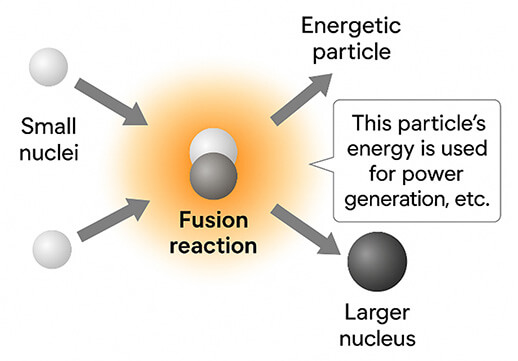
"Fusion" literally means joining things together. Nuclear fusion generates electricity using the energy released when light atomic nuclei, such as those in hydrogen, combine or fuse with one another. When the binding energy between protons and neutrons in atomic nuclei changes during this process, an enormous amount of energy is released. Some estimates suggest that fusion can produce as much as four times the energy of conventional nuclear power generation. Because the word "nuclear" is used, fusion is often confused with nuclear fission power generation, but the two are fundamentally different. Fusion power is a clean energy source that does not emit any greenhouse gases. While the process does produce small amounts of radiation, appropriate management of this can ensure safety. Further, because the reaction stops as soon as the fuel supply or power source is cut off, runaway reactions are impossible in principle. For these reasons, fusion is widely regarded as a promising foundational energy source for the next generation.
Fusion power is often described as an attempt to "recreate the Sun on Earth," because the energy emitted by the Sun in the form of light and heat is also generated through fusion reactions. As a result, achieving fusion power requires the integration of highly complex and wide-ranging technologies spanning multiple fields of expertise, making it one of the most challenging technological undertakings imaginable.
In Japan, fusion power has attracted attention as a major policy priority of the current administration, while internationally governments around the world are pursuing major development programs. At the same time, start-ups began entering the field in earnest around 2010. Private investment has surged throughout the 2020s, and today companies from a wide range of industries, including heavy industry, materials and component manufacturers, and AI and IT firms have all joined the sector. As a result, while significant technical challenges remain, progress toward commercialization has accelerated dramatically.
How do you personally view the unique nature of fusion energy?
Fusion energy is often described as the "ultimate energy source." People may interpret the word "ultimate" differently, whether in terms of its extraordinary energy potential or the sheer difficulty of developing it, but personally I think it is "ultimate" because it brings us closer to the origins of the universe. Our universe was born in the Big Bang approximately 13.8 billion years ago, and shortly afterwards, light elements such as hydrogen were formed. Using that hydrogen as fuel, stars have generated energy and created myriad elements through fusion ever since. Not only natural phenomena such as the Sun, wind and soil, but all living things, including human beings, can be described as "children of fusion." For me, fusion energy transcends the label of a "next-generation energy source." It belongs in an entirely different category.
Building Industrial Foundations with a Focus on Derivative Technologies Across the Short, Medium and Long Term
We've heard that a wide range of derivative technologies are emerging from the process of developing fusion power.
To create fusion reactions suitable for power generation here on Earth, temperatures exceeding 100 million degrees Celsius must be generated. To make a fusion power business viable, it is essential to develop materials capable of withstanding such extreme heat over long periods, equipment capable of maintaining and controlling these extreme operating environments, and technologies for safely managing low-level radioactive materials. As these technologies have been developed, several highly advanced derivative technologies have emerged alongside them. Because fusion power itself represents such an ambitious technological goal, many of the technologies derived from it are equally sophisticated, with applications across a great range of industries. In fact, some of these technologies are already being utilized in healthcare, aerospace and defense.
Sumitomo Corporation recognized the breadth of opportunities created by these derivative technologies. While maintaining our long-term objective of achieving the real-world deployment of fusion power, we have also begun identifying areas where derivative technologies can generate commercial value within the next several years. As a result, we have launched initiatives to develop derivative businesses over the short and medium term.
There are several reasons why Sumitomo Corporation views fusion power and derivative businesses as a continuous journey spanning the short, medium and long term, even though many organizations focus exclusively on power generation itself. First, the expertise gained through the short- and medium-term derivative businesses can contribute directly to our long-term goal of commercial fusion power. Second, if fusion companies can monetize derivative technologies, they can continue funding research and development independently rather than relying solely on external investment. And third, as derivative businesses expand into different sectors, public awareness of fusion energy itself will naturally increase. Over time, society may come to recognize fusion as valuable and relevant to people's lives. For all these reasons, Sumitomo Corporation believes that utilizing derivative technologies is one of the most effective paths toward the practical deployment of fusion power.
Is it correct that Sumitomo Corporation entered the fusion sector earlier than any other Japanese company?
Yes. It began in 2022 with our investment in the US-based company TAE Technologies. As we explored next-generation renewable and clean energy technologies, fusion power was an opportunity that caught our attention. The moment we learned about its potential, our team reached the same conclusion, both logically and intuitively: "Making this technology a reality could provide extraordinary solutions to a wide range of societal challenges." That conviction led us to commit ourselves fully to understanding fusion energy. Since then, we have continued to make strategic investments in fusion-related companies as part of deliberate long-term efforts to establish a presence in the sector.
Broad Collaborative Initiatives to Commercialize Derivative Technologies in Asia
Sumitomo Corporation invested in SHINE Technologies ("SHINE") in March 2026. What made the company stand out?
SHINE is a unique company. While pursuing the long-term goal of making fusion power a reality, it is also the only company in the world that has successfully commercialized businesses based on technologies derived from actual fusion reactions. One example is the production of medical isotopes using fusion-derived neutrons. These isotopes contribute to the diagnosis and treatment of cancer.
Although medical isotopes are currently produced in several countries, existing production methods face challenges in maintaining a stable supply. Looking ahead, imports to Asia, including Japan, are expected to decline significantly. SHINE's production technology has the potential to establish a reliable supply chain quickly, making it a highly promising and innovative solution.
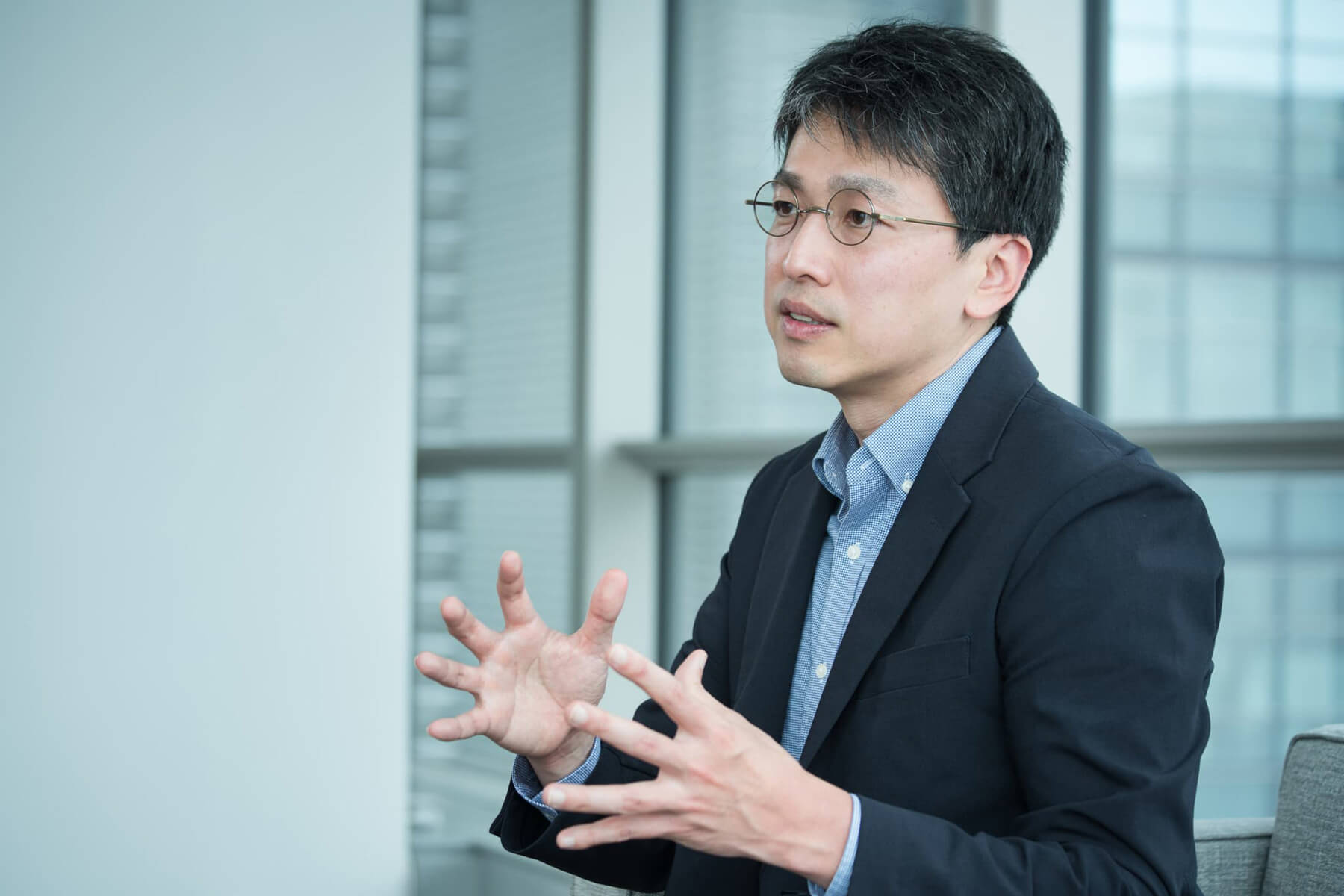
What role will Sumitomo Corporation play in expanding SHINE's derivative businesses?
We are expected to serve as SHINE's gateway for expansion across Asia, beginning in Japan. Within Sumitomo Corporation, we have already launched a broad-based collaborative initiative involving multiple Strategic Business Units (SBUs). These include our Pharmaceutical Business Unit, which brings expertise from the healthcare sector, and our Nuclear Fuel Unit, which has expertise in radioactive-material transportation and the nuclear industry. Building a robust business presence in Asia is critically important if we are to ensure that patients awaiting treatment have secure access to medical isotopes.
Another expected role of Sumitomo Corporation is helping transform derivative technologies into concrete business concepts. Many fusion companies have outstanding technologies but lack either the business development ideas or the networks necessary to bring them to market. As we deepen our relationship with SHINE, we are identifying the gaps between technology and commercialization, applying our ability to conceptualize new businesses and turn promising ideas into reality.
Building a Vast Fusion Ecosystem Connecting Industries Organically
It sounds as though industries built around fusion power have the potential to reshape our future.
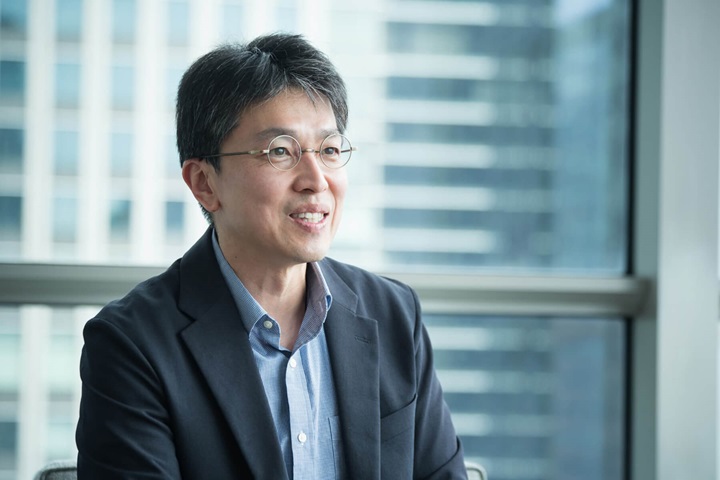
Absolutely. Earlier, I described fusion as the "ultimate energy source." But to realize this dream, we will need far more than technological breakthroughs. We will need to transcend organizational, industrial and generational boundaries, bringing together the capabilities of countless people and organizations to create a vast ecosystem that organically connects technologies, industries and markets.
While solving a wide range of societal challenges through derivative businesses, we must also continue working toward our ultimate goal: the real-world deployment of fusion power. To make that vision a reality, Sumitomo Corporation is determined to serve as a hub within the fusion ecosystem – connecting diverse players, expanding opportunities for collaboration and synergy and increasing the likelihood that fusion power will be realized. This commitment brings us together.
Recommend

Business
Toward a Carbon-Neutral Future: Sumitomo Corporation’s Company-Wide, Cross-Organizational Drive to Create New Businesses
Business
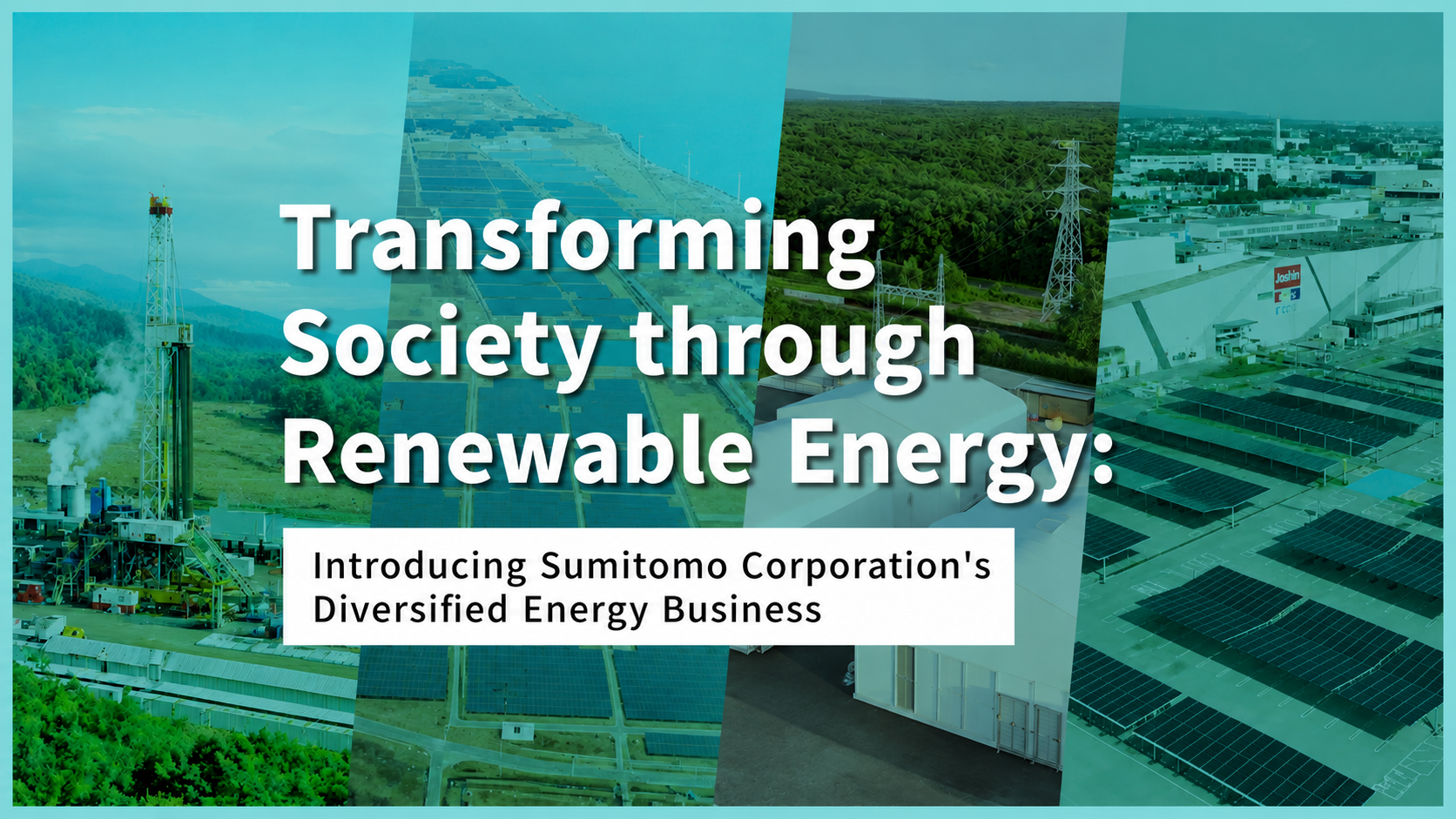
Transforming Society through Renewable Energy: Introducing Sumitomo Corporation's Diversified Energy Business
Business
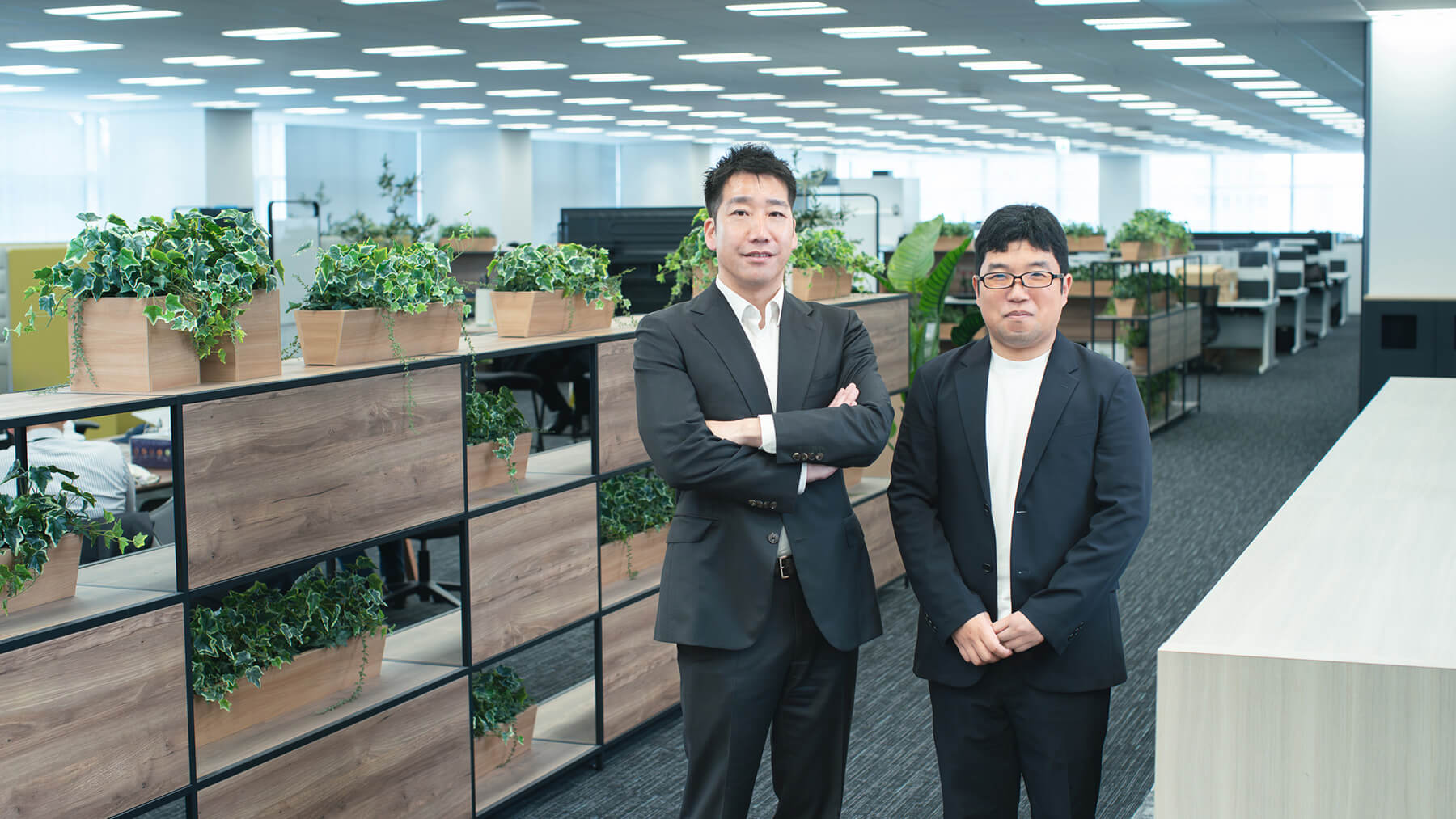
Opening New Frontiers in the Evolving Carbon Credit Market Through a Full-Spectrum "Create, Connect, Use" Approach
Business
Flying Planes and Growing Forests: A Joint Challenge by Sumitomo Corporation, Nippon Paper Industries and JAL to Produce Domestic SAF from Tohoku
+ (Plus)
Renewable Energy as the Cornerstone of Fukushima's Recovery: What the Abukuma Wind Power Project Brings to the Local Community
Business
Sumitomo Corporation's Commitment to Japan's Largest Onshore Wind Power Project: Continued Reconstruction in the Abukuma Area, Fukushima Prefecture
Business
Tackling offshore wind challenges! Behind the Scenes with a Newcomer from Sumitomo Corporation on Assignment in Saikai, Nagasaki
Business
Transforming Energy Storage Into Core Infrastructure: New Storage Battery Challenges for Sumitomo Corporation in Hokkaido
Business
Tackling Power Shortages with Rechargeable Batteries: Sumitomo Corporation Wiring the Future of Energy on the Koshiki Islands
Business
【Super-Sized Infographic】What's One Key Solution to Climate Change? Utility-Scale Energy Storage Spreading Worldwide

Culture
Sustainable Choices for Lunch and Work – A Sumitomo Deutschland GMBH Employee’s Quest To Promote Renewable Energy in Europe

Business
We’ve talked enough. It’s time for action. But how?―Sumitomo Corporation’s true commitment to decarbonization
Business
Geothermal Power Generation in Indonesia! Sumitomo Corporation’s Vision for a Sustainable Future
Business
Bringing green power to all of Japan. What is the new electricity business to realize decarbonization?

Business
“Storing up” as a business: striving to commercialize reusing EV batteries as energy storageon a remote island off Kyushu
Business
Spread and Expansion of Renewable Energy through Power Storage Business –Reused EV Battery Project on Koshiki Islands–

Business
Bringing traditional Japanese culture to tropical Ghana
Business
Contributing to next-generation energy infrastructure by smart use of cutting-edge battery technology for automobiles
Business
Sustaining Indonesia’s power supply with geothermal power generation
Business
Retail electricity sales – ensuring reliable power supply –
Ranking

2026.8.13
Business
Collaboration With SCSK Is Key: Inside Sumitomo Corporation Group's DAIS (Digital & AI Strategy)
2025.4.7
Business
How Does Sumitomo Corporation Excel in Media and Digital Businesses? History and Transformation Explained
2026.2.9
Business
Using AI to Streamline Track Inspections: Sumitomo Corporation and 33 Railway Operators Take on Labor Shortages in the Rail Industry
2025.8.29
Business
Sumitomo Corporation's Soaring Commercial Aviation Business: Powered by the World's Second Largest Aircraft Leasing Operation

2024.5.20
Business
SUMMIT: Making Supermarkets in Japan More Enjoyable