- TOP
- Enriching+TOP
- Transforming Society through Renewable Energy: Introducing Sumitomo Corporation's Diversified Energy Business
Business
Transforming Society through Renewable Energy: Introducing Sumitomo Corporation's Diversified Energy Business
2026.6.30
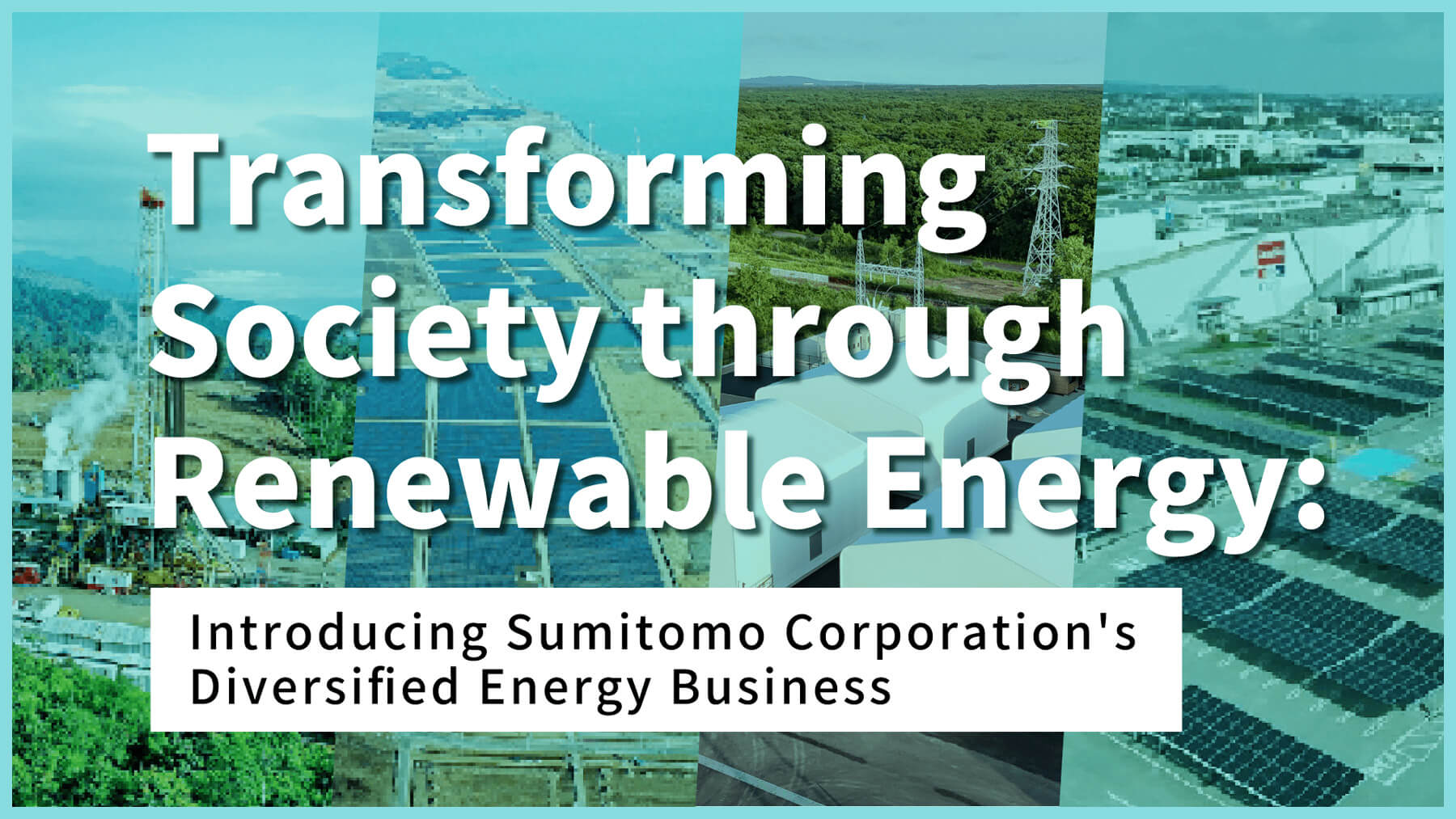
Renewable energy is being adopted at an accelerating pace globally as countries work towards achieving carbon neutrality. While once criticized for being expensive and dependent on weather conditions, advances in technology and changing demands in society have made renewable energy essential in supporting economic growth and environmental sustainability.
Sumitomo Corporation is doing more than simply building power plants. Drawing on decades of experience and the latest technologies, Sumitomo Corporation is helping optimize the supply and demand of many different renewable energy sources and convert them into stable, reliable power, laying the foundations for a sustainable society.
Today we're exploring the fundamentals of renewable energy and the benefits of its adoption, while showcasing examples of Sumitomo Corporation's diversified business initiatives.
-
Expert Supervision
Toru Morotomi
Professor, Graduate School of Public Policy, Kyoto University
Toru Morotomi graduated from Doshisha University in 1993 and completed the doctoral program at Kyoto University's Graduate School of Economics in 1998. A leading authority in environmental economics and public finance, he has long advocated the integration of environmental and economic policy. He has served as a member of the Central Environment Council and expert adviser to the Ministry of Economy, Trade and Industry and the Tokyo Metropolitan Government, playing a significant role in the development of decarbonization policy in Japan. His major publications include "A New Form of Capitalism" and "Japanese Electricity Market Liberalization and Renewable Energy." Widely recognized for his insight into renewable energy as a new engine of economic growth, he has earned the trust of stakeholders across government, industry and academia.
Index
- Renewable Energy: The Key to a Decarbonized Society
- Three Benefits of Transitioning to Renewable Energy
- Sumitomo Corporation's Renewable Energy Initiatives: Powering Communities and Driving Business through Innovation
- Beyond Renewable Energy: Sumitomo Corporation's Vision for the Future
- Frequently Asked Questions
Renewable Energy: The Key to a Decarbonized Society
Renewable energy refers to energy sources that exist naturally and can be replenished within a relatively short period of time after use, including solar, wind, hydroelectric, geothermal and biomass energy. Because they create little to no greenhouse gas emissions, including carbon dioxide (CO2), during power generation, they are regarded as one of the most important tools in addressing climate change.
So why is renewable energy attracting so much attention today? Several major reasons are outlined below.
The transition to renewable energy can be traced to the adoption of the Paris Agreement in 2015, which marked a major turning point. The Paris Agreement is an international commitment to hold the increase in the global average temperature to well below 2 ºC above pre-industrial levels, while pursuing efforts to limit the increase to 1.5 ºC.
Achieving this goal requires the realization of carbon neutrality – reducing net greenhouse gas emissions to zero. In response, countries around the world, including Japan, have adopted targets to achieve carbon neutrality by 2050 and are stepping up efforts to meet them.
For countries that rely heavily on imported fossil fuels, renewable energy generated domestically is an important means of improving energy self-sufficiency. Ensuring a stable energy supply while reducing the risks of price spikes and supply disruptions caused by changes in global affairs is directly linked to a nation's economic security. Building systems that harness natural resources to meet domestic energy needs without relying on imported fuels is essential to creating a sustainable social and economic foundation for the future. At a time when fuel prices continue to rise due to factors such as geopolitical risk, securing domestically produced energy that is less vulnerable to external circumstances has become an urgent challenge for both businesses and government.
Renewable energy was once considered expensive, but in recent years technological innovation and economies of scale have dramatically reduced costs. One of the greatest advantages of solar and wind power is that once the facilities have been installed, they don't require any fuel to generate electricity. Today, adoption is accelerating worldwide, particularly in Europe and China, and investment is on the rise. Renewable energy is no longer a niche source of power. It is increasingly recognized as an economically viable next-generation mainstream power source, and deployment is expanding across the globe. Supported by continued cost reductions, renewable energy is expected to become indispensable to social infrastructure moving forward.
Three Benefits of Transitioning to Renewable Energy
Introducing the key benefits for companies transitioning to renewable energy.
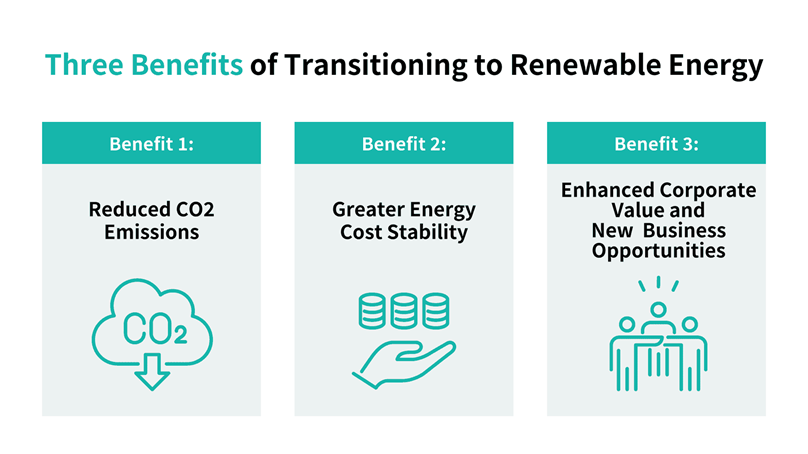
For companies seeking to achieve sustainable growth, reducing greenhouse gas emissions is no longer optional. Transitioning to renewable energy is one effective option for meeting commitments under international initiatives such as RE100, and respond to growing demands for emissions reductions across entire supply chains.
Reducing CO2 emissions and demonstrating a tangible commitment to addressing climate change not only helps mitigate risk – it enhances a company's environmental value. In this context, environmental value refers to an intangible asset that can influence corporate competitiveness. In recent years, requirements for the disclosure of sustainability-related information have expanded, particularly among listed companies. Quantitatively demonstrating environmental initiatives has become a core component of corporate responsibility and governance.
Improving energy self-sufficiency is an important strategy for strengthening business resilience. Fossil fuel prices are vulnerable to fluctuations driven by geopolitical developments and market conditions. By contrast, securing and utilizing renewable energy directly enables companies to procure electricity more stably, with less exposure to fuel price volatility. While the initial investment required must be taken into account, over the medium to long term renewable energy can improve the predictability of energy costs and serve as a hedge against future procurement risks.
Efforts to achieve decarbonization have become an increasingly important criterion by which investors, customers and business partners evaluate companies. Commitment to renewable energy builds trust and contributes to the resolution of societal challenges, supporting both ESG investment and stronger brand value. At the same time, developing new products and services focused on a decarbonized future is a source of competitive advantage in a changing marketplace. For these reasons, renewable energy has the potential to strengthen corporate value and open doors to new business opportunities in a sustainable society.
Sumitomo Corporation's Renewable Energy Initiatives: Powering Communities and Driving Business through Innovation
In the development of renewable energy, Sumitomo Corporation has a multifaceted approach centered on two key themes: prioritizing coexistence with local communities and making renewable power easier to use. Below are three examples of how Sumitomo Corporation is putting this approach into practice.
A Symbol of Regional Recovery and a Driver of Everyday Decarbonization
Sumitomo Corporation develops solar power projects on a range of scales, from large-scale mega-solar facilities to installations serving local commercial sites, tailoring each project to its location and customer needs. Two examples are introduced below.
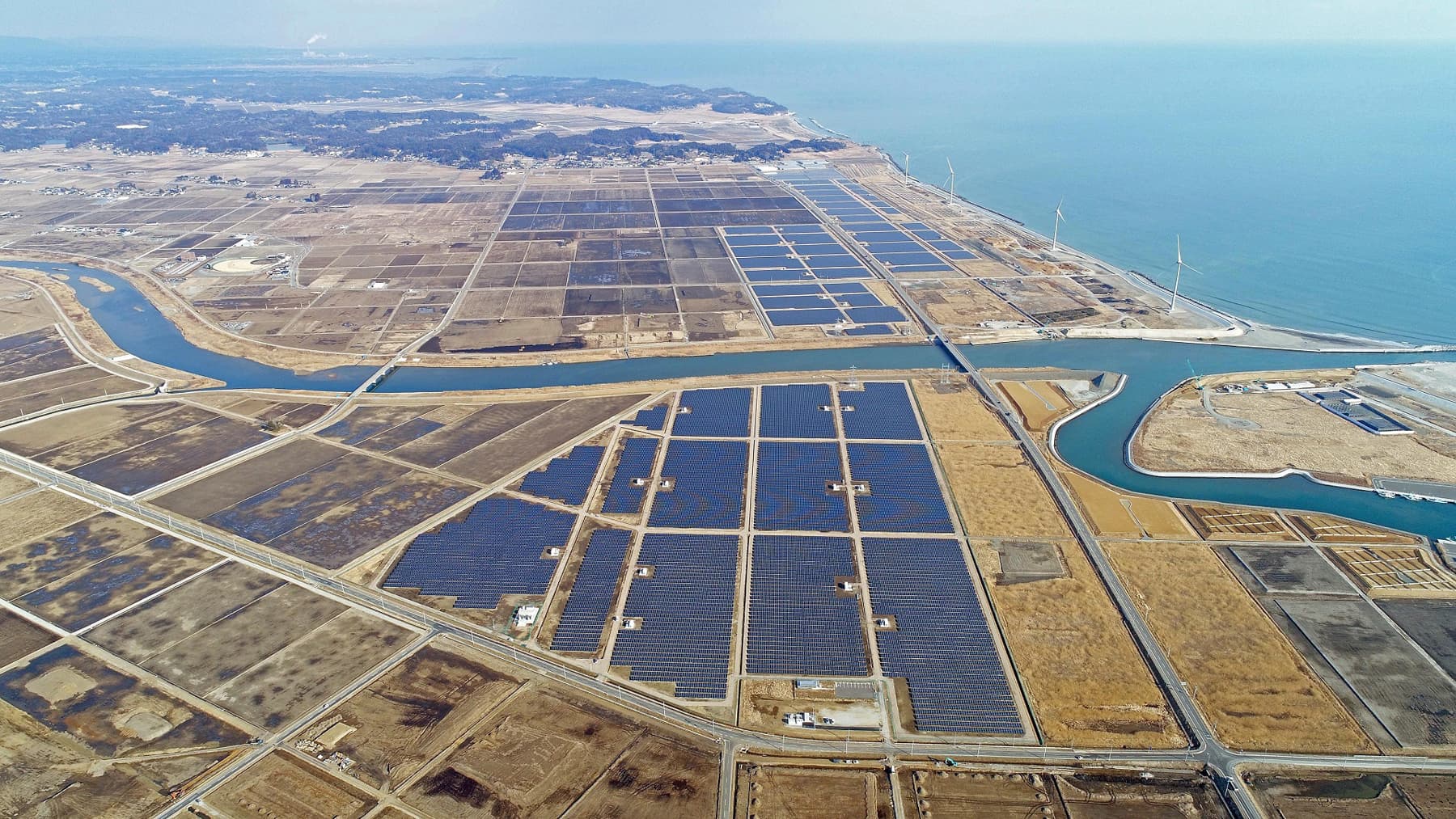
Sumitomo Corporation operates two of the largest solar power plants in the Tohoku region on coastal sites that were devastated by the tsunami caused by the Great East Japan Earthquake. Across approximately 150 hectares, the facilities have a combined generating capacity of around 92 MW, producing enough electricity to supply approximately 30,000 households. In addition to power generation, the project incorporates drone-based inspection technologies, contributes to local employment and sponsors traditional community events. Through ongoing dialogue with local stakeholders, the facilities have come to serve as symbols of recovery that continue to grow alongside the community.
The project traces its origins to the "Renewable Energy Promotion Vision" established by Minamisoma City following the disaster. As the city pursued reconstruction efforts, it identified renewable energy as a pillar of its future development. The project was launched in alignment with that vision. From the outset, the objective was not simply to build power plants, but to share in the community's aspirations and help shape its future.
Learn more about this project below:
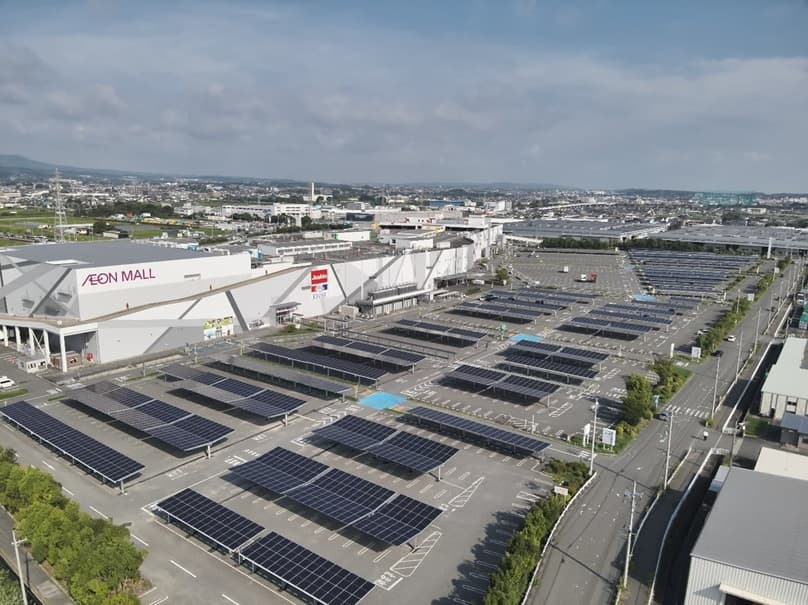
An on-site PPA (Power Purchase Agreement) is a contractual arrangement in which solar power generation equipment is installed on the rooftops or car parks of facilities owned by a company, with the generated electricity purchased and used by that company over the long term. As a powerful tool for supporting corporate decarbonization, on-site PPAs are one of Sumitomo Corporation's key focus areas. For example, through an investee company, Sumitomo Corporation concluded a comprehensive on-site PPA agreement to install solar carports in outdoor parking areas at AEON Mall’s domestic commercial facilities across Japan. The clean electricity generated is used directly within the facilities, while the solar carports also provide practical benefits to visitors by offering protection from rain and sunlight.
One of Sumitomo Corporation's strengths lies not only in overcoming site-specific constraints, but also in taking responsibility for the entire lifecycle of a project. From proposing solar panel installations and arranging financing to construction, operation and even consideration of future reuse and recycling initiatives, the company provides end-to-end support for the development of sustainable energy infrastructure.
Learn more about this project below:
Managing Risk and Developing Stable Baseload Power around the World
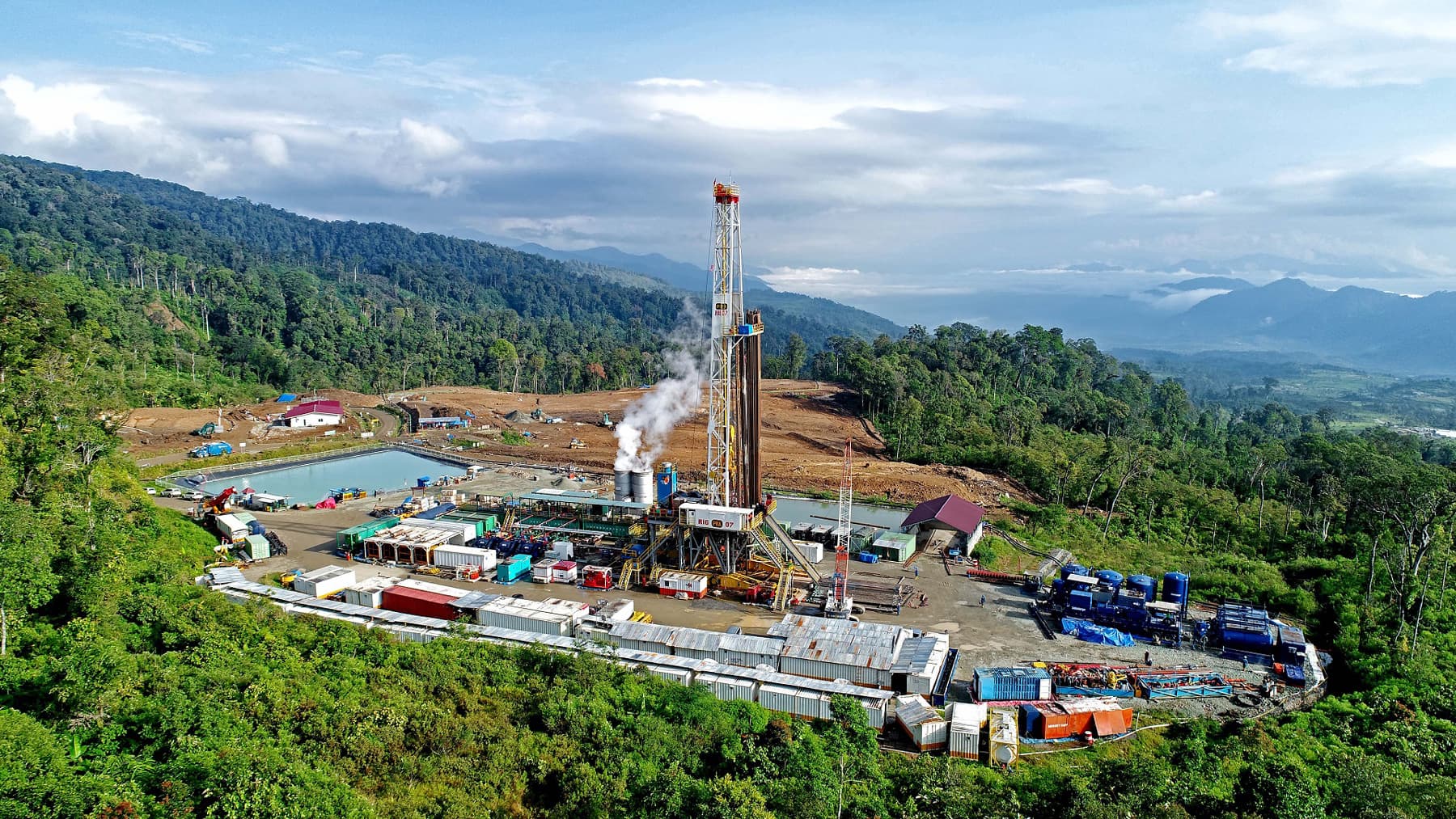
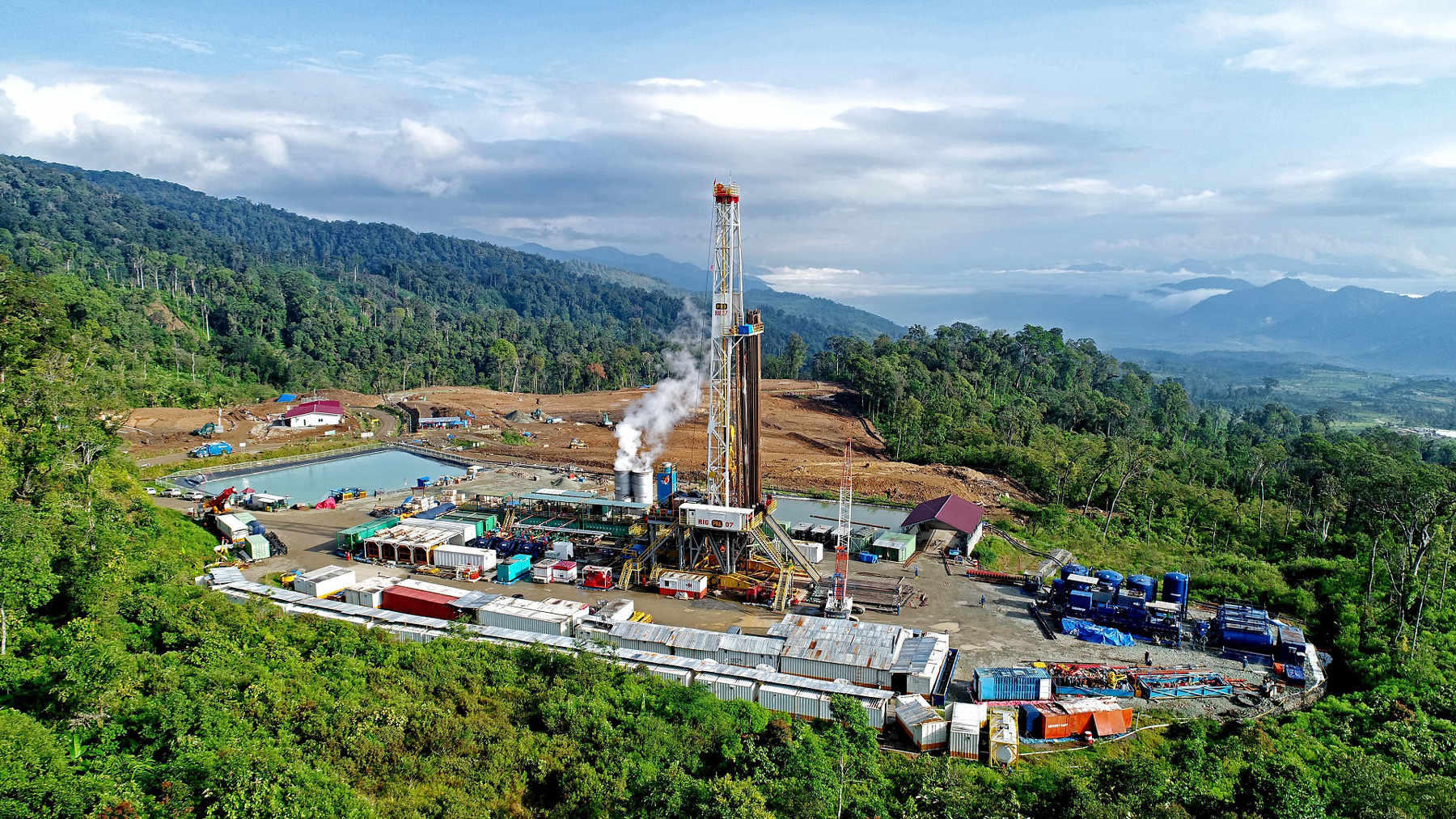
Sumitomo Corporation has more than 40 years’ experience in geothermal power generation, a renewable energy source capable of providing stable, around-the-clock power. At the Muara Laboh Geothermal Power Project in Indonesia, Unit 1, with a generating capacity of approximately 85 MW, began operations in 2019. Sumitomo Corporation became the first Japanese company to participate from the early, pre-drilling stage, and successfully saw the project through to completion. The company is currently developing a second unit with a capacity of approximately 83 MW at an adjacent site, with commercial operations targeted for 2027. Together, the two units are expected to provide a combined generating capacity of approximately 168 MW, enough to supply around 900,000 households. Sumitomo Corporation has been involved in the development of both units and has accumulated extensive experience in geothermal power plant construction in Indonesia and New Zealand.
Because geothermal power relies on underground resources, developers face a fundamental uncertainty: there isn't any guarantee that sufficient geothermal steam will be available to support commercial power generation. Drawing on expertise gained through decades of resource development, while also leveraging cutting-edge exploration and digital technologies through partnerships with startups and other organizations, Sumitomo Corporation continues to take on the challenge of developing technically complex geothermal projects.
Learn more about this project below:
Building the Next Generation of Infrastructure to Fully Utilize Renewable Energy
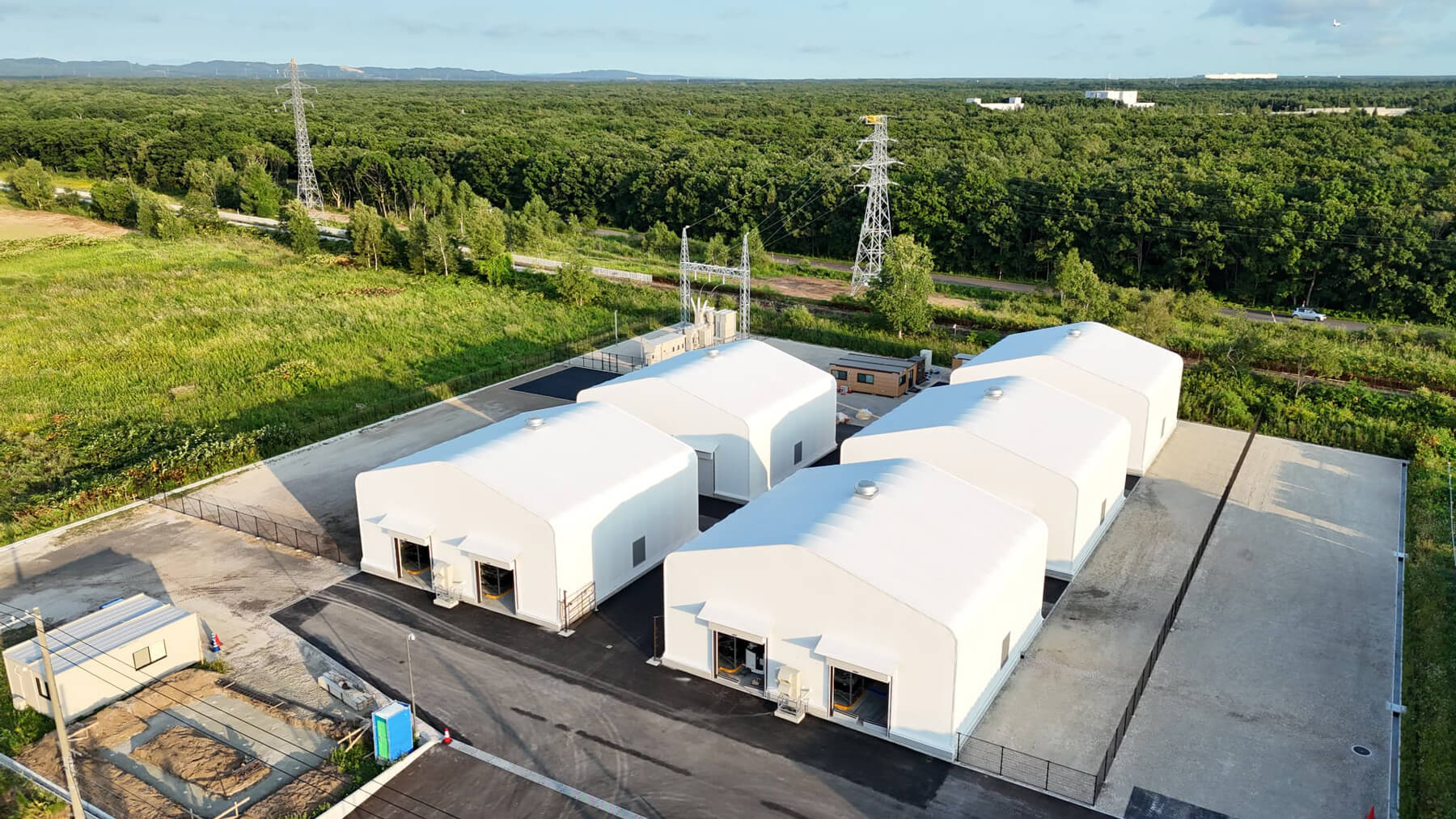
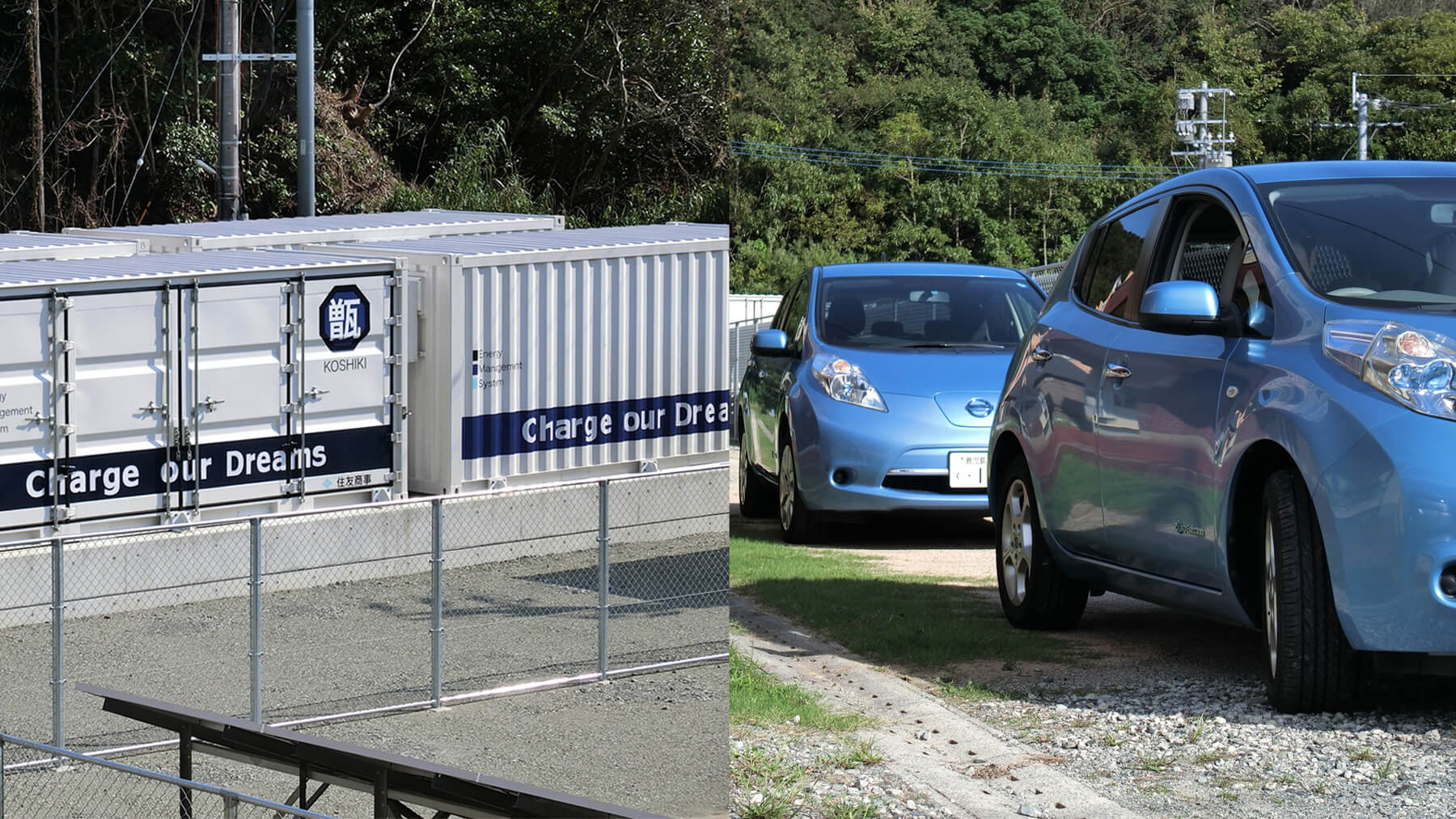
To address one of renewable energy's key challenges – fluctuations in power generation – Sumitomo Corporation is actively expanding its utility-scale energy storage business. The company is developing projects across Japan and has already established an operational track record in large-scale energy storage systems connected to extra-high-voltage transmission networks ahead of many competitors. These facilities help deliver renewable electricity efficiently across wide geographic areas. Sumitomo Corporation aims to expand its battery storage capacity to more than 500 MW by 2030.
The company is also expanding these initiatives internationally, including in Europe, where renewable energy adoption is accelerating. However, Sumitomo Corporation's contribution extends beyond simply installing battery storage. The real value lies in the expertise required to control charging and discharging operations appropriately in response to fluctuations in renewable energy output and electricity market supply-demand conditions. This is an area where Sumitomo Corporation's long-standing experience and operational expertise play a critical role, helping maximize the value and utilization of renewable energy through business.
Learn more about this project below:
Beyond Renewable Energy: Sumitomo Corporation's Vision for the Future
Sumitomo Corporation's role in the renewable energy sector extends far beyond building more power plants. By combining renewable energy generation with battery storage and other advanced energy solutions, the company aims to build infrastructure that supports the entire energy value chain, from generating electricity to delivering it and putting it to use. Through these efforts, Sumitomo Corporation seeks not only to accelerate regional decarbonization on a broader scale, but also to help enhance regional resilience by expanding options for using energy during emergencies. In addition, the company is working to develop carbon credit markets as a new mechanism for supporting the transition to a decarbonized society.
One of Sumitomo Corporation's key roles is to engage closely with local communities, applying the latest technologies and business expertise to manage fluctuations in renewable energy output. As a result, renewable energy can be transformed into stable, highly utilized social infrastructure. By combining on-the-ground execution capabilities with the collective strengths of the Sumitomo Corporation Group, the company will continue to drive the transition towards a sustainable carbon-neutral society.
Learn more about this project below:
Frequently Asked Questions
Renewable energy refers to naturally occurring energy sources that do not run out, including solar, wind, hydroelectric, geothermal and biomass energy. Because they emit little to no greenhouse gases, including carbon dioxide (CO₂), during power generation, they are regarded as one of the most effective tools for addressing climate change. Renewable energy sources can be replenished within a relatively short period after use, making them a form of clean power that supports a sustainable society.
Adopting renewable energy contributes directly to enhanced corporate value through decarbonized management practices and the establishment of a foundation for sustainable business operations. It also enables companies to secure a stable electricity supply that is less vulnerable to fluctuations in fossil fuel prices, helping stabilize energy costs over the medium to long term. Further, the development of environmentally friendly products and services can create new business opportunities in an evolving marketplace.
The primary drivers behind the growing importance of renewable energy are the achievement of the Paris Agreement's climate goals and the realization of a carbon-neutral society. Renewable energy is also important from the perspective of energy security, particularly for countries that rely heavily on imported energy resources, as it can improve energy self-sufficiency. In addition, technological advances have dramatically reduced generation costs, making renewable energy an increasingly economical and practical mainstream source of power worldwide.
Recommend
Business
Toward a Carbon-Neutral Future: Sumitomo Corporation’s Company-Wide, Cross-Organizational Drive to Create New Businesses

Business
Pursuing the Dream of Fusion Power: Sumitomo Corporation's Strategy for Moving from Fusion-Derived Businesses to Real-World Deployment
Business
Opening New Frontiers in the Evolving Carbon Credit Market Through a Full-Spectrum "Create, Connect, Use" Approach
Business
Flying Planes and Growing Forests: A Joint Challenge by Sumitomo Corporation, Nippon Paper Industries and JAL to Produce Domestic SAF from Tohoku
+ (Plus)
Renewable Energy as the Cornerstone of Fukushima's Recovery: What the Abukuma Wind Power Project Brings to the Local Community
Business
Sumitomo Corporation's Commitment to Japan's Largest Onshore Wind Power Project: Continued Reconstruction in the Abukuma Area, Fukushima Prefecture
Business
Tackling offshore wind challenges! Behind the Scenes with a Newcomer from Sumitomo Corporation on Assignment in Saikai, Nagasaki
Business
Transforming Energy Storage Into Core Infrastructure: New Storage Battery Challenges for Sumitomo Corporation in Hokkaido
Business
Tackling Power Shortages with Rechargeable Batteries: Sumitomo Corporation Wiring the Future of Energy on the Koshiki Islands
Business
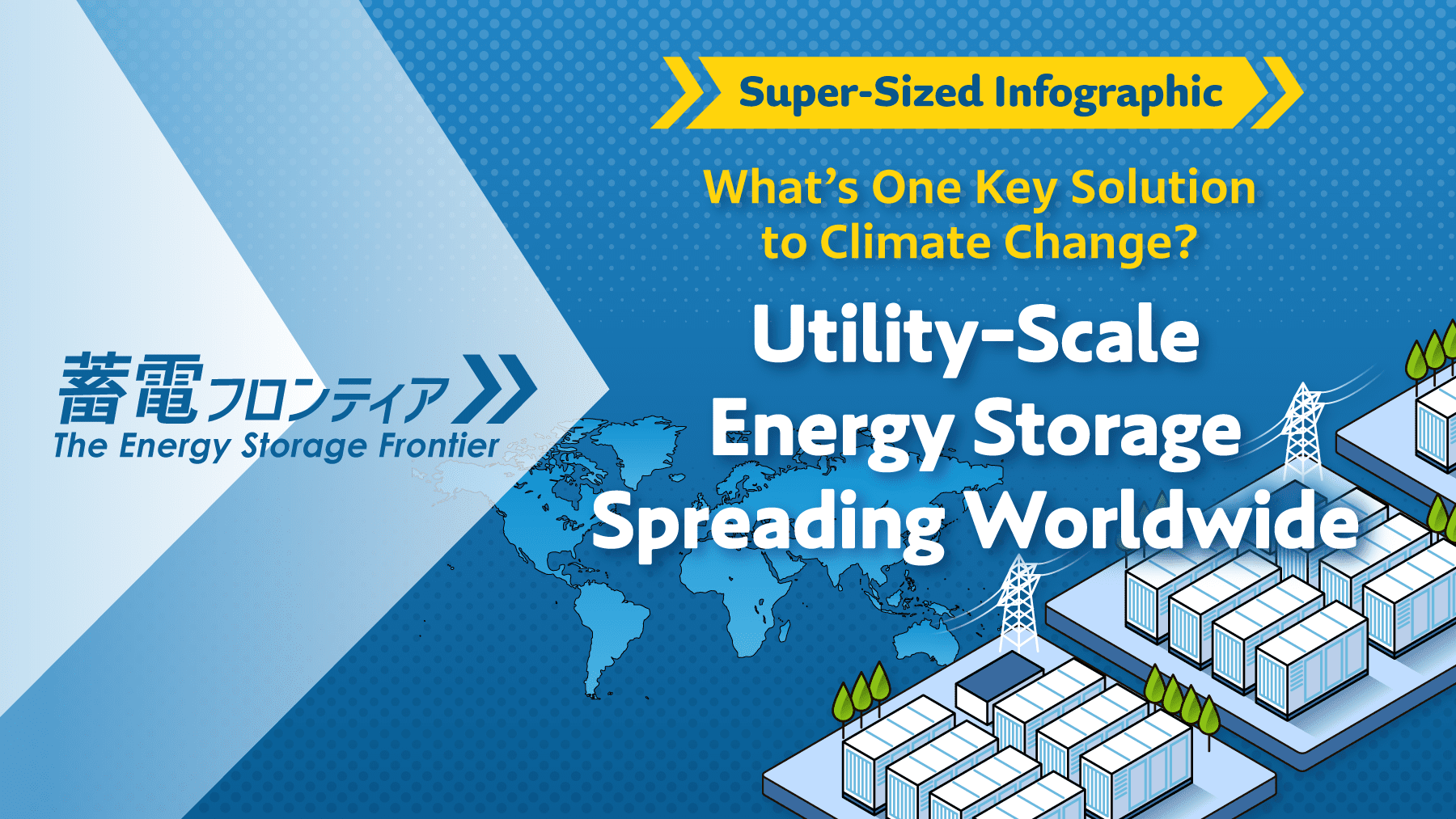
【Super-Sized Infographic】What's One Key Solution to Climate Change? Utility-Scale Energy Storage Spreading Worldwide

Culture
Sustainable Choices for Lunch and Work – A Sumitomo Deutschland GMBH Employee’s Quest To Promote Renewable Energy in Europe

Business
We’ve talked enough. It’s time for action. But how?―Sumitomo Corporation’s true commitment to decarbonization
Business
Geothermal Power Generation in Indonesia! Sumitomo Corporation’s Vision for a Sustainable Future
Business
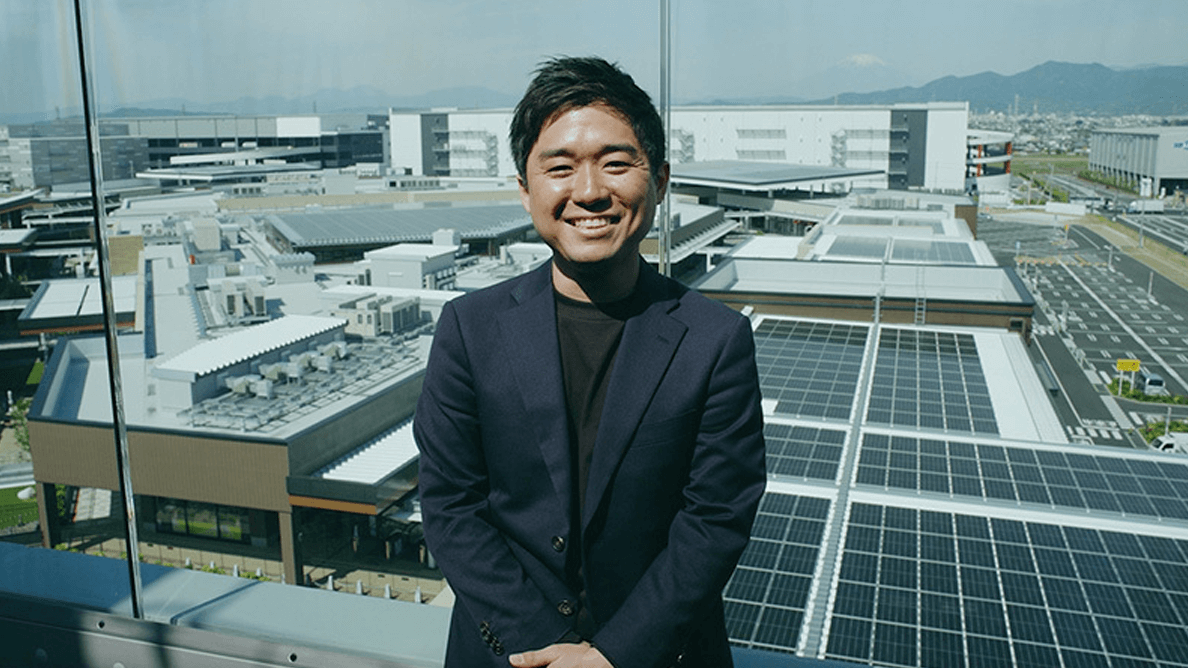
Bringing green power to all of Japan. What is the new electricity business to realize decarbonization?
Business
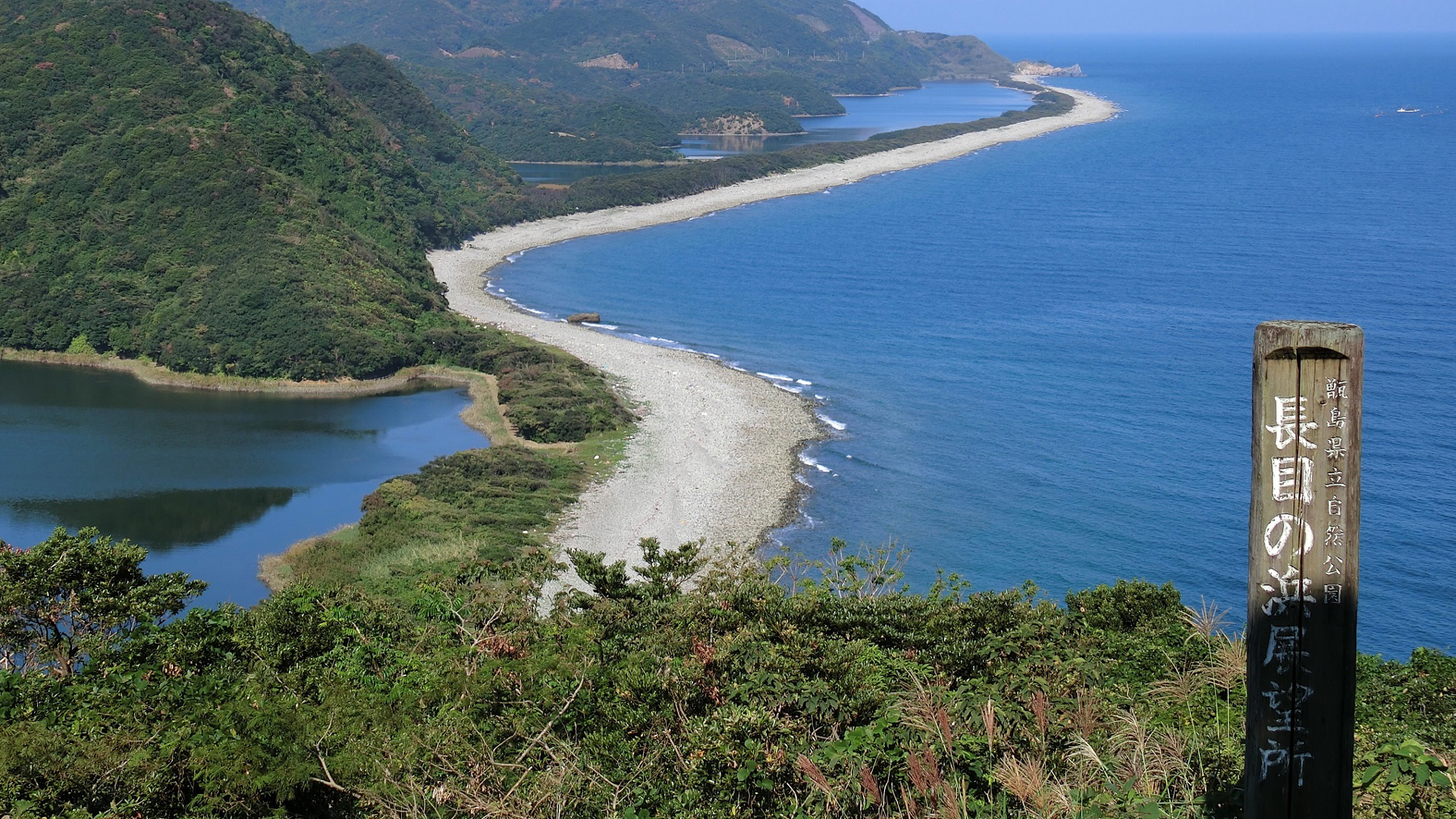
“Storing up” as a business: striving to commercialize reusing EV batteries as energy storageon a remote island off Kyushu
Business
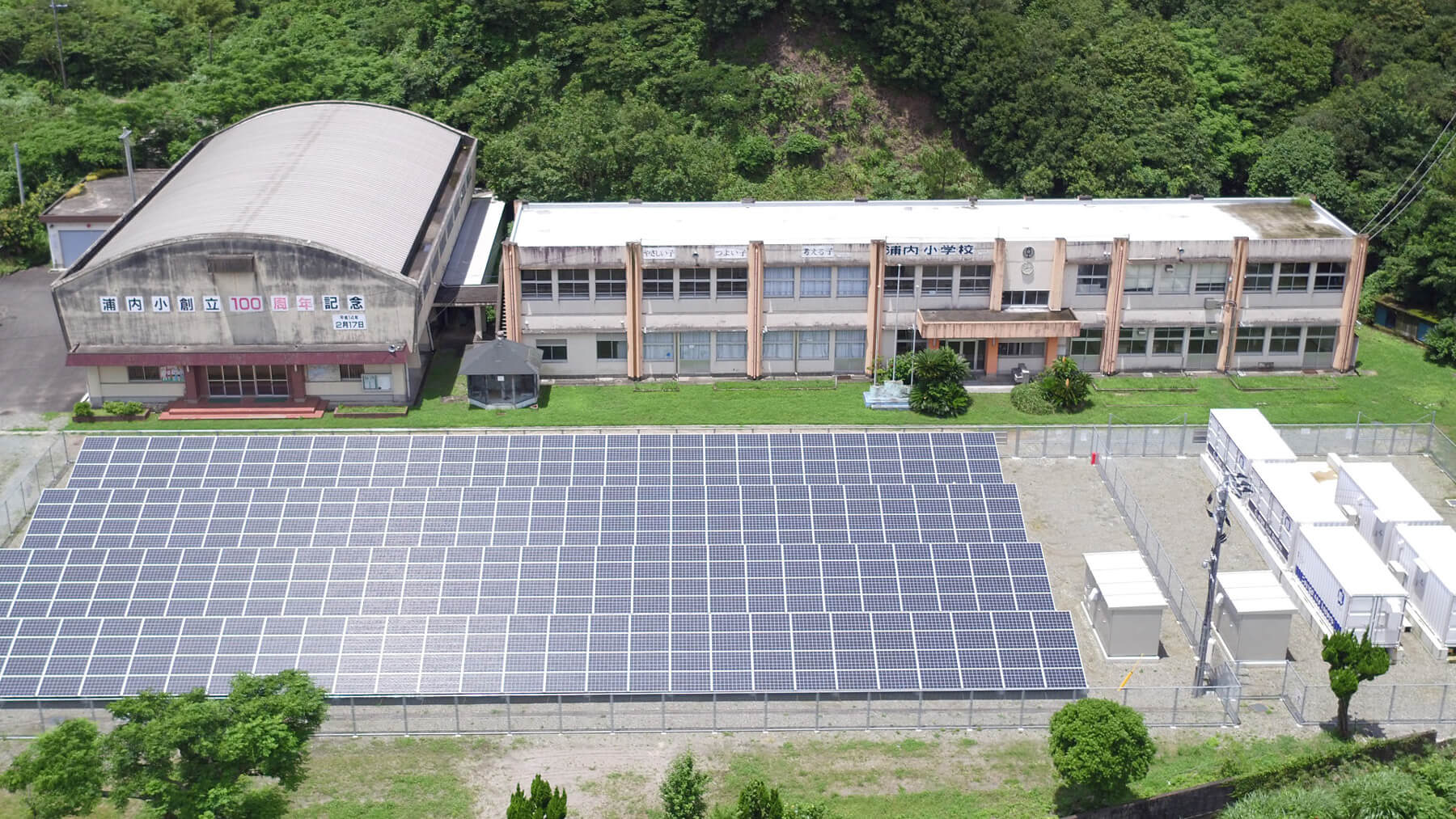
Spread and Expansion of Renewable Energy through Power Storage Business –Reused EV Battery Project on Koshiki Islands–
Business
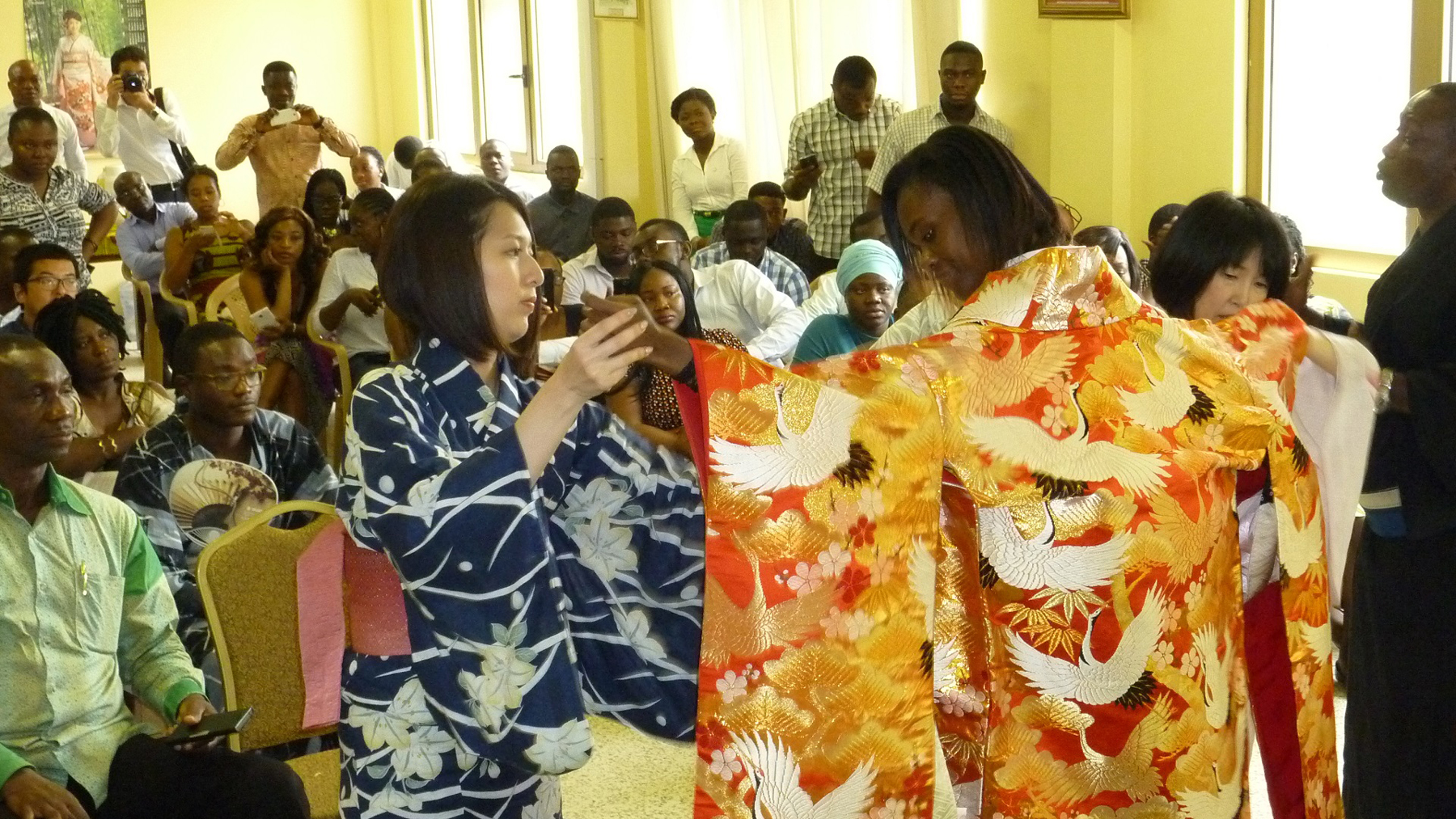
Bringing traditional Japanese culture to tropical Ghana
Business
Contributing to next-generation energy infrastructure by smart use of cutting-edge battery technology for automobiles
Business
Sustaining Indonesia’s power supply with geothermal power generation
Business
Retail electricity sales – ensuring reliable power supply –
Ranking

2026.8.13
Business
Collaboration With SCSK Is Key: Inside Sumitomo Corporation Group's DAIS (Digital & AI Strategy)
2025.4.7
Business
How Does Sumitomo Corporation Excel in Media and Digital Businesses? History and Transformation Explained
2026.2.9
Business
Using AI to Streamline Track Inspections: Sumitomo Corporation and 33 Railway Operators Take on Labor Shortages in the Rail Industry

2025.8.29
Business
Sumitomo Corporation's Soaring Commercial Aviation Business: Powered by the World's Second Largest Aircraft Leasing Operation

2024.5.20
Business
SUMMIT: Making Supermarkets in Japan More Enjoyable