- TOP
- Enriching+TOP
- Opening New Frontiers in the Evolving Carbon Credit Market Through a Full-Spectrum "Create, Connect, Use" Approach
Business
Opening New Frontiers in the Evolving Carbon Credit Market Through a Full-Spectrum "Create, Connect, Use" Approach
2026.6.18
Among the wide range of businesses that Sumitomo Corporation is developing to help realize a carbon-neutral society, the Carbon Solution Business Unit within the Energy Innovation Initiative (EII) SBU specializes in carbon credits – a mechanism that enables companies to trade greenhouse gas (GHG) emission reductions and removals. Leveraging the extensive expertise and practical insights gained in the field, the unit is involved across the carbon credit value chain, from credit generation and trading to utilization support. It is also helping shape the rules governing the market, positioning Sumitomo Corporation as a driving force in this emerging industry.
Why did Sumitomo Corporation focus on carbon credits? And how has it succeeded in building a track record in this still-developing market? We spoke with two leading figures at the forefront.
-

Energy Innovation Initiative (EII) SBU
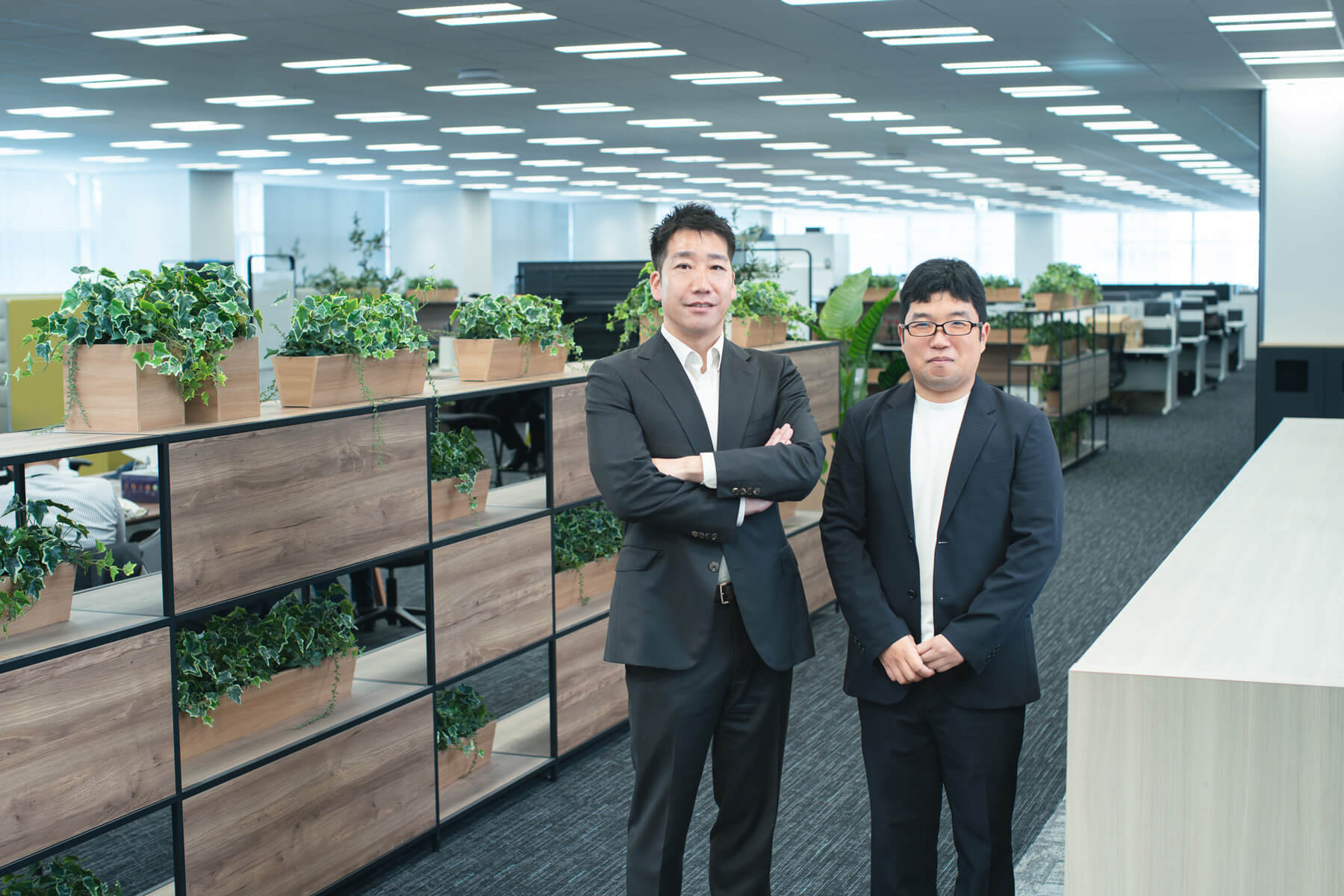
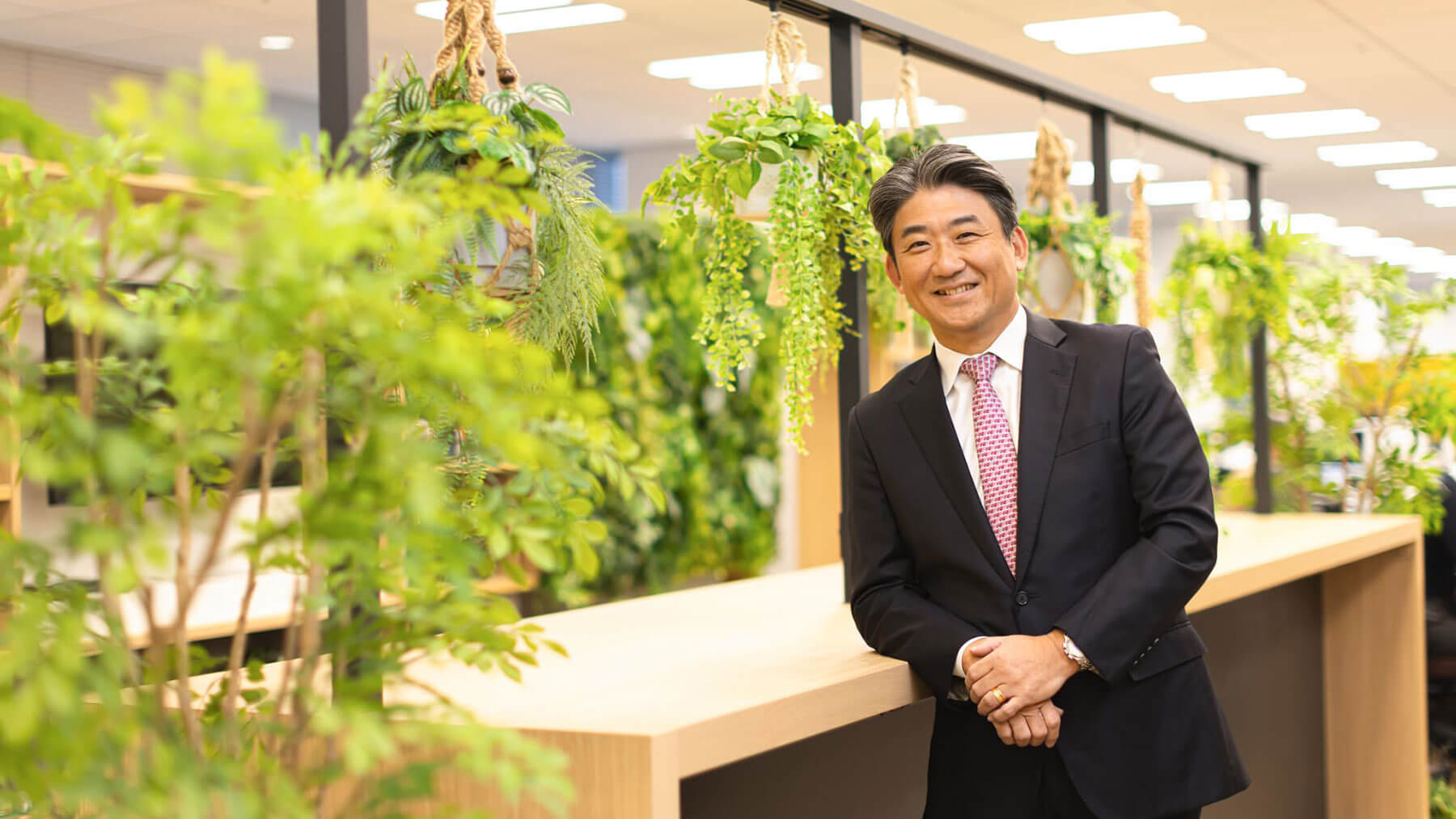
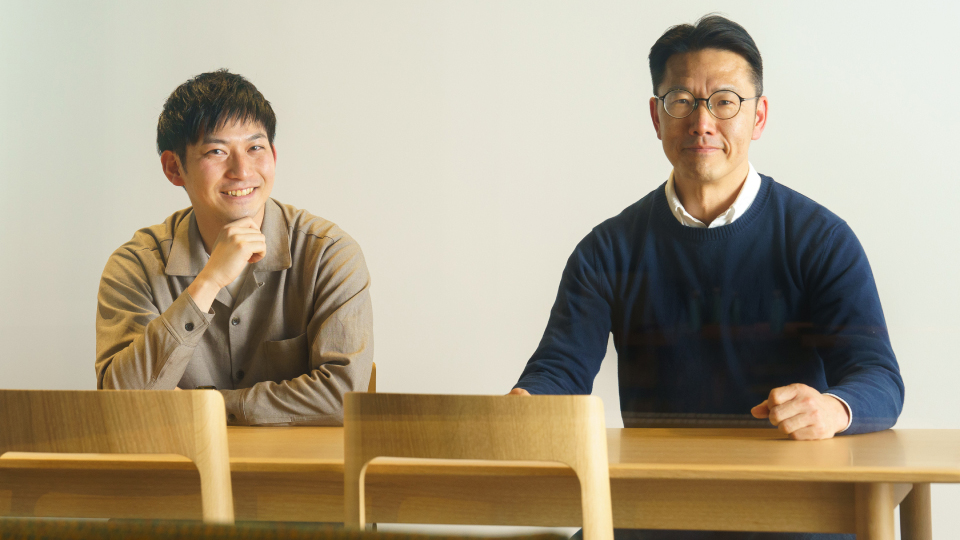
General Manager, Carbon Solution Business UnitYusuke Kinoshita
After joining Sumitomo Corporation as a new graduate, Kinoshita worked in the cement business, forestry and timber business, and risk management for investments and commercial transactions. Following the establishment of the EII in April 2021, he led the launch of Sumitomo Corporation's carbon credit business. He assumed his current position in July 2024.
-

Energy Innovation Initiative (EII) SBU
Carbon Solution Business UnitShuji Naito
Prior to joining Sumitomo Corporation, Naito worked at a private sector think tank supporting carbon credit policy initiatives led by Japan's Ministry of Economy, Trade and Industry and the Ministry of the Environment. His work included operations under the J-Credit Scheme, preparation of the Carbon Credit Report and management of expert study groups. Since joining Sumitomo Corporation in 2022, he has been engaged in the development of voluntary and JCM credits, as well as supporting carbon credit procurement primarily for Japanese companies.
Index
- Turning GHG Reductions and Removals into Tradable Value: What Are Carbon Credits?
- Launch of GX-ETS Marks a Turning Point for Japan’s Carbon Credit Market
- Sumitomo Corporation’s Voluntary Market Commitment: Do Credits Meet Our Quality Standards?
- Driving Active Trading in the Compliance Market as a Key Player
- Guided by a Greater Purpose: Delivering Carbon Credits That Create Real Value for Society
Turning GHG Reductions and Removals into Tradable Value: What Are Carbon Credits?
To begin, what exactly are carbon credits?
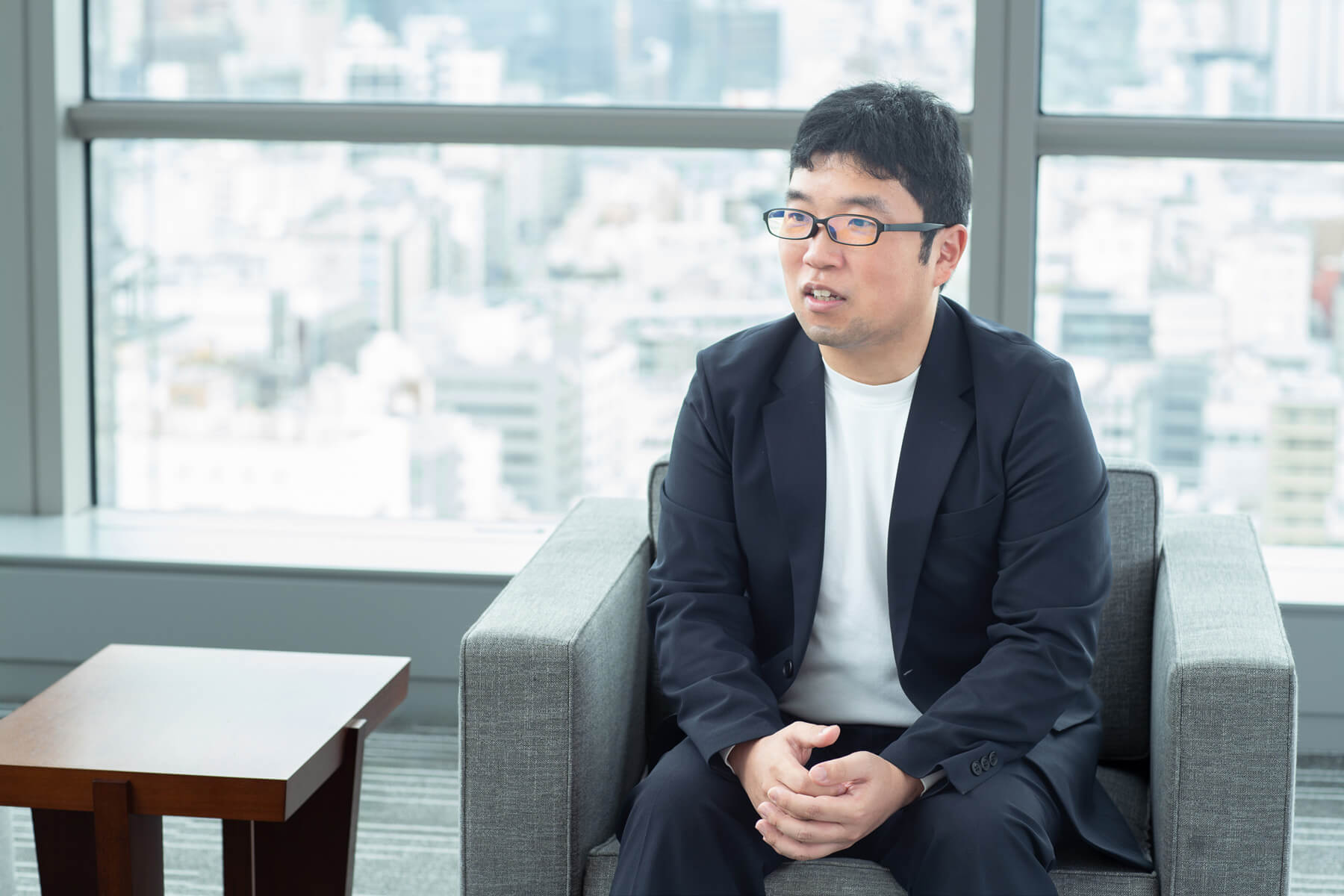
Naito Recently, countries around the world have been working together toward the goal of achieving carbon neutrality. One mechanism attracting attention as a means to this end is the carbon credit. Companies, particularly large corporations, are increasingly expected to reduce their GHG emissions. However, not all companies are able to achieve their reduction targets through their own efforts alone. Carbon credits emerged as a mechanism to address this challenge: the amount of GHG reduced or absorbed by a third party is quantified as "one credit per ton of CO2," allowing companies to trade those reductions to make up for any shortfall in their own targets. These tradable units are known as "carbon credits."
Could you briefly explain the overall structure of the carbon credit business?
Naito The carbon credit market consists of parties that "generate" credits: sellers that generate credits through initiatives such as introducing energy-efficient equipment, deploying renewable energy or implementing appropriate forest management practices, and parties that "Use" credits, namely buyers.
Between them are intermediaries that "connect" the two sides and facilitate sound transactions. Transaction prices are not fixed; they fluctuate depending on factors such as the "quality" of the credit, including how it was generated and whether stable future generation can be expected, as well as the format in which the transaction takes place.
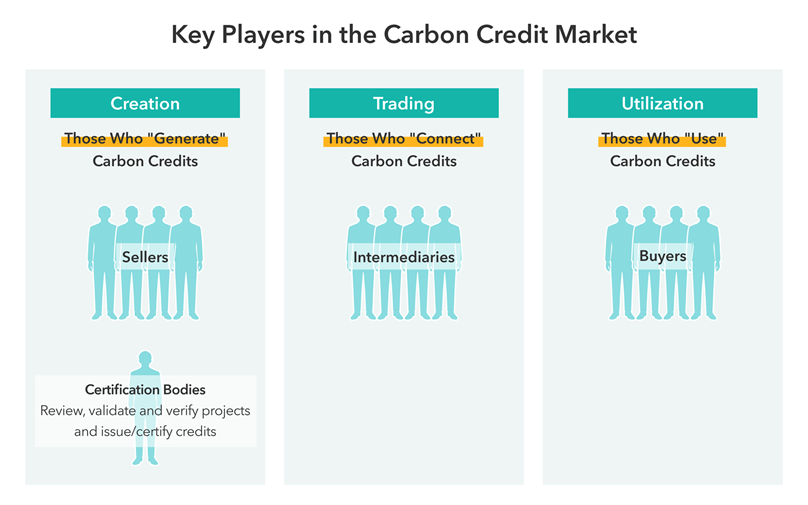
Kinoshita Carbon credit transactions can broadly be divided into two categories depending on their purpose: "voluntary" initiatives and "compliance" initiatives.
Voluntary credits are used by companies pursuing carbon neutrality on their own initiative. The primary transaction format in this space is over-the-counter (OTC) trading, in which sellers and buyers negotiate directly. Because participation is voluntary, considerable importance is placed on the quality of the credit itself and the story behind it: how the credit was generated and what kind of value it represents.
Credits used for compliance purposes, by contrast, are used to meet obligations under regulatory systems such as emissions trading schemes (GX-ETS)*1. In these cases, transactions are typically conducted through open exchanges overseen by government authorities, where buy and sell orders are matched in a transparent marketplace. Because credits used within regulatory systems must meet high standards of fairness and reliability, it's essential to have a well-structured market with clearly defined trading rules and pricing mechanisms that allow all participants to engage with confidence.
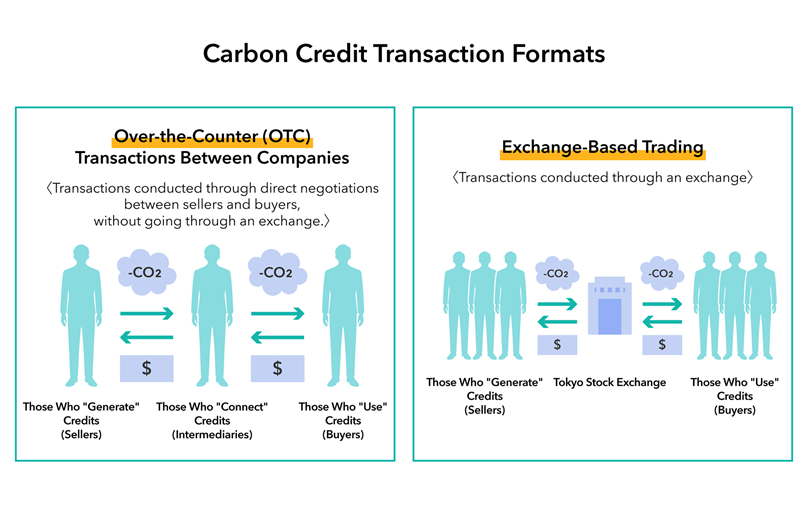
*1 A Japanese government system aimed at achieving carbon neutrality by 2050, under which businesses emitting 100,000 tons or more of CO2 annually are assigned reduction targets and subject to oversight.
Launch of GX-ETS Marks a Turning Point for Japan’s Carbon Credit Market
Why have carbon credits gained so much momentum in Japan in recent years?
Kinoshita The key reason is that the Japanese government began fully implementing GX-ETS in fiscal 2026. Under the system, companies that reduce emissions beyond their targets through their own efforts can sell surplus allowances. Conversely, companies that fail to meet their reduction targets are required to purchase allowances to cover the shortfall. While similar government-led systems have long existed in places such as the EU and South Korea, this is the first time such a framework has been rolled out nationally in Japan.
The system applies to roughly 300–400 companies, the majority of which are large corporations. Combined, these companies account for around 60% of Japan’s total emissions, meaning the system is likely to have a significant environmental and economic impact.
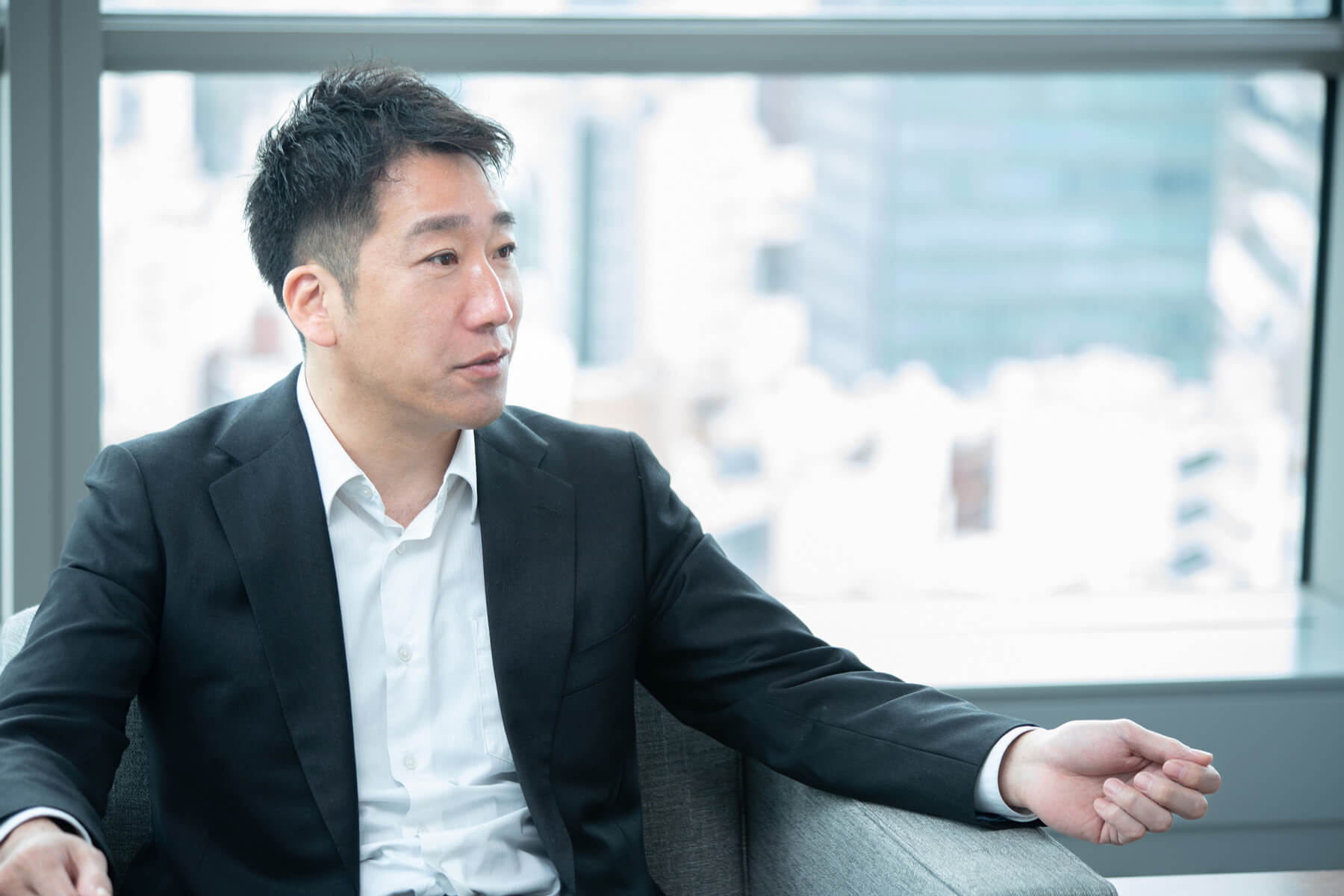
Naito Although GX-ETS is fundamentally a system for trading emission allowances, the Japanese government is also promoting mechanisms such as the J-Credit Scheme*2 and the Joint Crediting Mechanism (JCM)*3, which facilitates bilateral carbon credit transactions with overseas partners. The government also permits the use of these credits within GX-ETS, and we expect trading activity involving them to expand going forward.
*2 Japan’s government-certified carbon credit scheme, which quantifies and certifies domestic GHG emission reductions and removals achieved through measures such as the introduction of energy-efficient equipment, the use of renewable energy, and forest management.
*3 The Joint Crediting Mechanism (JCM), a bilateral framework through which Japan collaborates with partner countries to generate credits from greenhouse gas emission reductions and removals.
Sumitomo Corporation’s Voluntary Market Commitment: Do Credits Meet Our Quality Standards?
What position does Sumitomo Corporation occupy within the carbon credit industry?
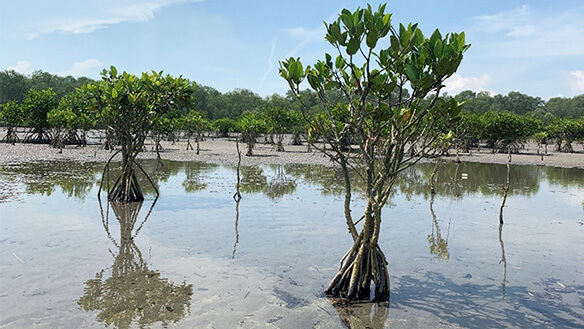
Kinoshita I would say we are involved across all aspects of the market: generating, connecting and using credits. On the generation side, we are promoting projects such as mangrove reforestation in regions including Asia and Africa to meet growing demand for voluntary credits. At the same time, we are developing JCM projects to respond to anticipated customer demand under GX-ETS, thereby contributing to the generation of carbon credits. On the connecting side, we act not only as an intermediary in OTC transactions but are also deeply involved in market-based trading, including efforts to enhance liquidity in the carbon credit market established by the Tokyo Stock Exchange in 2023. On the utilization side, we support dozens of major companies in their use of carbon credits.
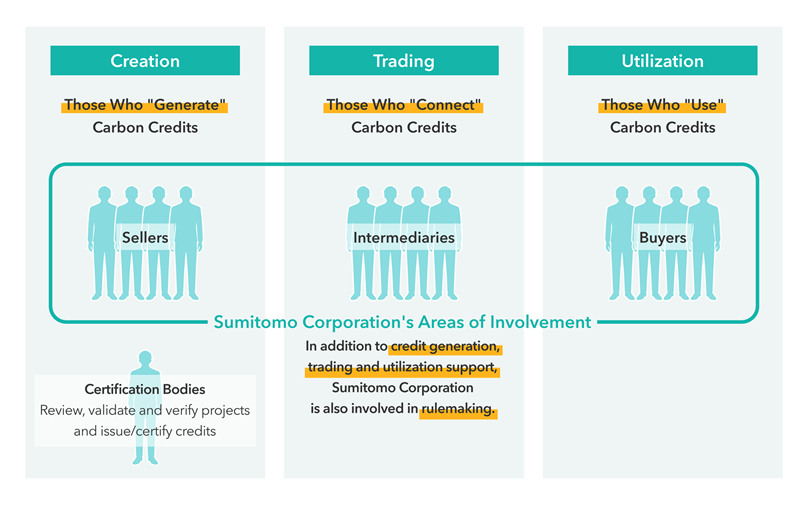
More specifically, what role does Sumitomo Corporation play in OTC (voluntary) transactions?
Kinoshita Our aim is to become a top-tier provider of high-quality, nature-based voluntary credits. There are clear differences in the quality of carbon credits, and those differences have a major impact on pricing and demand.
Where and how was the credit generated? How were the resulting reductions or removals measured and quantified? What additional value does the project generate? In a market where some credits lack transparency and the validity of their figures can't always be verified, credits that can be explained clearly and in detail are regarded as high quality. For example, projects that increase forest cover and thereby promote local biodiversity, or create employment through reforestation and forest management activities, are considered to offer significant co-benefits and therefore tend to command higher prices.
Sumitomo Corporation maintains a firm stance: we establish our own quality standards and do not handle credits that fail to meet them. We focus on credits that can be thoroughly explained and understood from multiple perspectives. We believe the trust we have earned in this emerging market stems from our deep understanding of carbon credits gained through direct involvement at project sites, as well as from the careful dialogue we maintain with both buyers and sellers. This includes supporting projects developed by other companies from the conceptual stage onward, and we take pride in that fact.

Driving Active Trading in the Compliance Market as a Key Player
Turning next to market-based (compliance) trading, what role does Sumitomo Corporation play in this area?
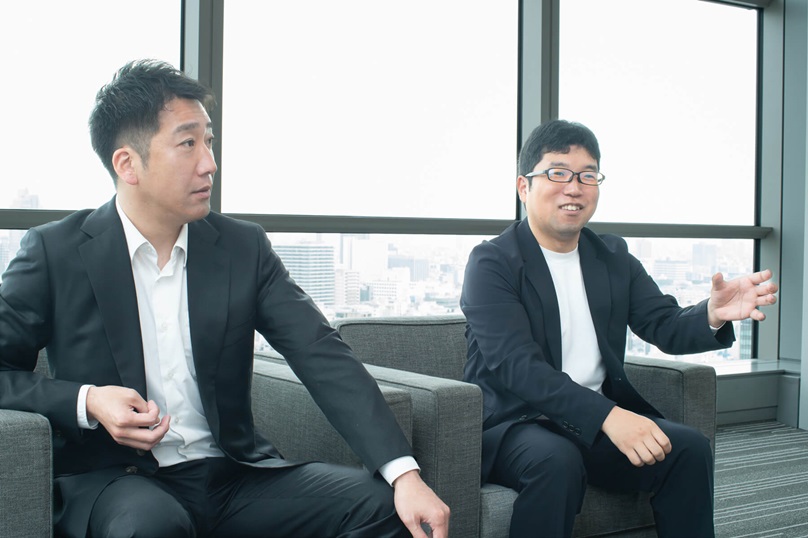
Kinoshita In Japan’s still-developing carbon credit market, we are focused on improving liquidity as a player helping the market itself take shape. High liquidity essentially means an active market. To achieve carbon neutrality, it's important that both sellers and buyers actively participate in the market and create an environment where trading flourishes.
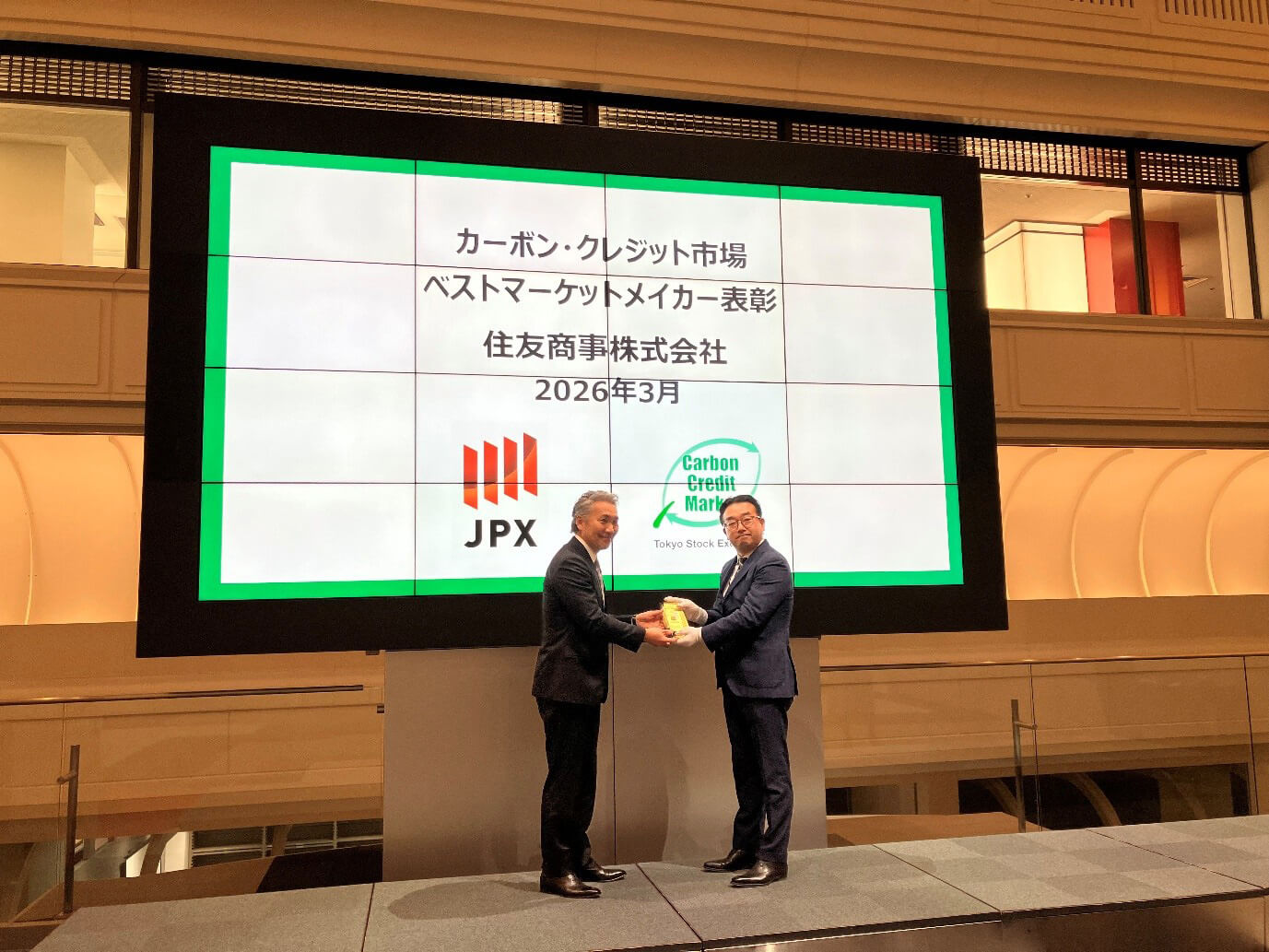
Since the launch of the carbon credit market by the Tokyo Stock Exchange (TSE), Sumitomo Corporation has engaged in both buying and selling activities to help create an environment where market participants can trade with confidence. In recognition of these efforts, we have been named a "Best Market Maker"*4 for three consecutive years, an award given to participants that achieve all performance targets established by the TSE.
Looking ahead, our goal is to become one of the leading suppliers of credits within GX-ETS as well. As an integrated trading and business investment company, Sumitomo Corporation's core business has always been to understand both the demand and supply sides of every industry and connect the two. We see that same role applying in this new market, and we intend to further strengthen our presence as an intermediary.
*4 The market maker system is a mechanism used in financial markets whereby certified market makers continuously quote bid and ask prices, including transaction volumes, to ensure market liquidity and facilitate smooth trading.
Guided by a Greater Purpose: Delivering Carbon Credits That Create Real Value for Society
As Japan's carbon credit market develops, what kind of social and economic impact do you expect it to have?
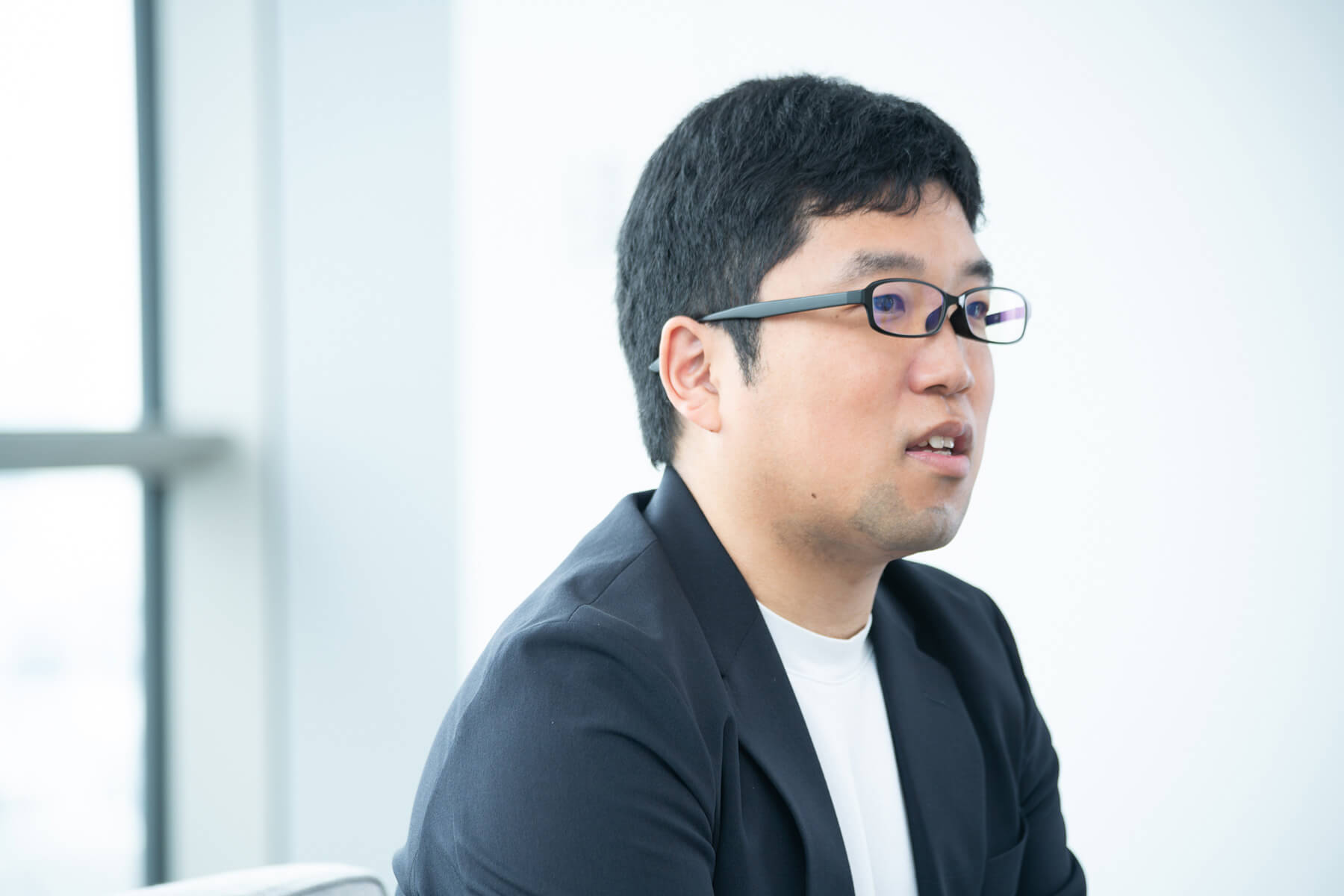
Naito Until now, many technologies and projects that contribute to reducing GHG emissions were recognized as "good for society," but failed to achieve commercialization, and thus were not directly linked to corporate growth or broader economic activity. However, the emerging market has made it possible to monetize these efforts more effectively, creating opportunities to accelerate the development of new technologies and businesses that previously struggled to gain traction.
Kinoshita At the same time, despite the rapid increase in attention over the past few years, the reality is that many companies still have not reached full market participation. Carbon credits are also a mechanism that requires a strong ethical foundation. For example, if it becomes easier and cheaper for a company to purchase credits from a third party than to invest in reducing its own GHG emissions, many companies will naturally choose the former. After all, carbon credits are essentially a system that assigns value to quantified reductions and removals. That means there is always the potential for fraudulent or questionable practices to emerge. When we established this dedicated organization, we discussed these concerns thoroughly. We launched this business guided by a strong conviction that carbon credits must unquestionably contribute to carbon neutrality and carry genuine significance for society.
This is precisely why we don’t see our role as merely brokering transactions between buyers and sellers. Instead, we place importance on ongoing dialogue by asking, "What is the ultimate purpose behind these efforts?" and "Given current social and global circumstances, what should be prioritized today?" By engaging each customer in these conversations and helping them understand the true significance of carbon credits, we hope to foster a society where carbon neutrality is viewed not as something to be endured or simply treated as a cost, but as a positive investment. Guided by this greater purpose, we will continue working to develop Japan’s carbon credit market.
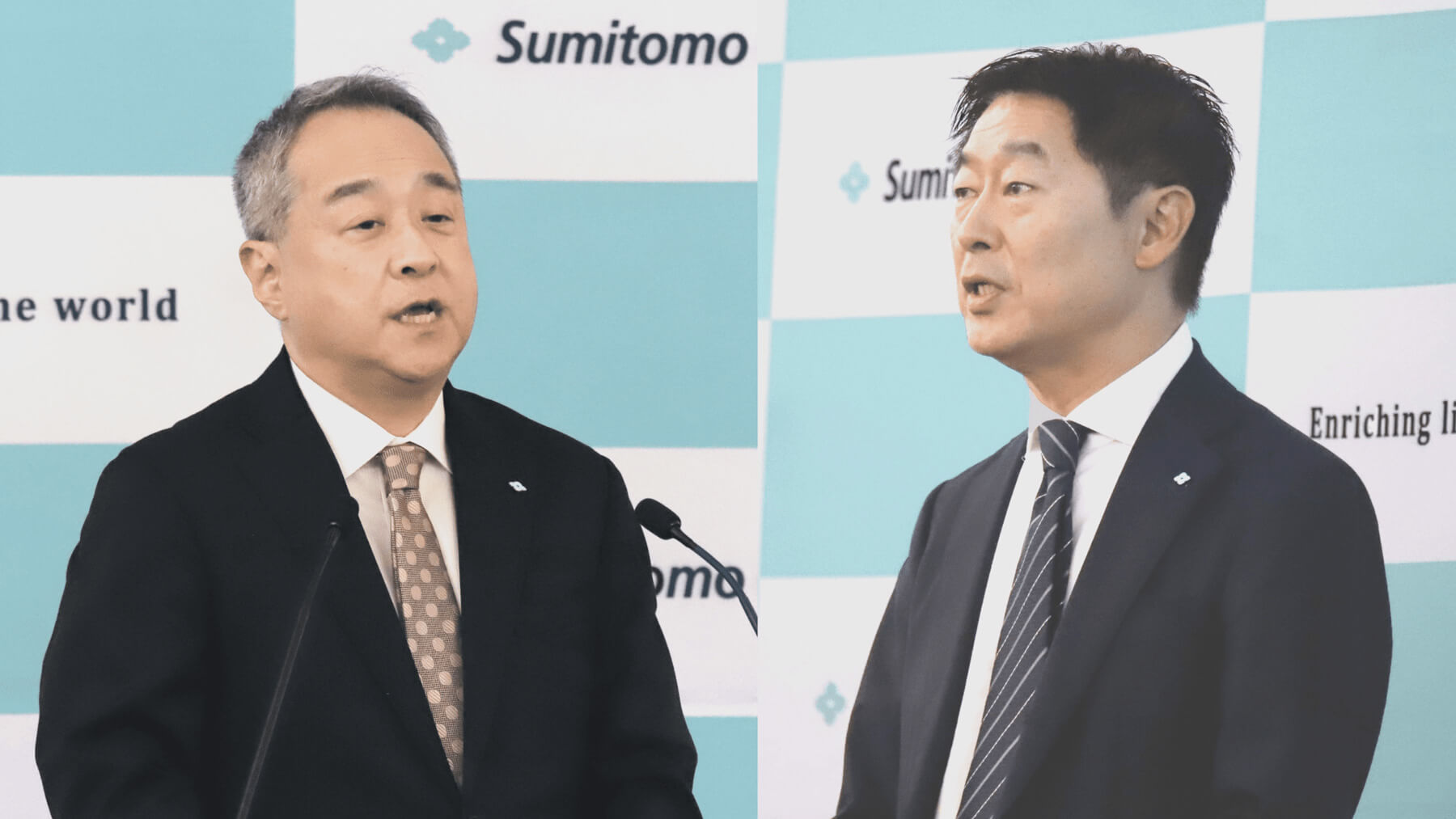
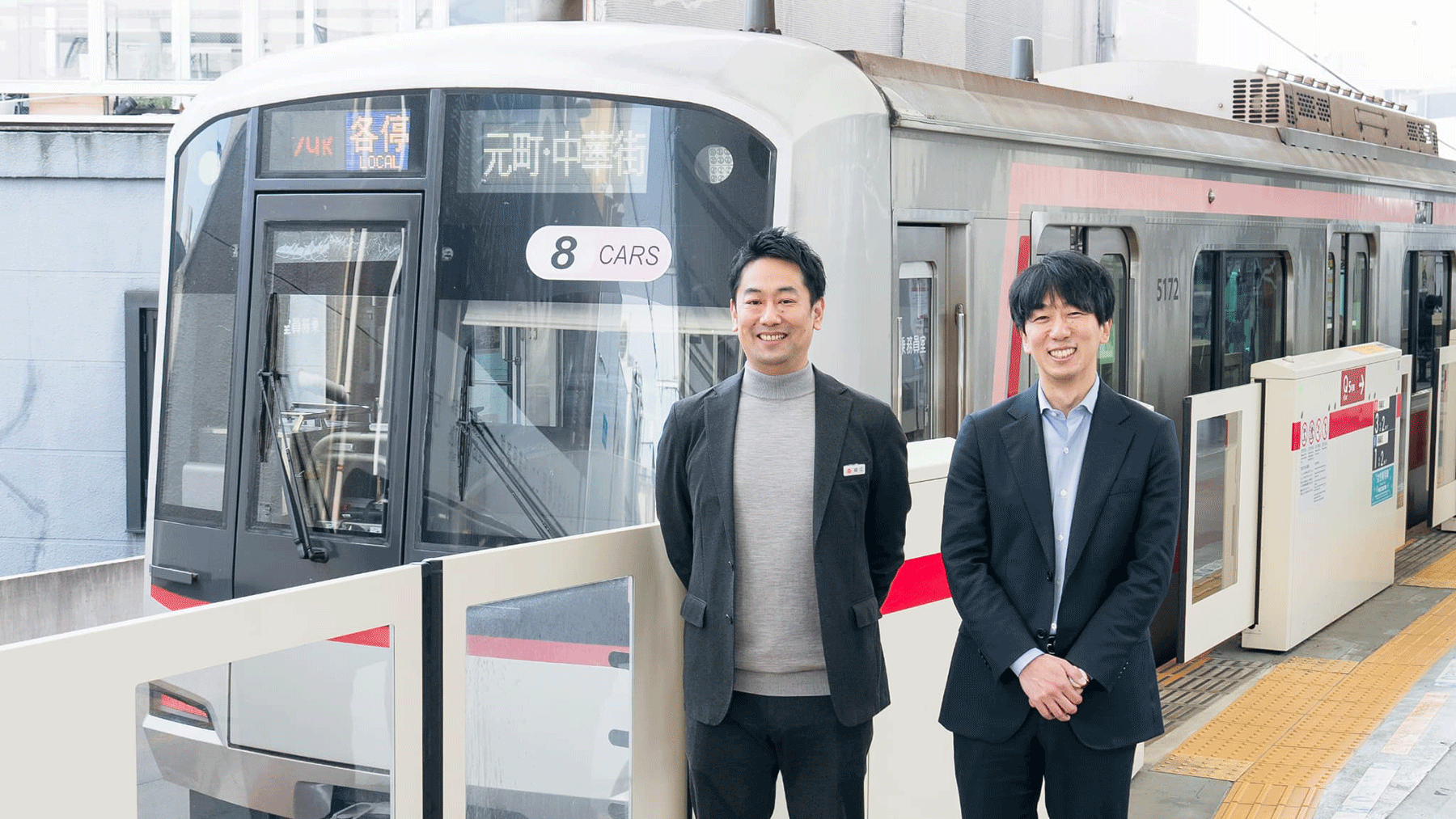
"In the difficult environment surrounding the formative and early developmental stages of Japan's emissions trading systems and policies, we are deeply grateful for Sumitomo Corporation's proactive participation in market-making activities. Sumitomo Corporation has a highly specialized team with extensive knowledge of the market, a deep understanding of domestic and international systems and market trends, and a broad customer network. We expect to continue working closely with Sumitomo Corporation as an invaluable partner in the future development of the market."
Takumi Matsuo, Tokyo Stock Exchange, Inc., Head of Carbon Credit Market Development Office (right in the photo)
Recommend
Business
Toward a Carbon-Neutral Future: Sumitomo Corporation’s Company-Wide, Cross-Organizational Drive to Create New Businesses

Business
Pursuing the Dream of Fusion Power: Sumitomo Corporation's Strategy for Moving from Fusion-Derived Businesses to Real-World Deployment
Business
Transforming Society through Renewable Energy: Introducing Sumitomo Corporation's Diversified Energy Business
Business
Flying Planes and Growing Forests: A Joint Challenge by Sumitomo Corporation, Nippon Paper Industries and JAL to Produce Domestic SAF from Tohoku
+ (Plus)
Renewable Energy as the Cornerstone of Fukushima's Recovery: What the Abukuma Wind Power Project Brings to the Local Community
Business
Sumitomo Corporation's Commitment to Japan's Largest Onshore Wind Power Project: Continued Reconstruction in the Abukuma Area, Fukushima Prefecture

Business
Tackling offshore wind challenges! Behind the Scenes with a Newcomer from Sumitomo Corporation on Assignment in Saikai, Nagasaki
Business
Transforming Energy Storage Into Core Infrastructure: New Storage Battery Challenges for Sumitomo Corporation in Hokkaido
Business
Tackling Power Shortages with Rechargeable Batteries: Sumitomo Corporation Wiring the Future of Energy on the Koshiki Islands
Business
【Super-Sized Infographic】What's One Key Solution to Climate Change? Utility-Scale Energy Storage Spreading Worldwide

Culture
Sustainable Choices for Lunch and Work – A Sumitomo Deutschland GMBH Employee’s Quest To Promote Renewable Energy in Europe
Business
We’ve talked enough. It’s time for action. But how?―Sumitomo Corporation’s true commitment to decarbonization
Business
Geothermal Power Generation in Indonesia! Sumitomo Corporation’s Vision for a Sustainable Future
Business
Bringing green power to all of Japan. What is the new electricity business to realize decarbonization?

Business
“Storing up” as a business: striving to commercialize reusing EV batteries as energy storageon a remote island off Kyushu

Business
Bringing traditional Japanese culture to tropical Ghana
Business
Contributing to next-generation energy infrastructure by smart use of cutting-edge battery technology for automobiles
Business
Spread and Expansion of Renewable Energy through Power Storage Business –Reused EV Battery Project on Koshiki Islands–
Business
Sustaining Indonesia’s power supply with geothermal power generation

Business
Providing the global market with sustainable wood resources
Ranking

2026.8.13
Business
Collaboration With SCSK Is Key: Inside Sumitomo Corporation Group's DAIS (Digital & AI Strategy)
2025.4.7
Business
How Does Sumitomo Corporation Excel in Media and Digital Businesses? History and Transformation Explained
2026.2.9
Business
Using AI to Streamline Track Inspections: Sumitomo Corporation and 33 Railway Operators Take on Labor Shortages in the Rail Industry

2025.8.29
Business
Sumitomo Corporation's Soaring Commercial Aviation Business: Powered by the World's Second Largest Aircraft Leasing Operation

2024.5.20
Business
SUMMIT: Making Supermarkets in Japan More Enjoyable