- TOP
- Enriching+TOP
- Aiming to Be No.1 in Each Field in the Age of AI
Culture
Aiming to Be No.1 in Each Field in the Age of AI
2026.9.1
*This article is republished with permission from the interview series "Revitalizing Japan" originally published on NewsPicks.
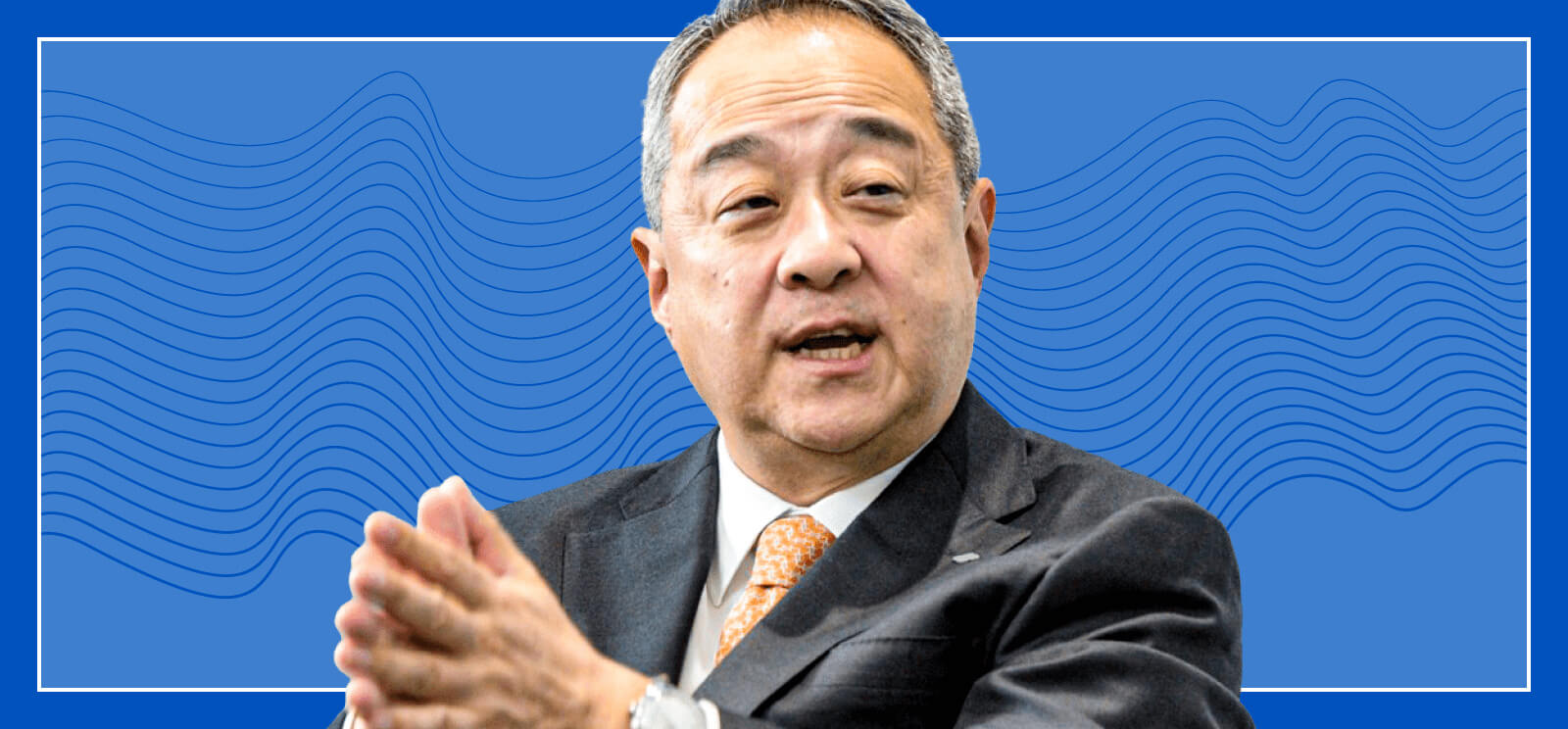
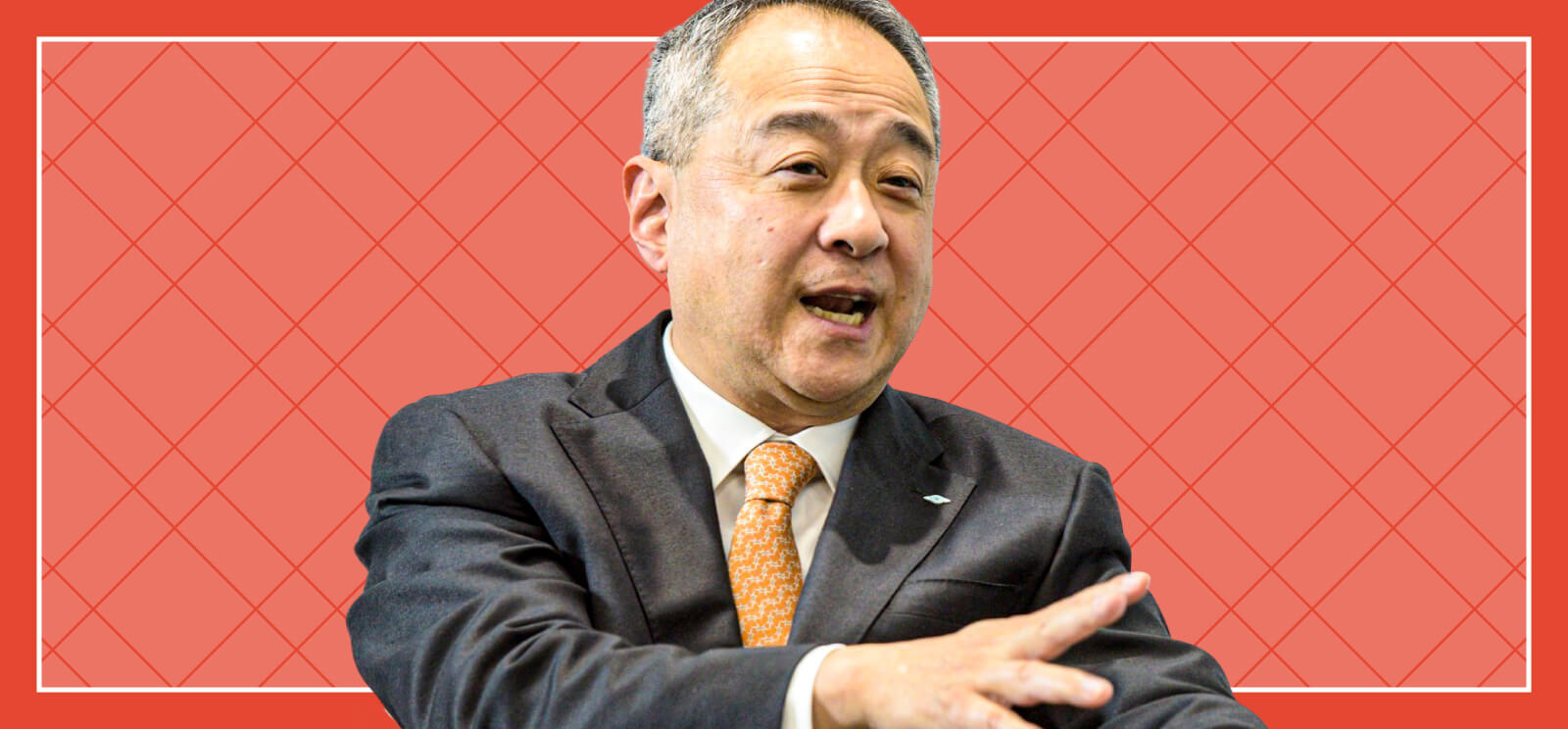
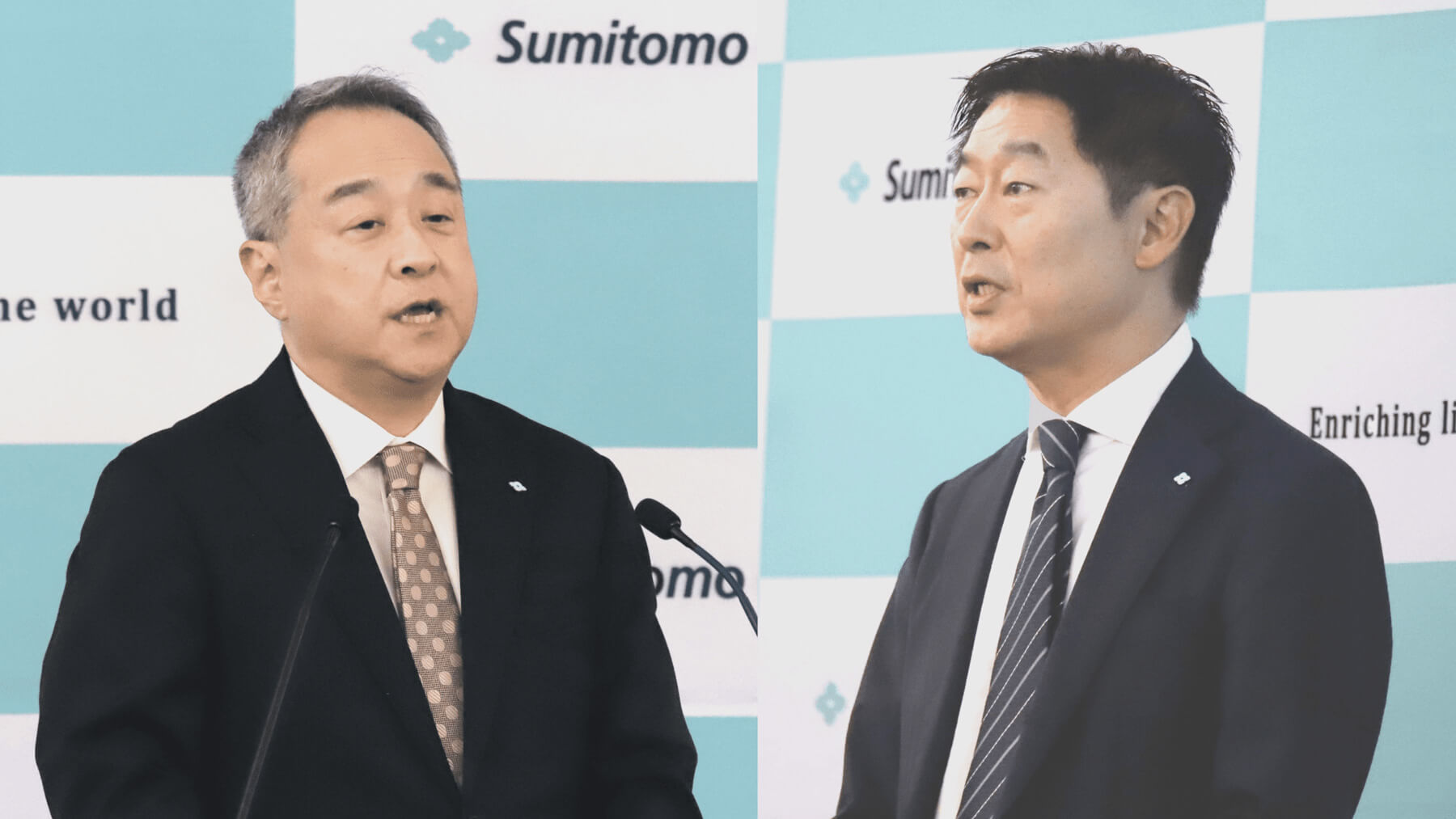
The series "Reimagining Japan" features Shigeru Sekinada, Chairman of the Japan office of global strategy consulting firm Kearney and former Asia Pacific Chairman, speaking with leading executives to discuss their vision for the future and the strategic perspectives required to shape it. Today he sat down with Shingo Ueno, President and CEO of integrated trading and business investment company Sumitomo Corporation.
When Ueno assumed office in April 2024, Sumitomo Corporation simultaneously launched its Medium-Term Management Plan 2026. At the heart of the plan is a bold message: "No.1 in Each Field." Each of the Company's 41 Strategic Business Units (SBUs) is expected to define what "being No.1" means for its own business and define a clear roadmap to achieving it. What is the strategic thinking behind the eight priority growth areas that will receive a total of ¥1.8 trillion in investment? And what lies at the heart of the Company's digital and AI strategy, reflected in its ¥880 billion acquisition of SCSK – the largest investment in Sumitomo Corporation's history?
This interview was conducted in December 2025. (Part 1 of 2) Read Part Two here:
-
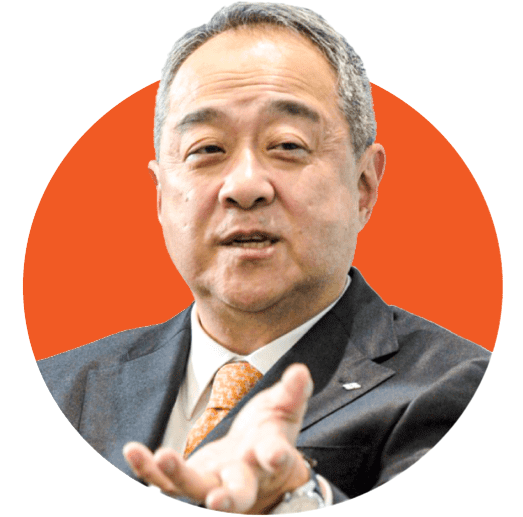
Representative Director, President and Chief Executive Officer,
Sumitomo CorporationShingo Ueno
Ueno was born in Hyogo Prefecture, Japan, in 1959. After graduating from Rokko Senior High School and Keio University's Faculty of Business and Commerce, he joined Sumitomo Corporation in 1982. Since then, he has spent much of his career in the steel pipe business, including oil country tubular goods and line pipe, with overseas assignments in Iran, Europe and the Americas. He was appointed Executive Officer in 2013 and subsequently served in senior executive positions, including Managing Executive Officer, Senior Managing Executive Officer and Executive Vice President. In April 2024, he was appointed Representative Director, President and Chief Executive Officer, marking Sumitomo Corporation's first change of president in six years. He is 66 years old.
Why Focusing on "No.1" Matters
You became President and CEO in April 2024, and the following month announced the Medium-Term Management Plan 2026 (FY2024–2026). As the new leader of Sumitomo Corporation, what was your perspective on the Company?
The current Medium-Term Management Plan began at exactly the same time as I assumed the role of President. During the previous three-year plan (FY2021–2023), we carried out extensive structural reforms. As a result, I believe we significantly strengthened the resilience of our business portfolio. Having completed that phase, I felt Sumitomo Corporation had reached the point where it was time to set our sights on a new stage of growth.
One phrase that stood out in the current Medium-Term Management Plan was "No.1 in Each Field." What did you hope to convey by placing such emphasis on being "No.1"?
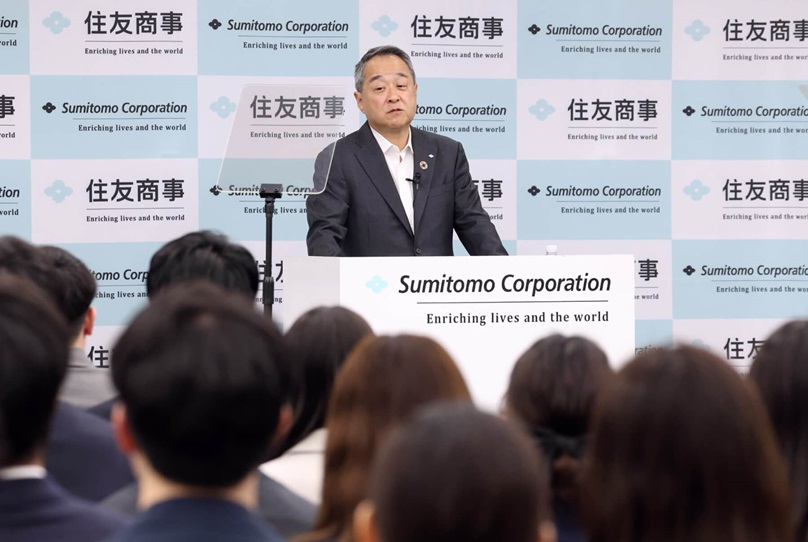
More than anything else, I believed Sumitomo Corporation needed a fundamental shift in the mindset of every employee. That's why we chose "No.1 in Each Field" as the plan's central message. The phrase reflects our commitment as management to ensuring that every business defines its own competitive advantage while pursuing both capital efficiency and growth. At the same time, the concept of becoming “No.1 in Each Field” is intended to foster the conviction that every business has the potential to become a leader in its respective field. The objective is not for Sumitomo Corporation as a whole to become No.1, but for each business to identify where it can lead and how it could achieve that position. Achieving that requires more than ambition alone. To make that possible, it was essential that the people closest to the business shape the strategy themselves, translate it into measurable KPIs, and drive execution.
Forty-One Businesses, Forty-One Paths to No.1
How did you communicate that message throughout the organization?
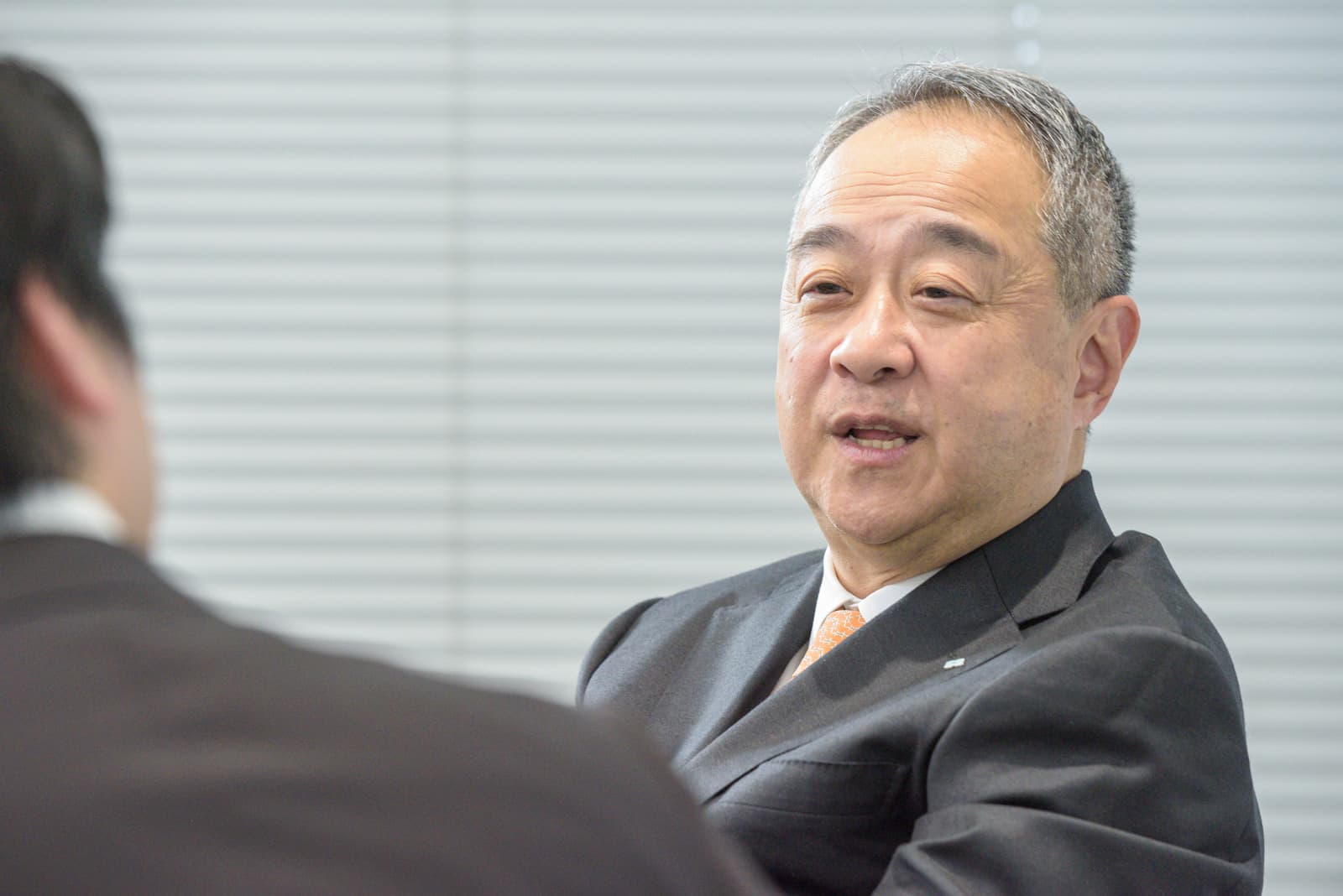
We began with a shared understanding that every business should aspire to become No.1 in its own field. We then asked each Strategic Business Unit to consider what "being No.1" meant for its business. Some responded by saying, "There are already dominant players in our industry. Given our current position, becoming No.1 is out of reach."
My response was always the same: "What exactly do you mean by No.1?" Are you referring to profits, revenue, sales volume, growth potential, return on equity (ROE), return on invested capital (ROIC), or risk assets (RA)? In many cases, people had concluded that becoming No.1 was impossible without ever clearly defining what they meant for their business. I encouraged them to think differently. Leadership does not necessarily require competing in the largest market. Even in a niche segment, there should be an area where only Sumitomo Corporation can deliver a unique value.
Over the following six months, discussions took place across the Company, and the question "What kind of No.1 should we become?" gradually became a shared theme. As a result, each business line identified its own definition of No.1.
The Strategic Focus of a ¥1.8 Trillion Investment
Once each business had defined its own version of No.1, how did you translate that into execution?
The first step was to have every business clearly articulate what kind of No.1 it was aiming to become. We then identified the approach needed to achieve that goal before establishing both Key Performance Indicators (KPIs) and Key Action Indicators (KAIs). The objective was to ensure that becoming No.1 remained more than an aspiration. By defining both strategy and measurable indicators, we turned the concept into a clear execution plan.
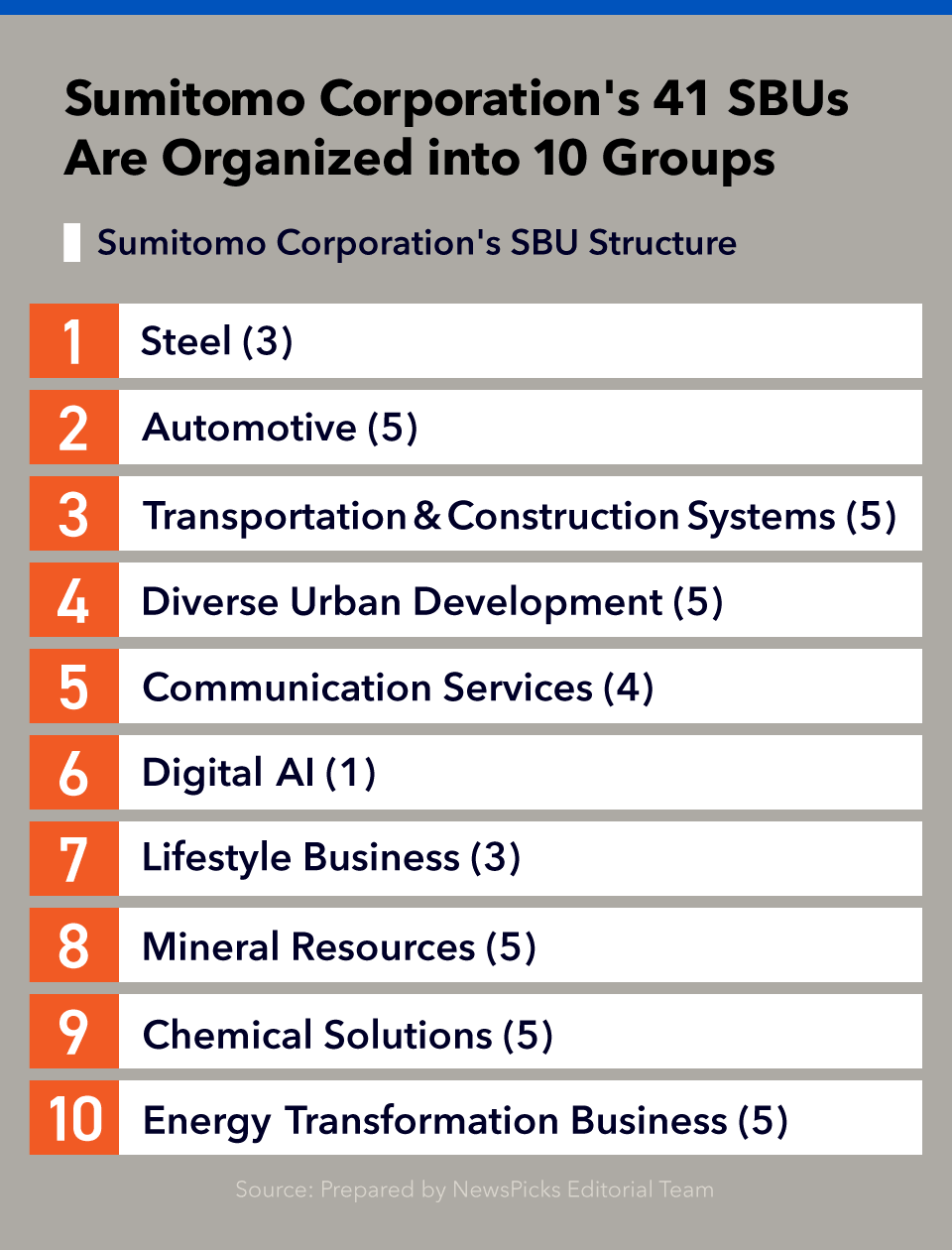
Sumitomo Corporation currently has 41 Strategic Business Units. Each is free to pursue a different definition of No.1 on its own timeline. Some goals may be achieved within three years; others may take 10. If every business succeeds in achieving the No.1 position it has defined for itself, the Company's overall competitiveness will be significantly strengthened. That collective ambition is what we mean by becoming "No.1 in Each Field."
*Editorial note: As part of its organizational restructuring in April 2024, Sumitomo Corporation replaced its previous divisional structure with a Strategic Business Unit (SBU) model designed to enable faster decision-making and greater managerial autonomy. As of May 2026, the Company comprises 41 SBUs.
The Medium-Term Management Plan identifies "growth leveraged by strengths" as its guiding principle and describes eight priority business areas as being "at the heart" of the Company's strategy. Why were these eight sectors – agriculture, construction systems, leasing, energy solutions, steel, digital, healthcare and real estate – selected?
The central theme of the Medium-Term Management Plan is "growth leveraged by strengths." Rather than spreading resources across areas where we lack a competitive advantage, we made a deliberate decision to concentrate management resources on business where we already possess – or have the potential to develop – a clear competitive edge.
The planned investment of ¥1.8 trillion is a concrete expression of that strategy. We identified eight priority growth areas – agriculture, construction systems, leasing, energy solutions, steel, digital, healthcare and real estate – as the primary destinations for capital investment. Each of these businesses has an established track record and the capability to adapt flexibly as market conditions change. By investing further in these areas, we intend to expand our competitive advantages. We also expect to deliver growth through inorganic opportunities, including acquisitions.
Other business areas, meanwhile, will continue to pursue organic growth by building on their existing capital base and driving autonomous improvements.
Chasing the Global Leader in Aircraft Leasing
In September 2025, Sumitomo Corporation announced its acquisition of major U.S. aircraft leader Air Lease Corporation, a transaction completed in April 2026. What do you see in the future regarding that acquisition?
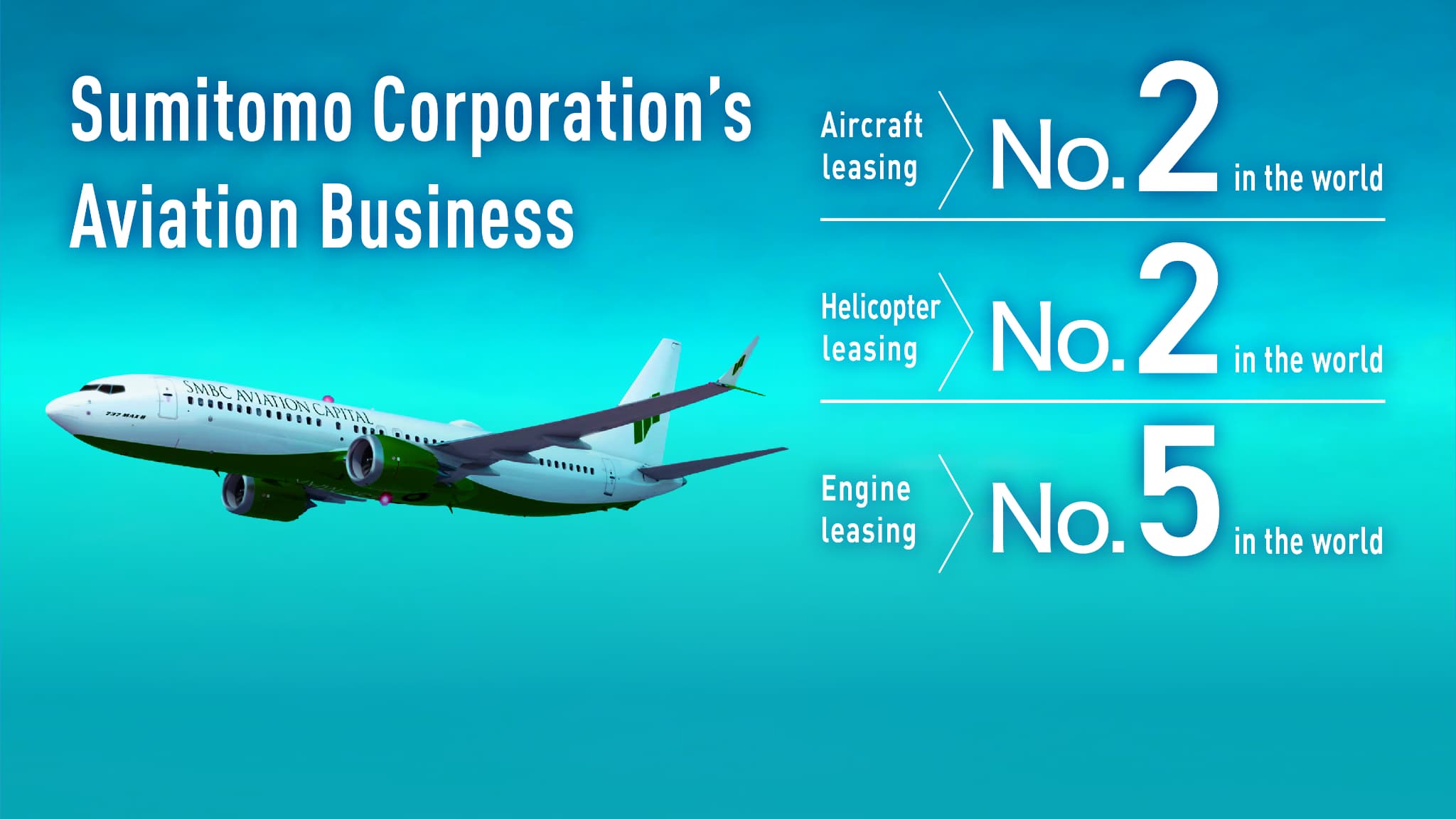
Leasing is one of our eight priority growth areas, and within that portfolio, aircraft leasing sits right at the heart of our strategy. Our investment in Air Lease Corporation was made as part of our broader pursuit of becoming "No.1 in Each Field."
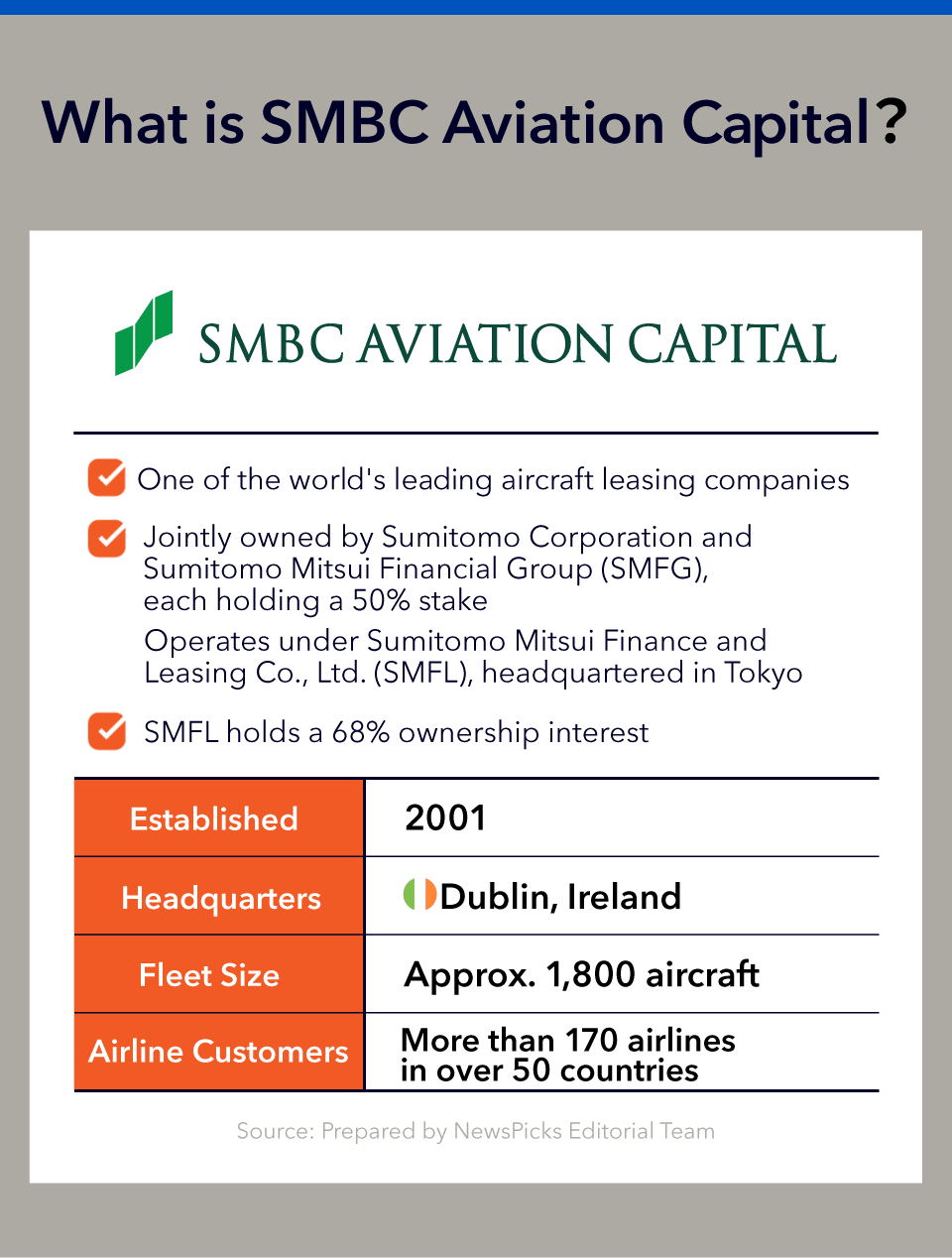
We also operate in aircraft leasing through our partnership with SMBC Aviation Capital. Combined with Sumitomo Corporation's own portfolio, we now own and manage approximately 1,800 aircraft. This scale positions us among the global leaders in aircraft leasing, alongside industry leaders such as AerCap. This is one example of our efforts to build a truly No.1 business.
Commercial aircraft manufacturing is effectively dominated by two companies: Airbus in Europe and Boeing in the United States. Both have backlogs extending several years into the future, leaving little available production capacity. One of the key objectives of this acquisition, therefore, was to gain immediate access not only to Air Lease Corporation's owned and managed aircraft portfolio, but also to its substantial order backlog. At a time when demand for air travel continues to surge and aircraft remain in short supply, securing a stable pipeline of aircraft places us in a much stronger competitive position. For that reason, I believe this was an extremely important strategic investment.
Bringing SCSK Fully into the Group Through an ¥880 Billion Investment
In October 2025, Sumitomo Corporation announced that it would acquire full ownership of leading systems integrator SCSK for approximately ¥882 billion. SCSK itself was created in 2011 through the merger of a Sumitomo Corporation IT subsidiary and CSK. Looking back, what were the objectives behind making SCSK a wholly owned subsidiary?
Our commitment to digital transformation has always been unequivocal. We launched a tender offer for SCSK valued at approximately ¥880 billion, which was successfully completed in December 2025. This was the largest single investment in Sumitomo Corporation's history. It meant that, in the same year, we undertook the two largest investments the company has ever made. Sumitomo Corporation already owned 50.6% of SCSK, a company that had achieved record earnings for 13 consecutive years. The question we continually asked ourselves was how we could accelerate its growth even further.
Meanwhile, advances in digital technologies and AI have been gathering pace. Generative AI, evolving almost daily, is rapidly transforming not only everyday life but also the way business itself is conducted. Watching these developments, I realized that the greatest risk facing Sumitomo Corporation was no longer embracing AI, but failing to use it at all.
Regardless of whether we made SCSK a wholly owned subsidiary, the direction we wanted to pursue as a group in digital and AI was already very clear. SCSK had already been making moves in this regard. In March 2025, it acquired leading network infrastructure provider Net One Systems through a tender offer worth approximately ¥360 billion (the two companies are scheduled to merge in April 2027). That acquisition expanded SCSK beyond systems integration into network integration and security services.
Our decision to acquire full ownership stemmed from our desire to accelerate SCSK's growth while providing our full support for its long-term growth strategy. SCSK shared that vision, which is why the transaction moved forward. If the opportunity to combine our respective strengths presents itself, we must embrace it. And wherever SCSK has the potential for dramatic growth, my view is simple: I want to see it happen.
What Will Be the Greatest Asset in the AI Era?
You have spoken about accelerating growth through your digital and AI strategy. In practical terms, what does that involve?
For example, we are sometimes briefed by major electronics manufacturers within the Sumitomo Corporation Group on advances in AI development technologies. The technologies themselves are undoubtedly impressive. Yet we also hear that they face a common challenge: they lack opportunities to test and validate those technologies in real operating environments.
Sumitomo Corporation, on the other hand, has approximately 900 operating companies and around 100,000 customers and business partners. That means we have an extraordinary number of real-world settings where digital technologies and AI can be applied. The same is true for SCSK. Expertise only becomes valuable when it can be applied in real business operations, and we have those operating environments. This is why I've said I want them to make full use of our businesses.
Our businesses are full of opportunities for growth and transformation. The important thing is to develop these opportunities together. That is the central idea behind our digital and AI strategy. The industry itself is not what matters. This isn't a question of saying, "We're in the steel business, so digital doesn't concern us." Every business line has reached the point where it must embrace transformation. AI-driven transformation cuts across every business. Even in the steel pipe business – where I spent much of my career – the industry is rapidly moving towards AI to manage global inventories, optimize their utilization and respond more effectively to customer demand.
What other initiatives are underway?
In the retail sector, for example, AI-driven dynamic pricing is already becoming standard practice. At Summit, the supermarket chain wholly owned by Sumitomo Corporation, AI analyzes sales patterns – particularly for ready-to-eat deli foods – to determine which products should be stocked at different times of day and when discounts should be applied to maximize sales.
In addition, in October 2025 we integrated the customer membership programs used by Summit and Tomod's, our wholly owned drugstore and pharmacy chain. By combining the purchasing data of the two companies, we significantly expanded the volume of customer data available to us. That gives us a much clearer understanding of individual customers and opens up the possibility of using AI to make recommendations tailored to each person's health profile and preferences. Ultimately, we'll be able to offer products and services much more closely aligned with each customer's purchasing behavior and lifestyle.
I believe SCSK can help us to accelerate initiatives like these. At the same time, SCSK should continue serving its own clients. In fact, around 85% of its revenue comes from customers outside the Sumitomo Corporation Group, while only around 15% comes from within. Even within that remaining 15%, however, if people generate new ideas and put them into practice, I think we'll see some exciting new developments. Through this acquisition, we expect not only to bring in valuable insights and expertise, but also accelerate the creation of new applications. It is precisely these applications, born out of real business operations, that I believe have the potential to become our next engines of growth.
Interview by: Shigeru Sekinada (Kearney)
Text and Editing by: Ken Taniguchi and Kotaro Yamazaki
Design by: Yurie Iwaki
Photos by: Ryu Sasaki
Recommend
Business
Collaboration With SCSK Is Key: Inside Sumitomo Corporation Group's DAIS (Digital & AI Strategy)

Business
WORLD BIZ+ ―Exploring the Reality of the Workplace Vol. 5― Sulfuric Acid Supporting Global Industry: Establishing No. 1 Global Maritime Transport Volume With Interacid
Business
Sumitomo Corporation’s Strengths and Business Position Through the Medium-Term Management Plan and Financial Results
Business
The Titanium Backbone of the Aerospace Industry: Sumitomo Corporation and OSAKA Titanium technologies Share the Untold Story of 70 Years of Growth
Business
Sumitomo Corporation's Soaring Commercial Aviation Business: Powered by the World's Second Largest Aircraft Leasing Operation
Business
The Front Lines of Sumitomo Corporation's Aluminium Business: Supporting the Future, Light as a Feather
Business
How Does Sumitomo Corporation Excel in Media and Digital Businesses? History and Transformation Explained

Business
Aircraft, Bullet Trains and Rockets: Sumitomo Precision’s No.1 Products Powering Society
Business
Sumitomo Corporation Supports Regional Healthcare in Malaysia: Becoming the Country’s Leading Clinic Network
Business
Developing an Industrial Park in Bangladesh from the Ground Up – Sumitomo Corporation's 30+ Year Track Record Mobilizes Government
Business
What is Sumitomo Corporation’s "Refine with Digital, Profit with Digital" Goal? We asked CDO and CIO Tatsushi Tatsumi, who is leading the DX strategy.
Ranking

2026.8.13
Business
Collaboration With SCSK Is Key: Inside Sumitomo Corporation Group's DAIS (Digital & AI Strategy)
2025.4.7
Business
How Does Sumitomo Corporation Excel in Media and Digital Businesses? History and Transformation Explained
2026.2.9
Business
Using AI to Streamline Track Inspections: Sumitomo Corporation and 33 Railway Operators Take on Labor Shortages in the Rail Industry
2025.8.29
Business
Sumitomo Corporation's Soaring Commercial Aviation Business: Powered by the World's Second Largest Aircraft Leasing Operation

2024.5.20
Business
SUMMIT: Making Supermarkets in Japan More Enjoyable