VISIONS Magazine (January 2026 Edition)
Presidio Ventures Invests in Innovation to Meet Cement’s Carbon Challenge
The cement industry sits at the center of one of the most persistent challenges in industrial decarbonization. Cement underpins modern infrastructure, yet its production generates a significant share of global emissions, largely due to the chemical process required to convert limestone into clinker — the intermediate material formed by heating limestone at high temperatures and the key binding component in cement. Because this process releases CO₂ as a matter of chemistry rather than fuel use alone, reducing emissions has proven difficult without fundamentally altering how cement is made. Fortera, a U.S.-based low-carbon cement company, addresses this challenge by capturing CO₂ released during cement production and mineralizing it back into a usable cementitious material.
“The cement and concrete industry accounts for approximately 7–8% of global CO₂ emissions, making it one of the largest single sources of emissions worldwide,” said Myles Himeno, Director at Presidio Ventures.
Presidio Ventures, Sumitomo Corporation’s U.S.-based venture capital arm, identified Fortera as a compelling investment because of both the scale of the problem it addresses and the practicality of its solution. Fortera’s technology focuses on emissions generated during clinker production itself, which represent the vast majority of the cement sector’s total footprint. By targeting this core step, the company concentrates on where meaningful reductions can occur.
“Fortera possesses a technology capable of reducing CO₂ emissions from the cement manufacturing process — which represents over 90% of total emissions in this industry—by 76%, giving it the potential for substantial market impact. Based on this significance, we decided to invest in the company,” Himeno explained.
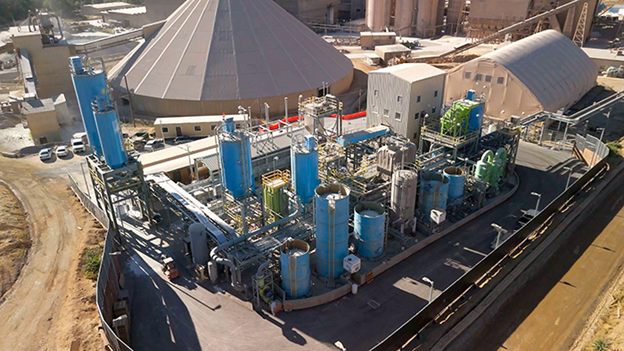
At the time of Presidio Ventures’ investment, Fortera had already progressed beyond laboratory development. The company had begun commissioning a 15,000-ton commercial-scale ReCarb® plant in California, demonstrating readiness for real-world operation rather than extended pilot testing. This stage of development distinguished Fortera from many early-stage climate technology companies still working toward initial deployment.
“At the time of our investment, Fortera had already begun commissioning a 15,000-ton commercial-scale plant, positioning it as one of the closest startups in the field to full-scale implementation,” Himeno said.
Sumitomo Corporation’s engagement with Fortera expanded further through the signing of a memorandum of understanding with Fortera and Sumitomo Osaka Cement to conduct a feasibility study for a commercial-scale low-carbon cement plant in Japan. The collaboration reflects Japan’s advanced decarbonization agenda and aligns with Sumitomo Corporation’s strategy of supporting technologies that can integrate into established industrial systems.
“Japan is among the most advanced countries in Asia in terms of decarbonization initiatives and therefore represents an important milestone for Fortera as it plans its global expansion. We believe there is substantial value in supporting the deployment of Fortera’s technology in the Japanese market.”
A defining advantage of Fortera’s ReCarb® process is its compatibility with existing cement manufacturing infrastructure. Rather than displacing incumbent producers, the technology functions as a bolt-on system, allowing manufacturers to continue using conventional raw materials, kilns, and distribution networks. This approach lowers barriers to adoption and supports faster scaling across the industry.
“Cement is one of the world’s largest industrial materials, and widespread adoption of any new technology requires effective use of the existing supply chain. A key advantage of Fortera’s process is its compatibility with existing cement manufacturing infrastructure, enabling a strategy of collaboration rather than competition with incumbent producers. The ability to utilize existing production and distribution networks provides a significant advantage for market penetration.”
Furthermore, unlike many competing technologies that require new raw materials differing from conventional calcium carbonate–based feedstocks, Fortera’s process can utilize the same raw materials currently used by cement producers. This compatibility presents a major differentiating factor in terms of scalability and adoption.
Fortera’s commercial progress—including partnerships with Graymont and investment from Microsoft’s Climate Innovation Fund—reinforces Presidio Ventures’ assessment of its readiness for market demand. Looking ahead, Sumitomo Corporation’s cement logistics, export, and ready-mixed concrete businesses through Sumisho Cement Co., Ltd. provide additional pathways to support Fortera’s expansion across Japan and potentially the broader Asian region.
“Leveraging this strong business foundation, we believe we can make a meaningful contribution not only in supporting the marketing of Fortera’s technology in Japan, but also in engaging potential partner cement manufacturers,” Himeno said.
For Sumitomo Corporation of Americas, the investment reflects a disciplined approach to climate-aligned innovation—supporting technologies that address large industrial challenges, integrate with existing markets, and demonstrate readiness for deployment. Through Presidio Ventures, SCOA continues to connect emerging solutions like Fortera’s with the industrial networks needed to translate innovation into measurable progress.