VISIONS Magazine (January 2026 Edition)
Metribuzin Solo (SENCOR®): Expanding the Agribusiness Platform in the Americas
Sumitomo Corporation’s acquisition of the Metribuzin Solo (SENCOR®) business represents a targeted expansion of its agribusiness portfolio, with a clear emphasis on strengthening market presence and operational control in the Americas. The transaction transfers trademarks, registrations, inventory, contracts, and technical know-how, enabling Sumitomo to assume responsibility for manufacturing, commercialization, and distribution in more than 20 countries across Latin America, Asia-Pacific, and Canada.
For Sumitomo Corporation of Americas, the acquisition aligns with the Life Science Group’s Agri-SBU strategy of expanding its product portfolio while reinforcing distribution capabilities in key agricultural markets. SENCOR® currently operates in 24 countries, with most of its revenue generated in the Americas, making regional execution central to the business’s future performance.

|
“This initiative aligns with our Agribusiness Strategic Business Unit (Agri-SBU) strategic focus on expanding the product portfolio, thereby strengthening our distribution platform,” said Marcos Mares, SC’s Head of Global Business Development for Agri-SBU (pictured left). “The whole SENCOR® business currently covers 24 countries where Brazil, Argentina, Mexico, India and Japan are the most important. With a total turnover close to $30 million, 68% are generated in the Americas. Looking ahead, we expect to generate $5 million in GTP in the Americas in 2026 with a projection of U$ 7 million after completing our own sourcing, separate from Bayer in the Americas.” |
The integration of SENCOR® into the Summit Agro portfolio addresses specific portfolio gaps in Latin America and Canada. As a metribuzin-only formulation, the product does not overlap with existing herbicides, while offering a recognized brand and formulation quality in markets where generic alternatives are prevalent. This positioning supports Summit Agro’s distributor relationships and brand strategy across the region.
“SENCOR® completes our portfolio of herbicides in LATAM countries without overlapping with existing portfolios” explained Mares. “Our distribution network recognizes the value and the quality of SENCOR® as a differentiation point in comparison with generic Metribuzin products, so we can create value together. The market recognizes Summit Agro as a strong branding company due to our product portfolio mainly based on original specialty products from Japanese R&D makers, so handling the SENCOR® brand as original product and high formulation quality, aligns very well with Summit Agro’s corporate image and business philosophy.”
From an agronomic standpoint, Metribuzin Solo plays a defined role in weed management programs for several major crops. Its continued use reflects both the limited availability of alternatives in certain crops and the need for additional modes of action in regions facing resistant weed populations. These factors are particularly relevant in soybeans, sugarcane, wheat, and potatoes.

“Metribuzin is a key solution for growers of potatoes (seen pictured above), who have limited solutions to control weeds effectively and also for resistant management in soybean, sugarcane and wheat, where there are new biotypes of resistant weeds to many modes of actions,” said Mares. “Metribuzin is a sustainable solution with low acute toxicity and very good environmental profile to help growers to control weeds under integrated weed management programs.”
The acquisition also provides Sumitomo with formulation know-how that supports both continuity and future development. Maintaining established quality standards while internalizing sourcing and production is expected to improve cost efficiency over time, while preserving brand consistency in the market.
“Bayer’s formulated products and brand are well recognized by farmers, and under the generics environment, there is space to get a premium price due to strong brand and superior formulation quality,” said Mares. “With this acquisition, we will get know-how to formulate SENCOR® products and following Bayer’s established recipe, we also expect to develop new mixture products that combine different modes of action, to bring innovative solutions to farmers for better weed control management.”
Looking forward, SCOA’s approach to the SENCOR® business will vary by crop and market structure. In higher-value crops, integration with biological products and technical programs is expected to be a focus, while in large-scale row crops, formulation development aimed at resistance management will remain a priority.
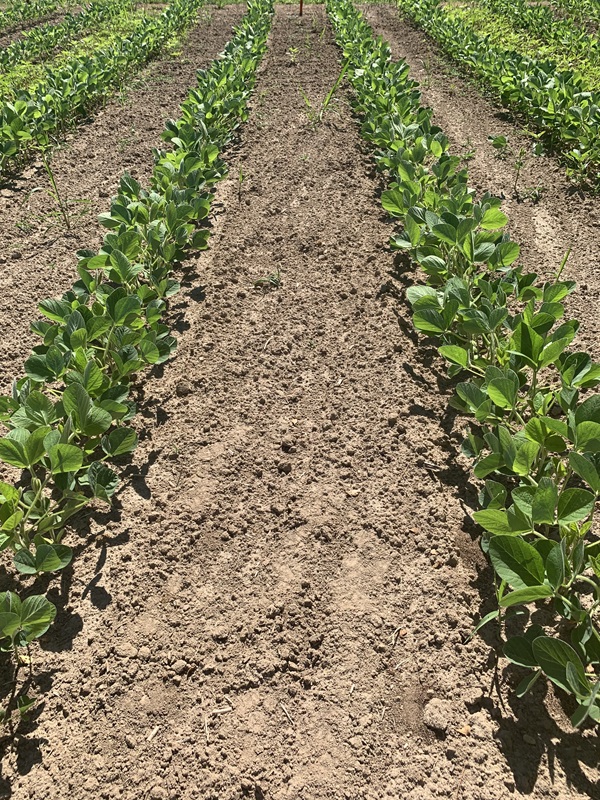
“There is a different approach depending on the crop,” Mares said. “For intensive crops and those intended for direct consumption, such as potatoes, tomatoes, and legumes (like soybeans pictured above), where SENCOR® has a significant presence and Bioproducts higher penetration, it is feasible to create bundled solutions between SENCOR® and Bioproducts, integrating technical programs with commercial packages. In row crops, where the greatest demand from farmers comes from the control of resistant weeds, the development of new formulations and mixtures will be a key for future success, leveraging the brand's strong legacy and the proven quality of SENCOR®'s formulations.”
Positioned this way, the Metribuzin Solo acquisition serves as a practical expansion of SCOA’s agribusiness platform. Rather than aiming for a broad repositioning or market disruption, the business stays grounded in existing demand, established brands, and clearly defined regional growth objectives. And that’s a formula we can get behind.