VISIONS Magazine (April 2026 Edition)
SteelSummit Advances Toward Net-Zero with SBTi-Validated Targets
SteelSummit Holdings, Inc. (SSH), a wholly owned subsidiary of Sumitomo Corporation of Americas (SCOA), has reached a significant sustainabilitymilestone. As of FY2025, SSH already reduced Scope 1 and 2 emissions (market-based) by over 70 percent compared to FY2020 levels and Scope 3 emissions by more than 10 percent compared to a FY2022 baseline. The detailed calculations and methodology can be found here. This achievement reflects several years of operational improvements and sustainability planning across SSH’s facilities and demonstrates measurable progress in reducing the company’s overall greenhouse gas footprint.
Around the world, companies are increasingly measuring and managing their climate impact using a standardized framework for greenhouse gas-accounting. Known as Scope 1, Scope 2, and Scope 3 emissions, this approach is set out in the Greenhouse Gas Protocol, created by the World Resources Institute and the World Business Council for Sustainable Development.
The GHG Protocol has become the global standard for quantifying and reporting corporate emissions. It is widely used to track progress toward climate goals connected to international efforts such as the Paris Agreement.
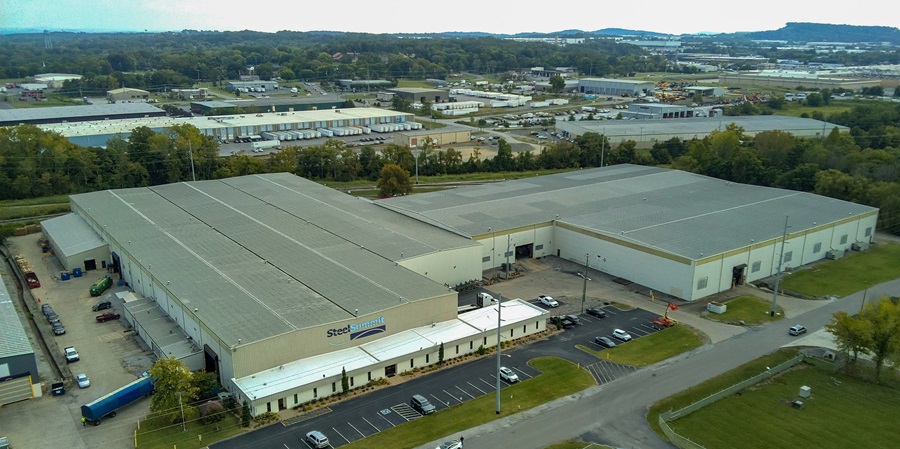
pictured above: SteelSummit's facility in Tennessee
“SteelSummit’s corporate vision and strategy are fully aligned with Sumitomo’s sustainability targets,” said Michitaka Tanoue, General Manager, Steel Group. “And this alignment has become a strong value proposition for major global customers in the automotive, office furniture, and appliance markets.”
The categories used to measure emissions help illustrate why these reductions are meaningful. Scope 1 emissions refer to greenhouse gases produced directly from a company’s own operations, such as fuel used in facility heating systems or equipment. Scope 2 emissions come from the electricity a company purchases to power its operations. Scope 3 emissions represent the broader category of indirect emissions generated throughout a company’s value chain, including those associated with transportation, suppliers, and other partners connected to its business activities.
Because Scope 3 emissions extend beyond a company’s immediate operations, reducing them often requires collaboration across suppliers, logistics providers, and customers. Addressing all three scopes of emissions allows companies to better understand the full environmental impact of their activities and to track progress toward long-term climate goals.
“At SteelSummit Holdings, sustainability is embedded in how we operate and plan for the long term,” said Todd Rollins, President & Chief Executive Officer, SteelSummit Holdings, Inc. “and the Science Based Targets initiative’s validation of our greenhouse gas reduction targets confirms that our commitments are credible, science-aligned, and consistent with the Paris Agreement’s 1.5°C ambition. As we continue making measurable progress across our operations and value chain, we remain focused on meeting our SBTi milestones, expanding circularity efforts, and maintaining transparent reporting as we build a more resilient and sustainable SteelSummit.”
The reductions achieved so far form part of SSH's broader climate roadmap. The company has committed to achieving net-zero greenhouse-gas emissions across its value chain by FY2050, while setting near-term targets to reduce operational and supply-chain emissions over the coming decade. These targets have been validated by the Science Based Targets initiative (SBTi), an international organization that evaluates corporate emissions targets to ensure they align with climate science and the objectives of the Paris Agreement. The full details of SSH’s validated targets are available here.
Operational improvements across SSH facilities have played a key role in reaching these milestones. The company has introduced energy-efficiency upgrades and electrification initiatives designed to reduce reliance on fossil fuels and lower overall energy consumption. These efforts include installing air-to-air heat pumps to reduce natural-gas usage and transitioning forklift fleets from propane-powered equipment to electric alternatives.
SSH has also incorporated renewable energy certificates (RECs) to help address emissions associated with purchased electricity. Through the use of RECs, the company is reducing its market-based Scope 2 emissions, reflecting its procurement of renewable electricity attributes and supporting renewable energy generation.
Circular-economy practices are another important part of SSH’s sustainability strategy. All scrap metal generated through the company’s processing operations is recycled and returned to steel mills for reuse, reducing demand for newly extracted raw materials while supporting the continued circulation of industrial metals within the manufacturing supply chain.
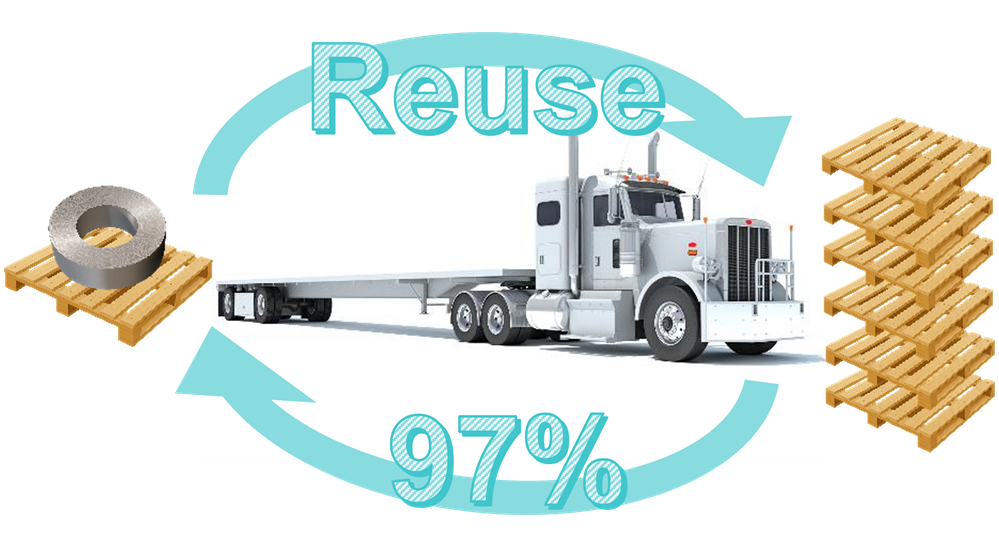
A longstanding pallet return program further contributes to waste reduction efforts. Through this initiative, wooden pallets used in shipments are collected, repaired, and reused for future deliveries, extending the life cycle of materials and lowering the need for new lumber purchases. (see below)
SSH has also strengthened its environmental governance through formal management systems. The company’s environmental management system is certified to ISO 14001:2015 across all four manufacturing plants and its corporate headquarters, establishing a structured framework for improving environmental performance and supporting regulatory compliance.
Transparency remains a central component of the company’s sustainability approach. SSH publishes sustainability reports and participates in CDP, a global environmental disclosure platform, where improved scores in climate and water-security reporting reflect the company’s commitment to accountability and measurable progress.
These initiatives align closely with the broader sustainability strategy of the Sumitomo Corporation Group, which has established long term climate goals across its businesses by 2050. SCOA plays an important role in supporting these objectives across the Americas by helping group companies measure emissions, develop reduction strategies, and implement sustainability initiatives.
With more than 70 percent reductions in operational emissions and measurable progress across its supply chain, SteelSummit Holdings is demonstrating how coordinated sustainability planning and operational improvements can translate into tangible environmental results while supporting the industries and communities it serves.
You can also read about this milestone here: SSH_SBTi-and-Sustainability-Article_Final.pdf