VISIONS Magazine (July 2026 Edition)
Keeping the Airport Moving: SCOA and Partners Return to Automatic People Mover Conference
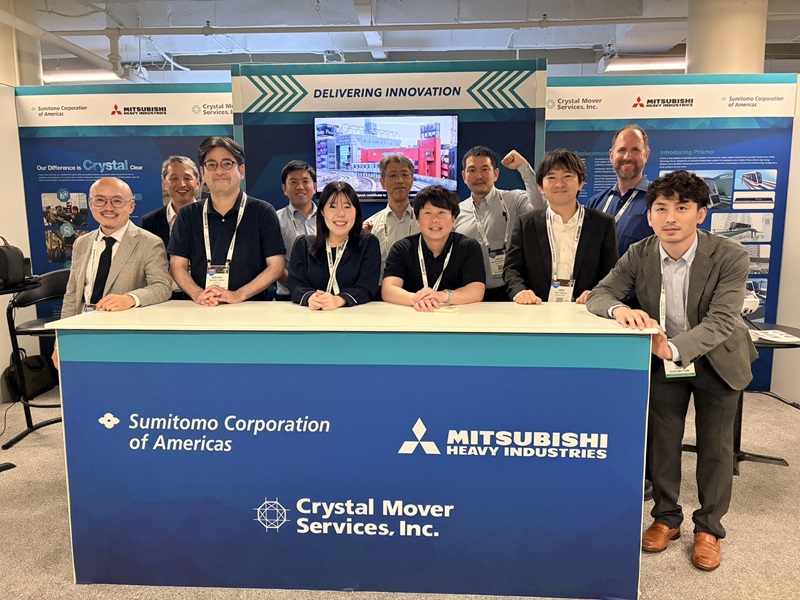
Most airport travelers rarely think about automated people movers. They step aboard with their luggage and expect the train to carry them safely and efficiently to the next terminal. For Sumitomo Corporation of Americas (SCOA), Mitsubishi Heavy Industries (MHI) and Crystal Mover Services, Inc. (CMSI), delivering on that expectation is a responsibility they take seriously.
Behind every seamless trip is a complex network of vehicles, signaling systems, power supplies, communications technology, platform screen doors and mechanical components. These systems must work together flawlessly, often in airports that operate around the clock and leave little room for disruption.
The realities of keeping those systems running were once again the focus of the International Conference on Automated People Movers and Automated Transit Systems (APM-ATS), held June 29–July 1 in Detroit, Michigan.
SCOA joined MHI and their joint venture company, CMSI, at the industry’s premier automated transit conference. Together, the three organizations sponsored this year’s event and contributed to discussions on the future of airport mobility, sharing insights drawn from the operation and maintenance of systems already serving millions of passengers.
The conference brought together researchers, transit operators, project managers, consultants, contractors and academics from around the world. Hosted in collaboration with the American Society of Civil Engineers’ Transportation and Development Institute and the Michigan Department of Transportation, the events created opportunities for a broader exchange of ideas on how transportation infrastructure is designed, built, operated and maintained.
For SCOA, MHI and CMSI, participating is about more than maintaining an industry presence. It provides a valuable opportunity to exchange knowledge with system owners and operators, examine emerging challenges and technologies, and remain closely connected to the evolving needs of automated transportation systems.
Their partnership spans the full lifecycle of an automated transit system—from design and project delivery to long-term operations and maintenance.
A Partnership Built for Long-Term Reliability
CMSI was established in 2009 as a joint venture between Mitsubishi Heavy Industries America, Sumitomo Corporation and SCOA. The company operates and maintains MHI’s proprietary automated people mover systems throughout the United States, providing around-the-clock support on behalf of airport owners and operators.
Its responsibilities include preventive maintenance, major overhauls, corrective repairs, parts management and system modernization initiatives. CMSI teams support all major system components, including vehicles, signaling and communications systems, power equipment, platform screen doors and related infrastructure. They also evaluate replacement parts, refurbishment opportunities, life-extension strategies and emerging technologies that can improve performance over time.
Much of this work takes place behind the scenes. A train that arrives safely and on schedule rarely attracts attention, but that reliability is the result of continuous planning, inspection, communication and preparation.
Bringing Real-World Experience to Industry Discussions
Conversations about automated transportation often focus on the future—digital technologies, predictive maintenance, advanced controls and new automation capabilities. While innovation is essential, new technology only creates value when it performs reliably in real-world operating environments.
Automated people movers must function through peak travel periods, changing weather conditions, construction activity and the wear associated with continuous service. Operators must be prepared to adapt quickly, respond to unexpected disruptions and coordinate closely with airport authorities. CMSI supports these demands through rigorous training programs, emergency drills, safety protocol, recovery procedures and continuous system monitoring.
That operational perspective is one reason the partners’ participation in APM-ATS remains so valuable. Their contributions are grounded not in theory, but in the day-to-day realities of operating and maintaining mission-critical transportation systems.
Since its founding, CMSI has supported automated people mover systems at major airports including Washington Dulles International Airport, Hartsfield-Jackson Atlanta International Airport, Miami International Airport, Orlando International Airport and Tampa International Airport. Its work spans the launch and ongoing operation of these systems, helping ensure reliable service for travelers across the country.
SCOA’s transportation experience extends even further. For more than 40 years, the company has supplied transportation equipment and systems to transit and airport authorities throughout the United States. Its project portfolio includes work with agencies in New York, Chicago, Los Angeles, Maryland, California, Northern Indiana and Virginia.
Supporting the Future of Automated Transit
Industry conferences can sometimes focus heavily on future possibilities. At its best, APM-ATS connects those ideas to the practical realities of ownership, operations and passenger expectations.
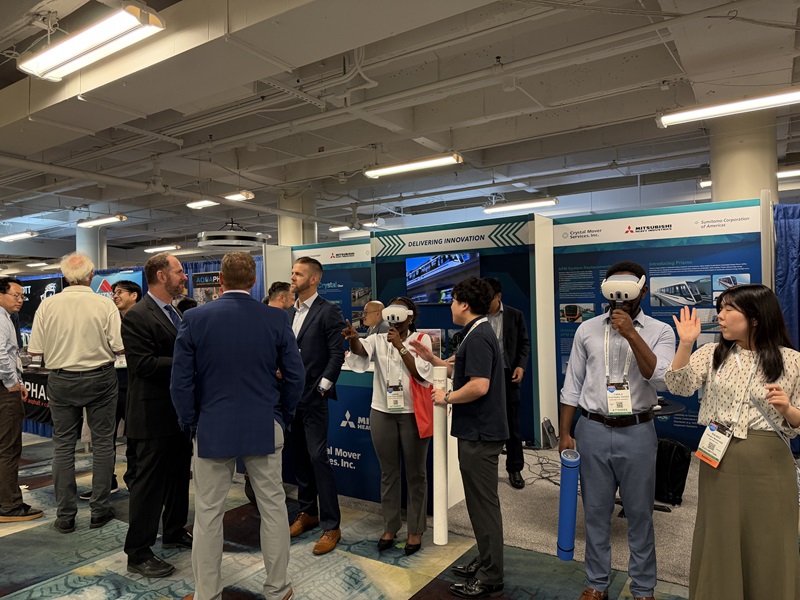
For SCOA’s Social Infrastructure Group, returning alongside MHI and CMSI helps keep those discussions grounded in real-world experience. Technical sessions, workshops and informal exchanges offer opportunities to share lessons learned, address emerging challenges and explore the future of automated transit.
The conference also reinforces a longstanding partnership built on more than individual projects. Together, MHI, SCOA and CMSI provide capabilities that span manufacturing, project execution, operations, maintenance and long-term system support. Their continued participation reflects a shared belief that successful transportation systems require sustained engagement long after construction is complete.
After all, an automated people mover is not judged solely by a successful launch. Its true value is measured over years of safe, dependable service — a standard that depends on strong partnerships and a long-term commitment to operational excellence.