VISIONS Magazine (July 2026 Edition)
SCOA’s Month of Impact Reaches Across the Americas Through Local Action
An oyster reef in New York Harbor needed rebuilding. A river in Mexico City needed cleaning. In Vancouver, invasive plants were crowding native species in Stanley Park. In Bogotá, unwanted clothing represented both a waste problem and an opportunity for reuse. All were local challenges taken up during SCOA’s 2026 Month of Impact, a regional environmental initiative organized by SCOA’s Corporate Sustainability Department. Employees in the United States, Canada, Mexico, Colombia and Chile stepped away from their regular duties to clean parks and waterways, support conservation research, remove invasive vegetation, reduce office energy use and find new destinations for textile waste.
“This is our third annual Month of Impact,” said Zheng Qian, Vice President & General Manager of Corporate Sustainability and President of the SCOA Foundation. “And while the activities may vary from office to office, our goal is the same, to make a meaningful contribution to the environments where we live and work.”
The program’s 2026 theme, “From Sumitomo Legacy to Local Impact,” connected the work of participating offices with a much older tradition of responsible business. But the clearest expression of that theme did not come from a slogan. It came from employees working in the communities where they live and work.
One Region, Many Ways to Contribute
Month of Impact was designed to give offices room to select activities suited to their locations, environmental priorities and available nonprofit partners. The result was not a single standardized volunteer event repeated across the region, but a collection of projects shaped by local needs.
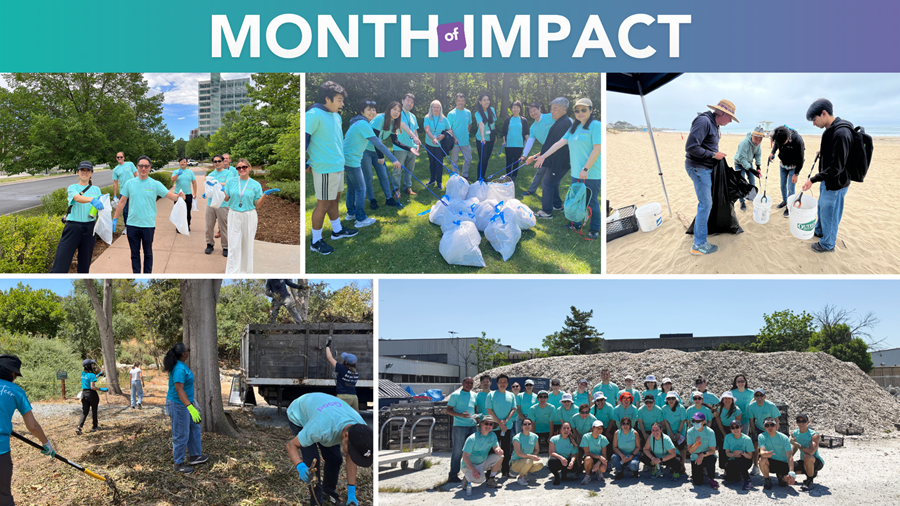
The program reached 12 participating offices through various unique initiatives culminating in 126 employees contributing approximately 346 participant-hours.
In New York, 33 employees worked with the Billion Oyster Project on oyster reef restoration out of Governor’s Island. The nonprofit is working to restore oyster populations to New York Harbor, where the shellfish can help filter water, create habitat for marine life and strengthen the harbor’s ecological resilience.
Chicago employees focused on the landscape surrounding their own metropolitan area. Fourteen volunteers joined the Forest Preserves of Cook County for a litter cleanup, contributing 21 participant-hours to the care of one of the nation’s largest urban conservation systems.
Six employees from the Los Angeles office worked with the South Bay Parkland Conservancy at Hopkins Wilderness Park in Redondo Beach. Their cleanup supported a local natural area that provides open space, wildlife habitat and environmental education within a densely populated region.
In Denver, eight employees took part in the Belleview Station cleanup on July 9. The group spent an hour walking the area and collecting litter during the Denver Office Trash Walk, contributing eight participant-hours to improving the shared space surrounding the office.
The following day, five Silicon Valley employees joined a two-hour beach cleanup with the Surfrider Foundation’s Santa Cruz chapter. The team contributed 10 participant-hours to the organization’s work protecting beaches, oceans, and coastal communities.
Conservation Efforts From the Field to the Office
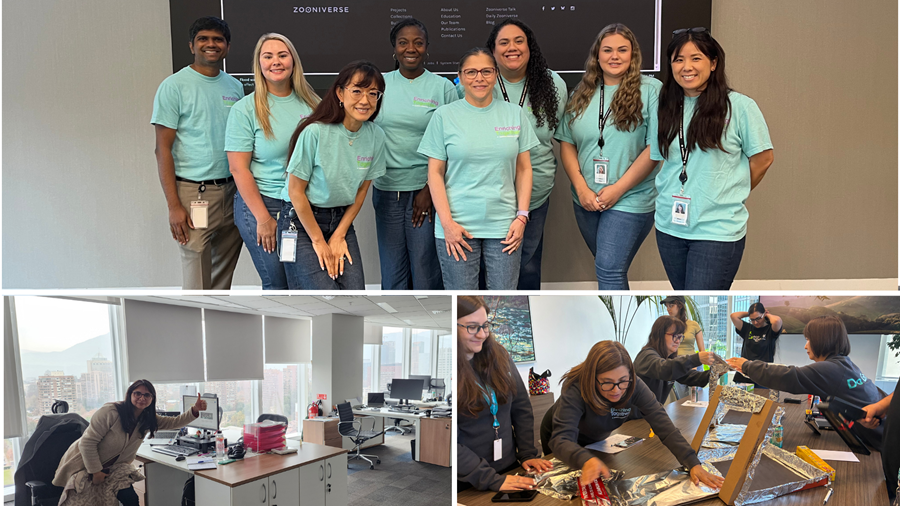
While many Month of Impact activities involved hands-on work outdoors, employees also made valuable contributions through office-based initiatives. In Houston, employees supported environmental research through a citizen-science project led by Texas A&M University and hosted through the Zooniverse platform.
Ten employees analyzed wildlife audio recordings collected in the Edwards Plateau region of Texas. By identifying and classifying sounds within the recordings, the volunteers helped researchers process information used for habitat monitoring and conservation study. The Houston team completed 1,028 classifications and contributed 28 participant-hours.
The project demonstrated that environmental volunteering could extend beyond traditional cleanups and restoration work. Digital tools allowed employees to support scientific research taking place hundreds of miles away while learning more about the species and habitats found within their own state.
Sumitomo Canada Limited’s Toronto and Calgary offices took another educational approach. Thirteen employees participated in an energy workshop led by nonprofit organization EcoSpark, using wattmeters to measure the electricity consumed by common appliances and discussed ways to conserve energy at home and in the workplace.
Participants also constructed solar ovens to explore renewable energy, heat retention and the greenhouse effect. The combined activity contributed 32.5 participant-hours of supporting EcoSpark’s environmental education programs and helping employees better understand how everyday energy choices affect homes, workplaces, and communities.
In Santiago, Chile, Month of Impact unfolded through daily office behavior rather than a single volunteer event. Employees regularly turned off lights and television screens and relied on natural daylight during designated periods throughout May. In addition to contributing to energy savings, this initiative encouraged colleagues to reflect on everyday energy use and demonstrated how small actions, when practiced collectively, can help foster a culture of environmental awareness and resource conservation.
Restoring Local Ecosystems
In Vancouver, eight employees joined Stanley Park Ecology for a three-hour invasive-plant removal program. The hands-on activity brought volunteers into less familiar parts of Stanley Park while teaching them about its ecology, biodiversity and history.
Removing invasive species can be slow, physical work. It is also an important part of protecting native vegetation and maintaining the balance of an ecosystem. The Vancouver team contributed 24 participant-hours directly to the park’s continuing restoration.
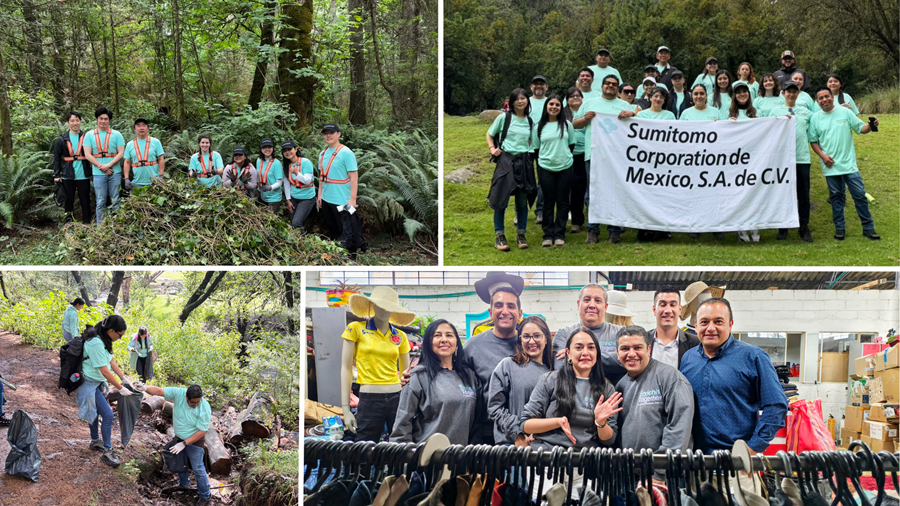
Mexico City recorded one of the program’s largest single-day volunteer commitments. Twenty-three employees spent four and a half hours at Parque Natural La Cañada, supporting river cleanup and ecosystem conservation. Together, they contributed 103.5 participant-hours—the highest documented total among the reported office activities.
The work reflected the program’s emphasis on direct, place-based action: employees addressing an environmental need in a location that forms part of their own community. These projects varied in scale, but each placed employees in direct contact with an environmental challenge and the organizations working to address it.
Giving Textiles a Second Life
Bogotá employees celebrated Month of Impact 2026 by launching “RE-DRESS The Future”, a two-part initiative focused on promoting textile reuse and circular economy. In the first activity, employees in the Bogotá office collected and donated approximately 45 kg of garments to the El Minuto de Dios Organization’s “Banco de Ropa y Roperos” program. In this program, items in good condition are redistributed to people in need, while textiles unsuitable for direct use may be channeled into redesign and recycling programs that transform them into new products.
The second activity involved six employees volunteering directly at the Banco de Ropa y Roperos facility to help sort and prepare donated materials for charitable distribution. This half-day volunteer event contributed 24 participant-hours and supported donations for victims of the recent Venezuela earthquake.
In addition to diverting approximately 45 kg of textiles from landfill, this effort is estimated to have avoided roughly 135 kg of CO₂e emissions and 90,000 liters of water associated with producing new garments. Although these figures are estimated based on external references regarding the life cycle of apparel, they illustrate the environmental costs embedded in everyday products. Clothing that is reused, repurposed, or recycled can reduce waste while extending the value of the water, energy and raw materials used to manufacture it.
Connecting the Past with the Work at Hand
A Month of Impact webinar for employees across the Americas spotlighted the regional activities and contextualized the efforts within the history of the Besshi Copper Mine, launched in 1894 by Sumitomo’s Teigo Iba in Ehime, Japan. Sumitomo undertook an extensive reforestation effort after decades of mining and environmental damage. Tim Sander, Executive Vice President and Chief Ethics and Compliance Officer at SCOA and a member of the SCOA Foundation Board of Directors, described Besshi as an enduring source of lessons about the relationship among people, profit and planet.
“One of the key lessons is long-term vision and just wanting to do the right thing,” Sander said.
The webinar also highlighted the SCOA Foundation’s support for The Nature Conservancy’s Mining the Sun initiative, which seeks to transform former mine lands and brownfields into hubs for clean, green and equitable energy. The partnership provided one contemporary example of the principles introduced through the Besshi story.
For Month of Impact, however, those principles ultimately came down from the historical and strategic level to the offices themselves. Employees encountered stewardship not as an abstract corporate concept, but as bags of litter, wildlife recordings, invasive plants, discarded clothing, energy meters and waterways requiring attention.
“Together, these stories will show a powerful connection, give us perspective and inspiration, and show us how we can come together and take meaningful environmental action every single year throughout this Month of Impact,” Qian said.
Across the SC Americas region, that action took many forms. Its collective value came from employees recognizing that local work, when repeated across offices, cities and countries, can become part of something considerably larger. It shows that when it comes to “Enriching Lives and the World,” our motto is put into action across the region and beyond.